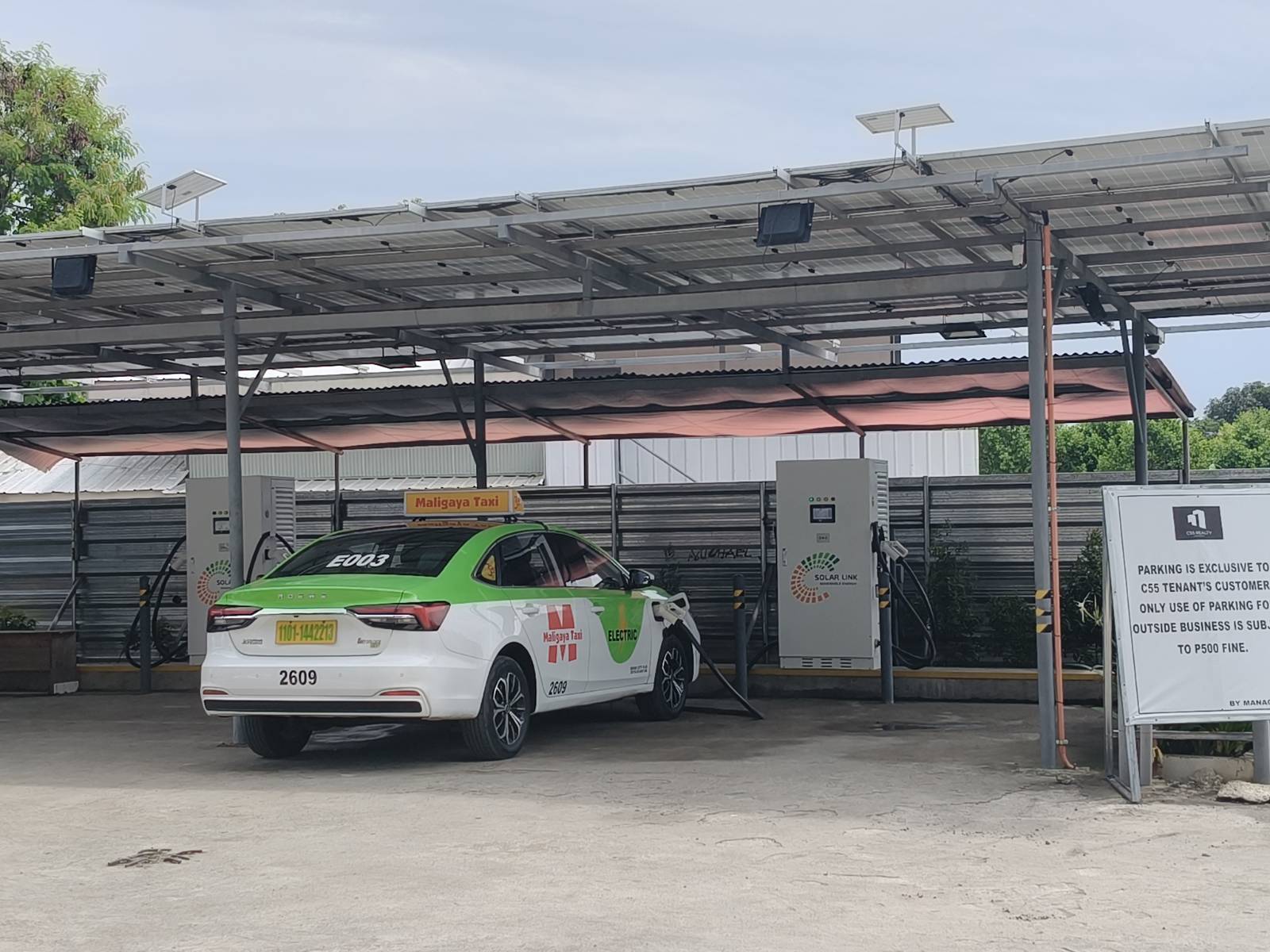
DAVAO CITY, Philippines — The environmental case for electric vehicles rests on a premise that is straightforward in theory but complicated in practice: an electric car is only as clean as the electricity that charges it.
Research has consistently found that electric vehicles produce fewer greenhouse gas emissions over their lifetimes than comparable gasoline-powered cars. But the scale of that reduction depends heavily on the composition of the local grid. In countries where electricity comes primarily from renewable sources, the benefits are substantial. In countries where coal dominates the energy mix, those benefits shrink considerably — and the emissions are not eliminated, merely relocated from the vehicle’s exhaust pipe to the power plant’s smokestack.
That distinction is not academic in the Philippines, where the Mindanao power system is still largely fed by coal-fired plants like Therma South Inc. in Davao City and San Miguel Power in Davao del Sur.
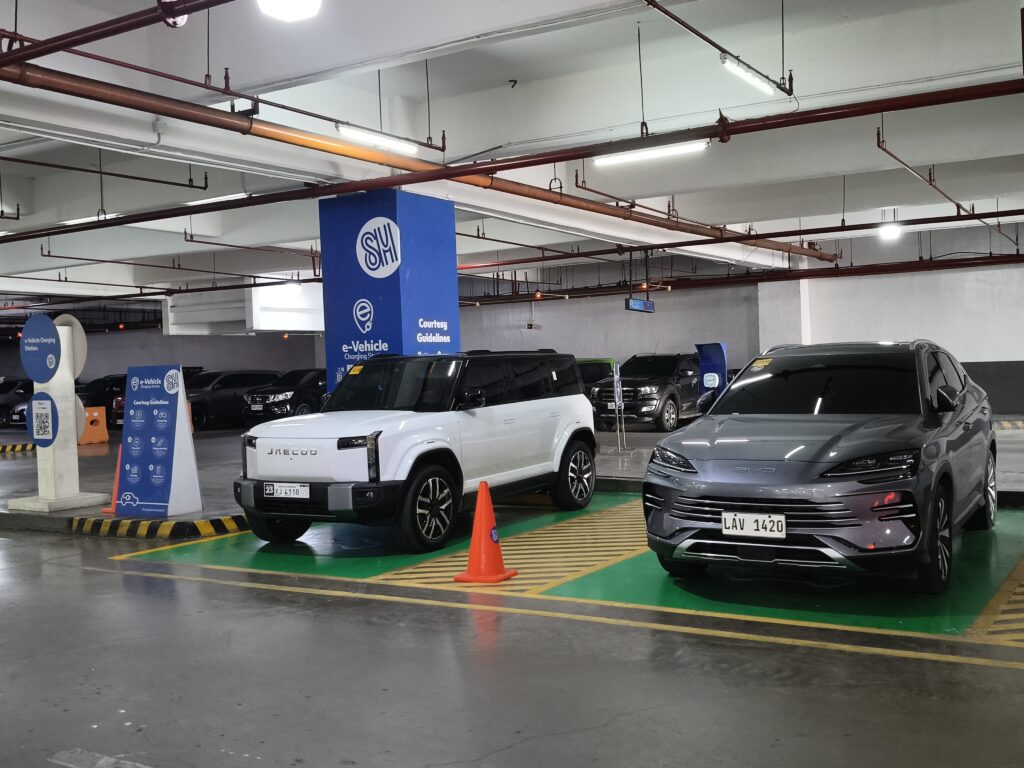
The paradox
Former Bayan Muna Representative Carlos Isagani Zarate put it bluntly: “The problem is that we are advocating for green vehicles for Filipinos, but the electricity that charges many of these vehicles is mostly generated from coal sources.”
“If our country generates electricity from coal, we are merely relocating the emissions from the vehicle exhaust to the source of power generation,” he said.
For Zarate, the electric vehicle transition should not be viewed as a transport policy alone. It should become a catalyst for energy reform including rapid investment in renewable energy such as solar, hydro, and geothermal power, modernization of the national grid, incentives for rooftop solar systems that could supply energy to EVs, and domestic production of electric vehicles.
“The electric vehicles transition should become a catalyst for energy reforms,” he said.
The numbers behind the ambition
The government’s roadmap reveals the scale of its aspirations, and the size of the gap.
Under the Comprehensive Roadmap for the Electric Vehicle Industry (CREVI), developed by the Department of Energy (DOE), the Philippines should have 311,700 electric vehicles and 7,300 charging stations nationwide by 2028. As of December 2025, Region XI had just 1,688. Nationwide, the figure stood at roughly 42,000, meaning the country must grow its EV fleet more than sevenfold in three years to meet the target.
In a baseline business-as-usual scenario, CREVI projects over 850,000 electric vehicles by 2040. Under the more ambitious Clean Energy Scenario, that figure rises to over two million, with 40,000 charging stations and a greater share of renewable energy in the national mix.
For Engr. Adrian Mel Delola, Science Research Specialist II at the Department of Energy–Mindanao Field Office, the roadmap is about more than vehicle sales. “This roadmap is not only about the number of electric vehicles,” he said. “It is about preparing the entire energy system for the transition.”
New electric vehicles, he explained, will require their own network of accredited charging stations, upgrades to transmission and distribution systems, and coordination among regulatory bodies, electric companies, and private investors. Each charging station must be accredited by the DOE and approved by its central office, with additional coordination required from regional distribution utilities like Davao Light and Power Co.
The cost of power
Even setting aside emissions, the economics of EV charging in the Philippines are shaped by some of the highest electricity prices in the region.
The average residential electricity price in the Philippines is 11 to 12 per kilowatt-hour roughly $0.18/kWh, the second-highest in Southeast Asia after Singapore’s $0.20/kWh. Malaysia pays about $0.11/kWh, Thailand $0.13, Indonesia $0.09, and Vietnam just $0.07.
Despite these elevated rates, charging an electric car remains cheaper per kilometer than filling up with gasoline which is precisely why drivers like Andaya and Camingawan have seen their daily energy costs halved.
But Zarate cautioned that the growing number of electric vehicles will require a serious examination of the power sector’s readiness for additional demand.
He warned that the Philippines already experiences yellow and red power alerts during peak evening load, acute risks of power failure driven by surging demand. Widespread evening charging of electric vehicles could compound that strain.
Zarate also questioned the concentration of ownership in the Philippine power sector and called for revisiting the Electric Power Industry Reform Act (EPIRA), which privatized electricity generation, transmission and distribution. Despite market liberalization, consumers still pay some of the highest tariffs in the region.
The affordability gap
Sonny Africa, Executive Director of IBON Foundation, argues that the conversation about electric vehicles cannot be separated from questions of who can actually afford them.
Over 50 percent of the total energy consumed in the country comes from oil, and 96 percent of transport energy requirements depend on it — almost all of it imported. “In such a scenario, it looks obvious that increasing the usage of electric vehicles would be a good step toward reducing the dependence on imported oil,” Africa said.
But the current reality, he argued, does not allow for a significant reduction in that dependence, because electric cars remain out of reach for most Filipinos. Only about one in ten Filipino families can afford a conventional vehicle, and electric cars are even more expensive.
“The beneficiaries of the current incentive scheme are mainly upper-middle and higher-income classes that can afford buying new cars, while most Filipinos, drivers and passengers, are still paying for expensive and volatile fuel prices,” he said.
Africa pointed to the government’s Public Utility Vehicle Modernization Program as a cautionary example: many jeepney drivers wanted to switch to electric vehicles but lacked the financial support to do so, delaying the transition to cleaner public transport.
He also noted that the Philippines has missed the opportunity to build domestic manufacturing capacity around electric vehicles. As it stands, EVs and their components are largely imported, meaning increased adoption grows manufacturing industries abroad rather than at home.
For Africa, electric vehicles should not be treated as a goal in themselves but as a means to enhance public transport, reduce dependence on imported oil and develop domestic industries.
Back to Andaya
Every morning before dawn, Sergio Andaya Jr. unplugs his taxi from the charger and pulls onto the streets of Davao City.
Things he used to do differently, the daily stop at the gasoline station, the ?3,000 spent on fuel, are gone. His daily energy costs have been cut in half. His maintenance routine has been stripped to the basics. The savings are real, and they are his.
But the question that nags at him is the same one hovering over the country’s entire electric mobility push: what happens when the battery dies?
A replacement pack could cost ?250,000, nearly a fifth of what the vehicle itself is worth. For a driver who has spent nine months watching his fuel bills collapse, that single expense could erase months of savings overnight.
It is the one variable in his new routine that he cannot control, and it is tied to the same fragile, coal-dependent grid that powers his every charge.
Andaya is not thinking about national roadmaps or renewable energy targets. He is thinking about earnings, expenses and whether the math will still work when the battery gauge finally fails.
Tomorrow morning, he will unplug his taxi before sunrise and start his shift. Whether that routine becomes normal for millions of drivers across the Philippines will depend not just on cheaper cars or more chargers, but on whether the country’s energy sector can deliver electricity that is affordable, reliable, and eventually clean enough to make the switch worthwhile. (davaotoday.com)
Reporting for this story was supported by the Local Climate Story Hubs initiative powered by Lyf and Fyt Media.”