DAVAO CITY, Philippines—Pork prices in Davao Region have dropped over the past year, but concerns over African swine fever and varying consumer practices underscore the importance of ensuring meat has passed required inspections before reaching the market.
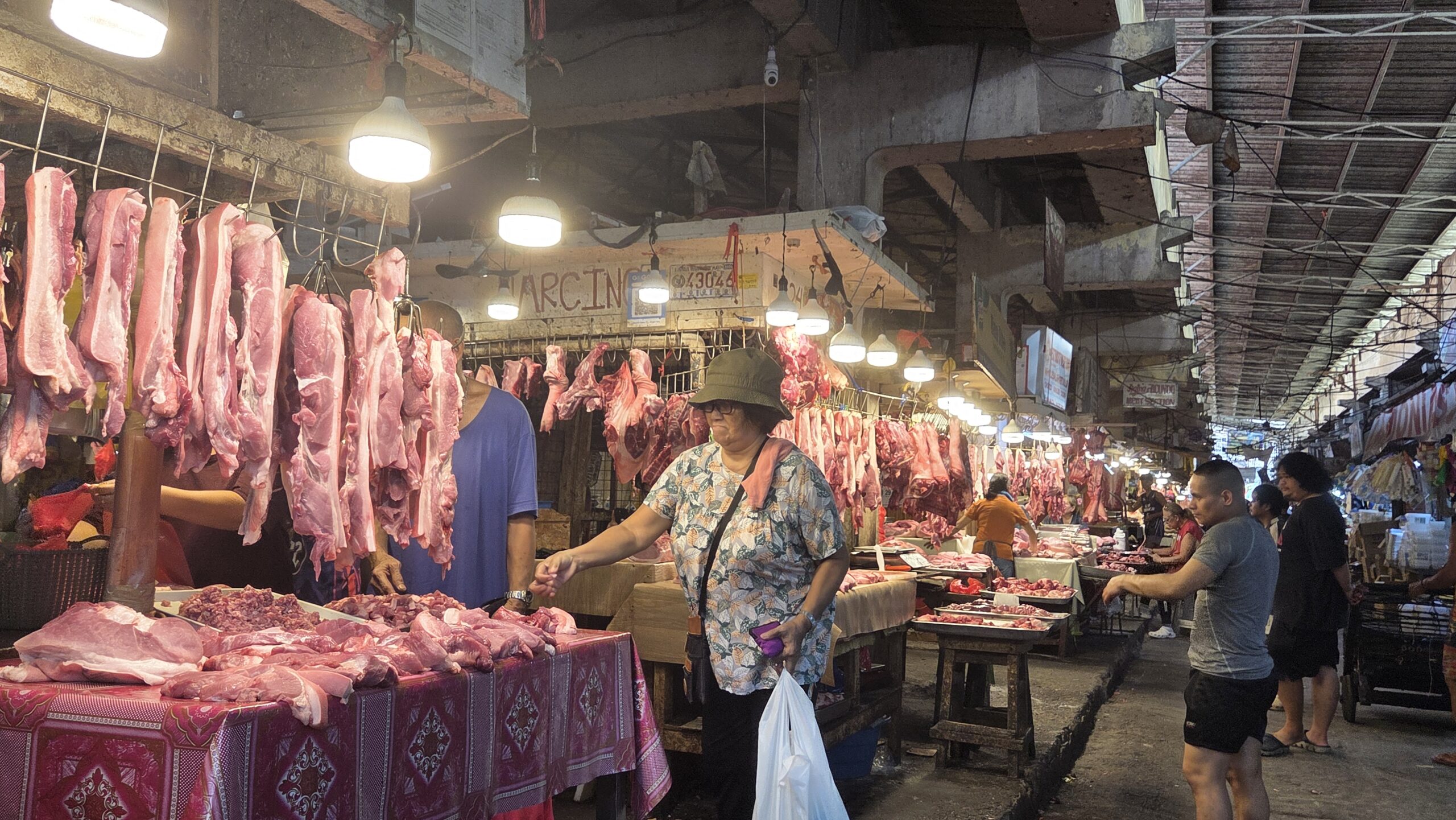
Evangeline Caasi, who has sold pork and chorizo at Bankerohan Public Market since 2014, said prices began falling around March or April as sales slowed.
She attributed part of the drop in demand to customers’ fears after seeing social media posts about African swine fever, a viral disease affecting pigs and wild boar.
“Other customers have slowly gone, because the prices are always differing,” Caasi told Davao Today in Cebuano.
Pork that normally sells for P270 per kilogram could be offered at P260 or P250 when sales are slow, she said.
Data from the Philippine Statistics Authority (PSA) support the trend. Fresh pork with bones averaged P261.70 per kilogram during the first five days of September 2026, down from P325.06 during the same period in 2025— a decline of about 19.5%. Prices vary by cut and seller.
Caasi said affordability remains a major factor for buyers.
“What they really look at are the prices. Of course, they will always look for the cheapest,” she said.
Some customers remain loyal to their regular vendors, while others buy from sellers offering lower prices, she added.
Caasi said her supply comes from a supplier that sources pork directly from a piggery. The meat has documentation from the slaughterhouse and undergoes veterinary checks, she said.
NMIS urges buyers to check certificates
The National Meat Inspection Service Regional Technical Operations Center XI (NMIS RTOC XI) is urging consumers to check meat inspection certificates displayed at public markets, groceries and meat shops.
Regional Technical Director Dr. Lailanie Rose Rico said the agency inspects meat at slaughterhouses and other regulated meat establishments to help ensure that products released for consumption meet food-safety requirements.
Inspectors examine animals before slaughter and inspect their carcasses afterward because some diseases may not be apparent while the animals are alive, Rico said.
“We don’t let them pass through inspection so consumers avoid eating spoiled meat,” Rico said in Cebuano.
The agency also conducts enforcement operations against uninspected meat, commonly called “hot meat,” which may be confiscated under existing regulations.
Rico said consumers can check the Meat Inspection Certificate displayed at meat stalls to determine whether meat came from an inspected slaughterhouse. For imported meat, buyers should look for the appropriate Certificate of Meat Inspection.
But not all buyers are familiar with the documents.
Russel Dialang, who helps manage a relative’s eatery near Villamor Street in the Jacinto area, said the business buys pork, chicken and fish from Bankerohan through a regular supplier.
Asked whether he had noticed a meat inspection certificate with the products, Dialang said he had not.
“I think it’s relatively safe. I smell them,” he said, explaining that he relies on the meat’s smell to assess its condition.
Rico said NMIS assists local government units in monitoring meat sold in markets, although local governments have direct jurisdiction over their markets.
She emphasized that meat safety requires cooperation among government agencies, industry stakeholders and consumers.
“This is not just ours, this is a shared responsibility among the national government, the local government, our stakeholders and consumers,” she said.
Continued ASF monitoring
NMIS conducts monthly Africa swine fever surveillance at about 12 accredited slaughterhouses in Davao Region.
The monitoring involves collecting blood samples from pigs before slaughter and screening them using rapid test kits. Samples suspected of testing positive are sent to the Regional Animal Disease Diagnostic Laboratory in Davao City for confirmation.
“So far, in all the meat establishments we have already monitored, they’re all negative of ASF,” Rico said.
She clarified that the surveillance covers accredited slaughterhouses under NMIS jurisdiction, not all pig farms. The Bureau of Animal Industry and relevant veterinary offices conduct their own monitoring at farms, she added.
NMIS had confiscated more than 2,000 kilograms of uninspected or mishandled meat as of its July 2026 baseline performance figures.
Rico urged consumers to remain vigilant when buying meat, saying inspection certificates provide information that price, appearance or smell alone cannot establish. (davaotoday.com)