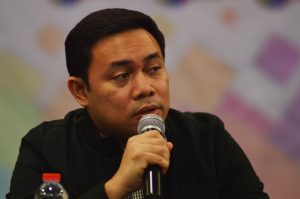
DAVAO CITY, Philippines—Davao City Councilor Danilo Dayanghirang opposed calls to ban Facebook, saying existing laws and the platform’s self-regulation can address harmful content, even as the Senate and House approved separate bills to restrict minors’ access to social media.
In a press conference Oct. 13, Dayanghirang said Facebook has become part of everyday communication and social interaction, particularly for overseas Filipino workers communicating with their children.
“Facebook plays a huge part in our culture and family relations. You are an OFW, you use it to communicate with your children. It also helps relay medical information about medicines during emergencies. It also largely helps our economics, because we are sharing and giving information on the app,” Dayanghirang said in Cebuano.
Kabataan Partylist Southern Mindanao chair Cobbie Jan Canda and the United Nations Children’s Fund also urged a broader approach to online safety, warning that restrictions alone would not address the underlying causes of school-related violence or fully protect children online.
Separate age limits
The Senate approved Senate Bill No. 2424, or the proposed Safe Media Access and Responsible Technology for Kids in Digital Spaces Act, on third and final reading Oct. 8. The measure would prohibit minors under 18 from accessing covered high-risk digital services.
The House approved House Bill No. 11566, or the proposed Children’s Digital Safety, Protection, and Well-Being Act, on third and final reading Oct. 12. Its version would prohibit children under 13 from creating or maintaining accounts on covered platforms while imposing additional safeguards for older minors.
The Senate passed its measure 16-1, with Sen. Risa Hontiveros casting the lone dissenting vote. The House approved its version 287-3, with no abstentions.
The chambers must reconcile their versions before a consolidated measure can be sent to President Ferdinand Marcos Jr. for approval.
The proposed restrictions come amid renewed calls for stronger online safeguards following three deadly school shootings in the country since June, which reignited debate over social media’s influence on young people.
Concerns over blanket bans
Hontiveros argued that a blanket restriction could sever young people’s social connections and limit their access to opportunities.
“Social media has become a space where young people build and maintain their connections with their friends, communities, families, and loved ones,” she said.
“An outright ban strips away these very connections that have become so important in their day-to-day lives.”
She also cited young people who use social media for livelihood, including online selling, content creation and virtual assistance.
Marcos Jr. said the government is still studying whether a blanket ban would be appropriate, warning that restrictions could drive children to conceal their online activities.
“If you ban it, the children will hide,” Marcos Jr. said in a media interview in Singapore. He said this could make it harder for authorities and families to identify children being groomed online.
Calls for broader protection
Canda said the bills would not address the root causes of school-related violence and could deprive young people of a channel for information and advocacy.
“It is as if we are taking away an avenue for young people. We are not saying that participation in social media should be given greater importance, but we believe that these restrictions undermine young people’s right to access information,” Canda told Davao Today in Cebuano.
He acknowledged that social media can spread misinformation but said young people should be equipped to assess information critically rather than be denied access to digital platforms.
“Social media is a double-edged sword. It can help us strengthen our advocacies and shape our convictions, but it can also become a source of misinformation,” he said.
UNICEF Philippines also called for a comprehensive approach to child online protection.
In an Oct. 8 statement, UNICEF Representative to the Philippines Kyungsun Kim said children’s online and offline experiences are deeply interconnected.
“We must recognize that growing up today means growing up in a digital world, and children’s experiences online and offline are deeply interconnected, with risks in one environment often fueling harm in the other,” Kim said.
UNICEF warned that poorly designed or implemented restrictions could limit children’s access to information and support networks or push them toward less regulated online spaces.
Canda called for greater government investment in education, health care and mental health services to support children’s holistic development.
“What we are calling for is sufficient funding for the development of children and young people, from health care starting at birth to mental health services as they grow up. There must also be adequate funding for education,” he said. (davaotoday.com)