MANILA, Philippines – Cuban hospitals have been forced to adopt extraordinary measures to keep operating as the decades-long U.S. blockade severely restricts the country’s access to fuel, transportation, electricity and medical supplies, Cuba’s top diplomat in the Philippines said.
Cuban Ambassador to Malaysia and non-resident ambassador to the Philippines Yadira Ledesma Hernández said the sanctions have debilitated Cuba’s healthcare system, leaving hospitals struggling to maintain essential services amid an acute energy crisis.
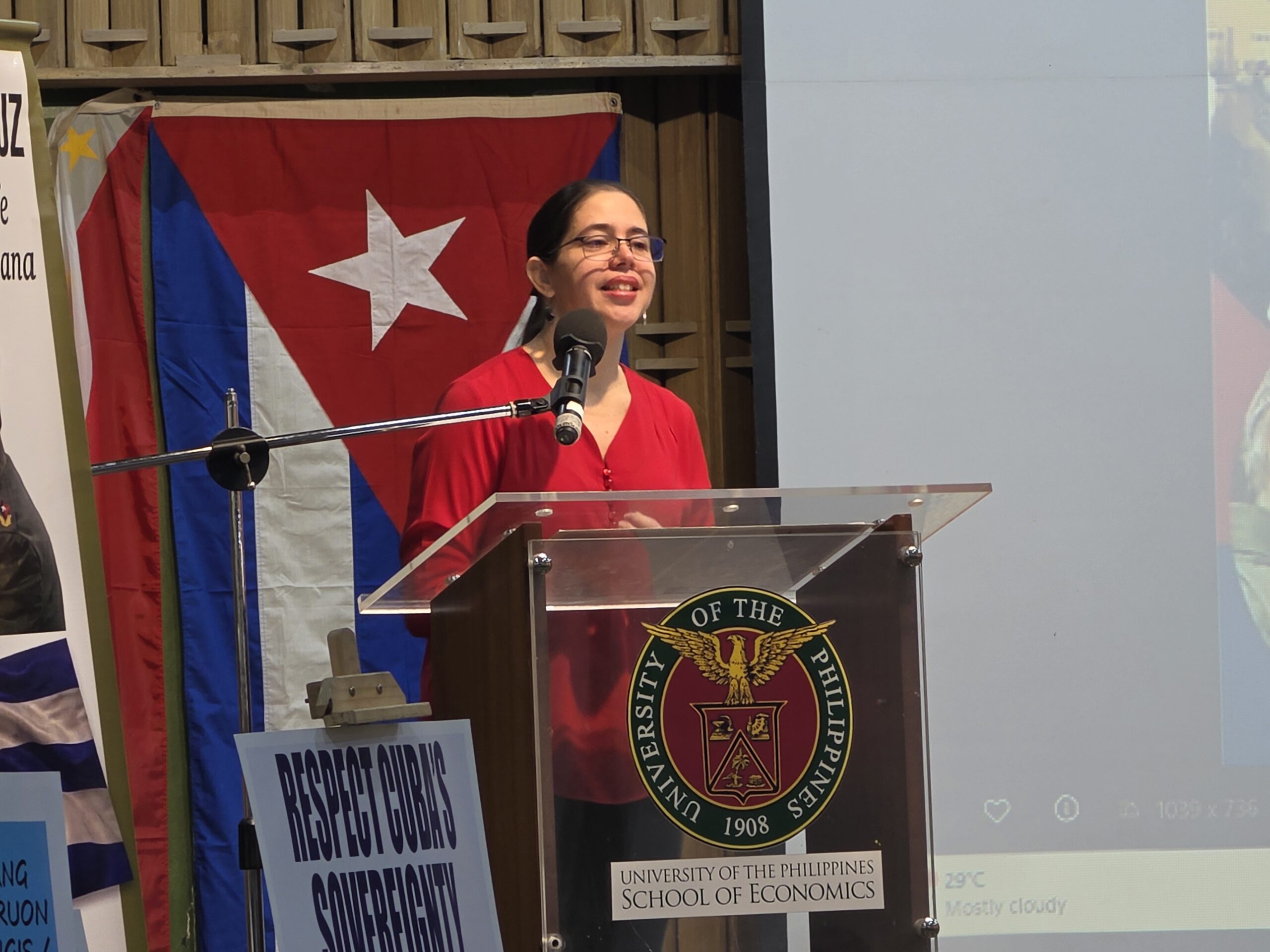
“We are facing a very, very critical situation,” Hernández told a solidarity forum on July 25 at the University of the Philippines Diliman.
She said the crisis has worsened under the Trump administration, which she accused of blocking oil-based energy imports into the island nation since January.
“Today Cuba is experiencing its most serious crisis,” Hernández said.
“The imperialist state headed by Trump has blocked the entry of oil-based energy into the island country since January this year.”
Despite the hardships, she said Cuba remains committed to reforms and social programs, noting that 176 reforms grounded in 23 fundamental pillars covering essential areas of economic and social life have been approved.
“Cuba is not stopping. Cuba is not giving up on its future. Cuba continues to seek paths and solutions,” she said.
Assault to Cuban sovereignty
Philippine solidarity organizations echoed the call to lift the blockade, framing the sanctions as an assault on Cuban sovereignty and the daily lives of its people.
Dr. Robert Macapagal-Corpuz of the Philippine-Cuba Friendship Association (AMISTAD) described the sanctions as a systematic form of violence aimed at forcing submission.
“An empire’s blockade is not just a policy. It is a systematic form of violence designed to starve people into submission,” Corpuz said.
“Cuba does not export terror. It exports life, sending medical brigades across the globe, including here to Asia and the Global South.”
He urged the international community to support Cuba’s right to self-determination, saying solidarity with the Cuban people is not passive.
“The Cuban revolution is not alone,” he said. “We stand shoulder to shoulder with the Cuban people in their fight to defend their sovereignty.”
Lawyer Edwin de la Cruz also of AMISTAD linked the group’s solidarity to the Philippines’ own struggle for national independence, calling for an end to U.S. influence in both countries.
“We stand in solidarity with Cuba, but our humble contribution is driving out U.S. imperialism from our shores and ending the puppetry of the local bureaucratic capitalists, the ruling classes, and establishing a Philippines that is free from U.S. imperialism,” de la Cruz said.
The event, which commemorated Cuba’s National Day of Rebellion and the centennial of former leader Fidel Castro, was organized by AMISTAD alongside other Cuba solidarity organizations and the UP Center for International Studies. It was held at the UP School of Economics Auditorium.
A solidarity statement calling for the lifting of the U.S. blockade and reaffirming support for Cuba’s sovereignty and right to determine its own political and economic future was signed during the event. (davaotoday.com)