
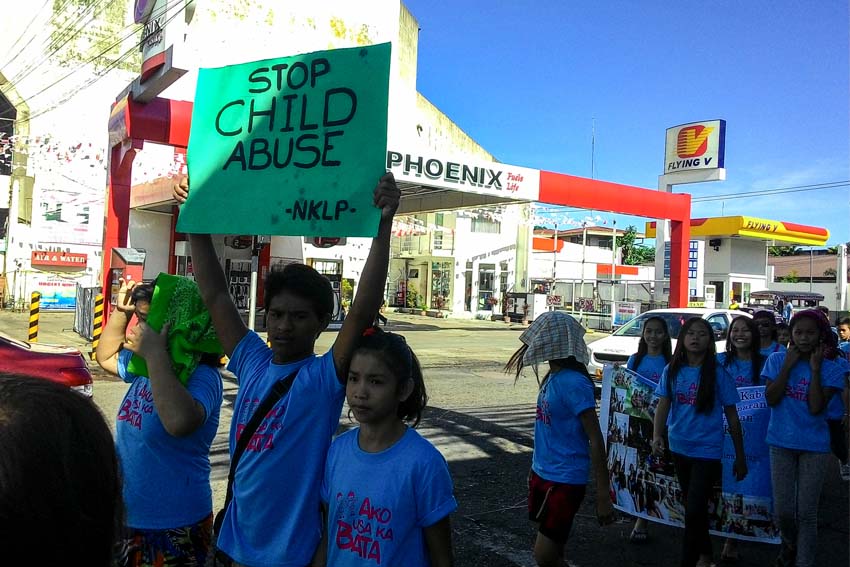
DAVAO CITY, Philippines—Some of Davao City’s children start work before dawn, carrying vegetables in the Bankerohan and Agdao public markets for earnings that serve as their school allowance. The government counted them among 3,819 profiled child laborers in Davao Region in 2025. This year, it has pulled only 85 out.
The Department of Social Welfare and Development in Davao Region (DSWD XI) record on child labor was based on the profile made by the Department of Labor and Employment (DOLE) and Public Employment Service Offices (PESOs).
Of the total, Davao de Oro recorded the highest number at 1,108 children, followed by Davao City with 880, Davao Oriental with 617, Davao Occidental with 553, Davao del Norte with 433 and Davao del Sur with 228.
During the Isyu Karon media forum on Nov. 6, DSWD XI child labor focal person Hannah Princess Taguinod clarified that the 2026 profiling is still ongoing. She warned the number could grow as rising prices and worsening household finances push more children into work to help support their families.
Taguinod said children in Davao City have been found working as street vendors, construction helpers, tricycle and electric-bike drivers, and porters in Bankerohan and Agdao public markets.
Some children also return to work after classes, leaving them little time to rest. Some have become their families’ primary breadwinners because their parents are sick or absent — the youngest assisted by the program is 10 years old.
Anakbayan-Souther Mindanao Region chair Fauzhea Guiani said the government’s response should go beyond warnings and focus on establishing comprehensive mechanisms to protect children’s rights.
“The DSWD’s response to a potential rise in child labor cases should go beyond mere warnings. A comprehensive mechanism and program are necessary to safeguard the rights of children and the youth,” she said in Cebuano in a statement.
Guiani questioned local government efforts to address child labor, pointing to Davao City’s 880 profiled cases, the second-highest in the region. She said many children work in the informal sector under physically demanding and dangerous conditions, contradicting the progressive image the city government seeks to project.
“The local government must also be held accountable for the rising number of children forced into labor. Davao City ranks second in the child labor profile for the entire Davao Region, a reality that suggests the people, especially children struggling in their daily lives, are not truly experiencing the ‘Life is Here’ promise,” she said.
Government livelihood interventions
The DSWD said it provides livelihood assistance to parents of identified child laborers through its Sustainable Livelihood Program, referring families to DOLE when they cannot be accommodated.
Under its SHIELD against Child Labor project — Strategic Helpdesks for Information, Education, Livelihood and Other Developmental Interventions — profiled children receive one-time educational assistance of P5,000 to help them remain in school.
DOLE XI’s Davao City Field Office reported that 61 parents and guardians of profiled child laborers received P1.22 million in livelihood assistance through its Child Labor Prevention and Elimination Program and DOLE Integrated Livelihood Program. Each received a starter kit worth P20,000 for small businesses such as rice retailing, sari-sari stores, motor parts shops, frozen goods vending and mini eateries.
DOLE XI also announced on Oct. 19 that 12 parents or guardians of profiled child laborers would receive P20,000 each under Project AGAKKA, or Alalay para sa Ginikanan Alang sa Kalambuan sa Kabatan-onan, to strengthen household livelihoods and prevent children from having to work.
The City Social Welfare and Development Office implemented its Trabaho, Alalay, sa Bata ug Negosyo sa Ginikanan (TABaNG) program in January 2026.
The program provided school kits and grocery packs to 96 children in street situations and child laborers, livelihood grants to 48 parents, and cash-for-work assistance to 25 parents of children at risk and in conflict with the law, covering 10 city districts including Agdao, Buhangin, Poblacion, Talomo, Toril and Tugbok.
Inflation worsens child labor
Guiani said worsening economic conditions continue to push children and young people into work, citing rising oil prices, low wages and the increasing cost of basic commodities.
The Philippine Statistics Authority reported that national headline inflation reached 7.8% in October 2026, up from 7.2% in September — the highest rate since February 2023 — with inflation among the country’s bottom 30% income households higher still at 9.5%.
“Amid the worsening crisis characterized by high commodity prices and low wages, young people are being driven to enter the workforce,” Guiani said.
She criticized the Marcos Jr. administration for failing to address this worsening economic crisis, specifically by raising wages and lowering the cost of basic goods. (davaotoday.com)

