
COTABATO CITY, Philippines—Violence, voting accessibility and ballot-handling issues marred the first Bangsamoro parliamentary elections Sept. 14 in the Bangsamoro Autonomous Region in Muslim Mindanao.
Local observer group Katungod Bangsamoro called the polls a critical step toward democratic governance despite the problems. Their preliminary report noted security incidents and voter intimidation led to disenfranchisement across 11 precincts in Cotabato City, Maguindanao del Norte and Maguindanao del Sur.
The election marked the first time BARMM voters directly chose representatives for an 80-member parliament after seven years under the appointed Bangsamoro Transition Authority. While long queues appeared even in peaceful areas, security incidents and other problems challenged implementation of the region’s new electoral system.
Former rebels join race
Former combatants and conflict-era leaders participated prominently in the first Bangsamoro parliamentary elections, underscoring the political transition’s significance.
Abdullah Macapaar, known by his nom de guerre Commander Bravo, cast his first ballot at age 64 at Saduc Elementary School in Marawi City. A former Moro Islamic Liberation Front commander in the Lanao areas, he now serves as interim Bangsamoro Parliament member and is the United Bangsamoro Justice Party (UBJP) nominee for parliament.
Interim Chief Minister Abdulraof “Sammy” Macacua, running for a parliament seat in Maguindanao del Norte, also voted in Kabuntalan. He called on candidates and supporters to remain peaceful amid election day violence reports.
Their participation reflected a key characteristic of the region’s political transition, which began with a peace agreement between the MILF and Philippine government and created the Bangsamoro Autonomous Region in Muslim Mindanao.
Amirah Lidasan of the Moro-Christian Peoples Alliance said the election held significance beyond selecting the region’s first elected parliament.
“For a long time, the Bangsamoro people have waited for this election to finally take place as part of their struggle for the right to self-determination,” she said.
Uneventful and security delays in voting
Some areas enjoyed uneventful election days while others faced security incidents that disrupted voting in the first Bangsamoro parliamentary elections.
In Upi, Maguindanao del Sur, Tiruray voter Boying Ortega described voting at Nuro Central Elementary School as peaceful. “Residents of Upi are peace-loving,” he said. Similar calm prevailed in Parang, Maguindanao del Norte, where voter Datu Mala Lumbos and an electoral board member at Mac-ale Memorial Elementary School reported no serious problems.
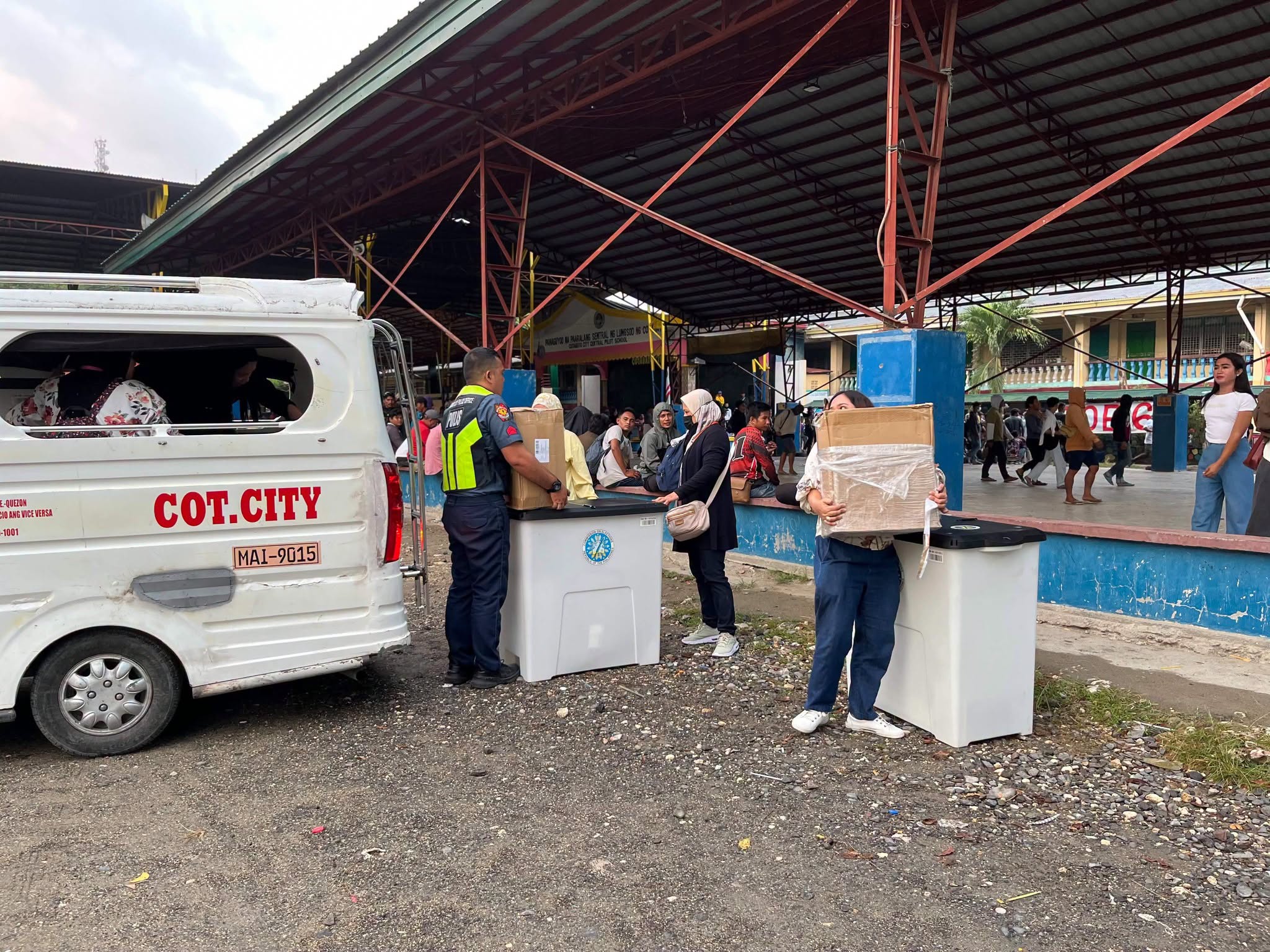
However, voting was interrupted elsewhere by gunfights and intimidation. In Shariff Saydona Mustapha, armed confrontation forced voters to abandon polling centers around 11 a.m. At Cotabato City Central Pilot Elementary School, multiple gunshots prompted security forces to enter the building.
Fauzhea Guiani, a voter and Anakbayan Southern Mindanao Region spokesperson, witnessed ballot tampering attempts before disorder erupted. A woman tried to take her ballot to feed it into the machine, but Guiani refused.
“I should be the only one who knows what was on my ballot and whom I had voted for,” she said. She managed to cast her vote and receive her voter receipt before chaos broke out, warning such incidents could deter future turnout.
Lidasan, also at Central Pilot School, saw rival groups clash and voters struggling to access polling areas.
“We saw people having to assert their right to vote by forcing their way into the polling precincts,” she said, attributing tensions to deliberate obstruction attempts.
Katungod Bangsamoro observers confirmed violence and disruptions in Cotabato City, Matanog, Sultan Mastura and Shariff Saydona Mustapha.
Delays on delivery of election equipment, machine malfunctions
Katungod said several precincts opened late because of delays in the arrival of election equipment and paraphernalia, affecting some senior citizens and persons with disabilities who arrived early.
At Cotabato City Central Pilot School, the group said some senior citizens complained about difficulty reaching precincts located on the second floor.
Katungod also reported defective vote-counting machines at voting centers in Upi, Datu Saudi Ampatuan, Datu Odin Sinsuat and Shariff Aguak. Commission on Elections technical personnel were reportedly available to address the problems.
In Shariff Aguak, Maguindanao del Sur, voting was suspended after an automated counting machine malfunctioned despite repeated attempts to operate it.
In Basilan, the Commission on Elections extended voting in Al-Barka until 9 p.m. after security tensions delayed the entry of teachers and the preparation of election materials.
Heavy security scale, visibility raises questions
Authorities deployed security forces across the region to prevent election-related violence, drawing mixed reactions from observers.
Katungod Bangsamoro noted heavy security presence in some areas. While acknowledging the security purpose, the group questioned whether its scale and visibility could discourage voters from approaching polling places.
Amirah Lidasan similarly reported soldiers, police and military vehicles were highly visible around some precincts, particularly in Cotabato City, potentially making voters reluctant to go to the polls.
The group also reported Philippine National Police personnel were deployed to augment electoral boards after teacher withdrawals, addressing staffing shortages.
However, Katungod called for assessment of whether police inside polling centers affected voter participation.
Both groups raised concerns about allegations concerning the Bangsamoro Islamic Armed Forces of the Moro Islamic Liberation Front (BIAF-MILF).
Lidasan said her organization received messages alleging BIAF-MILF affiliates could retaliate over disenfranchisement of UBJP supporters and other groups. She expressed concern such reports could associate the former rebel organization with election violence despite its participation in the peace process.
Katungod likewise disputed allegations linking BIAF-MILF members to possible violence or vote-buying efforts for a political party in Cotabato City.
Irregularities inside polling precincts
Beyond security concerns, monitoring organizations documented voter assistance and ballot-handling irregularities during the elections.
The Legal Network for Truthful Elections (Lente), which deployed observers in 209 voting centers, found instances where voters did not personally feed ballots into vote-counting machines.
Of 826 monitoring reports on the issue, 209 — about 25% — indicated someone other than the voter inserted the ballot. Lente recorded voter assistance in 32% of those reports, including cases where watchers served as assistants despite being prohibited from doing so.
Guiani’s experience at Cotabato City Central Pilot Elementary School reflected similar concerns, though she did not identify the woman who attempted to take her ballot as an election official or political representative.
Katungod reported separate incidents where electoral board members fed ballots into machines without voters present. Election personnel said the machines were operating slowly and voters had already left. The group also cited a power outage in Matanog that affected voters’ ability to verify ballot processing.
Katungod called for assessment of the automated voting system, including verifiable audit logs, paper records and comparisons of electronic and physical results. The group also reported allegations that some local government officials prevented voters perceived as supporting rival parties from entering precincts.
Women participation
Katungod Bangsamoro observers documented varying gender participation patterns at some polling precincts during the parliamentary elections.
The group noted women voters and candidates were present, with regional political parties complying with the requirement that women comprise at least 30% of nominees.
At Cotabato City Pilot Elementary School, observers reported many young men, some wearing masks, lined up before polls opened for elderly voters and persons with disabilities. Relatively few women were present at the time.
In Shariff Aguak, a predominantly male crowd gathered in the afternoon; observers were told women had voted earlier in the day.
“These observations were not sufficient to establish a broader pattern but could warrant further examination,” the group said.
Katungod also noted young people’s participation as voters and election volunteers. Some security incidents occurred in or near schools serving as polling places.
Political clans
Katungod Bangsamoro also raised concerns about the role of established political families in the election.
According to the group, its observers noted the influence of political clans in the selection of candidates and nominees and received reports of attempts to influence voter behavior.
The Bangsamoro Electoral Code contains provisions addressing political dynasties, which Katungod said should be assessed following the election.
Katungod also reported oversized campaign tarpaulins and other campaign materials in prohibited areas, including near voting centers.
What comes after the first parliamentary vote
The Commission on Elections (Comelec) described the overall elections as generally peaceful despite violent incidents reported in some areas, including Cotabato City.
“At present, the election is generally peaceful. However, there were unfortunate incidents, particularly here in Cotabato City, which saddened us,” Comelec Chairperson George Erwin Garcia said at a news conference.
Garcia also condemned violence that resulted in deaths and injuries, saying such incidents should not happen.
Lawyer Carlos Isagani Zarate, convener of Katungod Bangsamoro, urged those elected to the Bangsamoro Parliament to uphold voter trust.
“Do not betray the trust that the people have placed in you,” Zarate said, adding that voters especially trusted former mujahideen.
Garcia expressed optimism that voter turnout could reach 80% of BARMM’s 2,393,202 registered voters. (davaotoday.com)

