
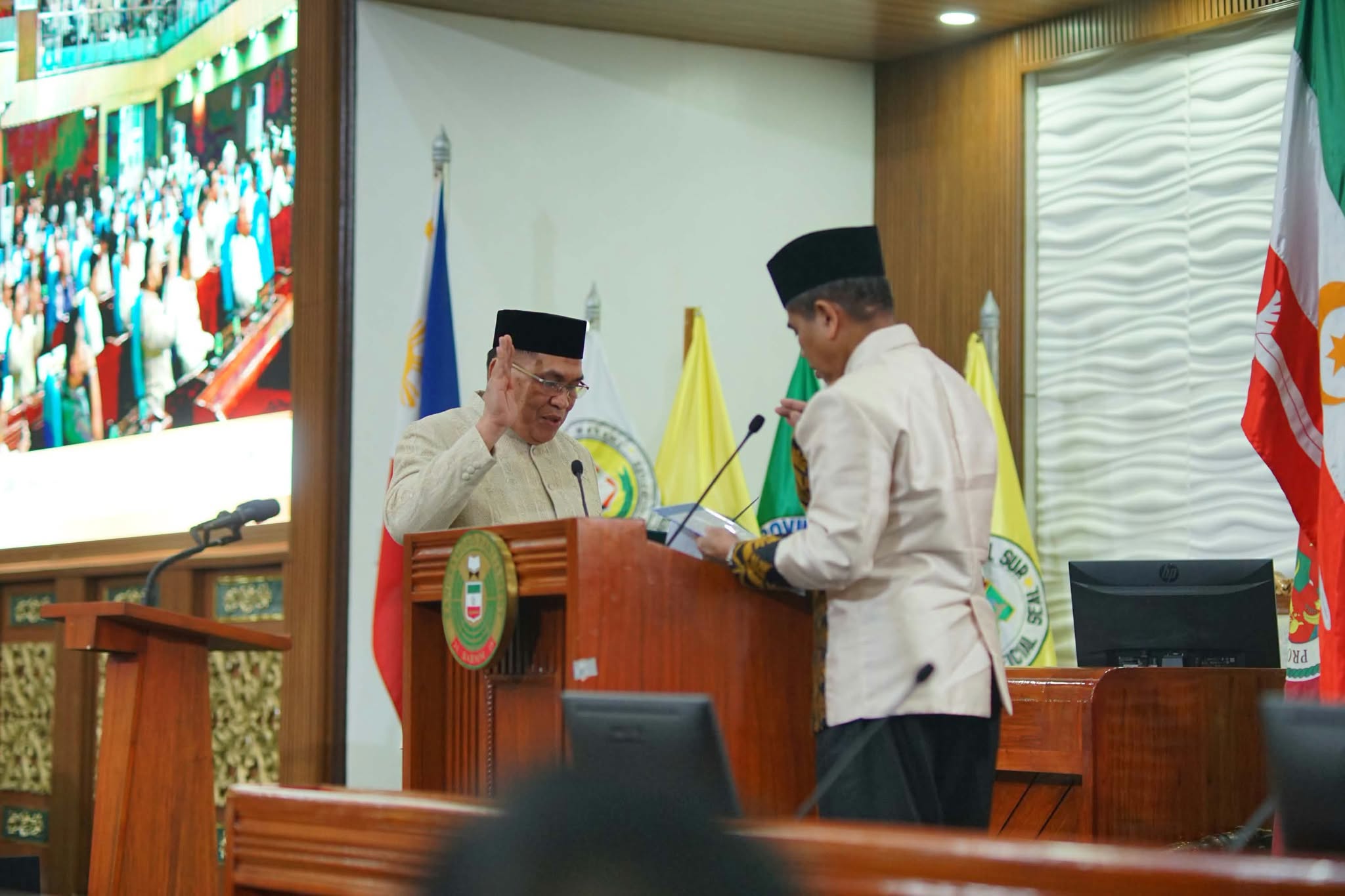
DAVAO CITY, Philippines—The Bangsamoro Parliament was convened for the first time in Cotabato City on Oct. 30, after years of delay in electing its members.
It is the legislative body formed to lead the Bangsamoro Autonomous Region in Muslim Mindanao (BARMM).
It elected Abdulraof ‘Sammy Gambar’ Macacua, a Moro Islamic Liberation Front (MILF) leader who once led its armed wing, as its first chief minister.
Macacua won 51 votes in the 80-member parliament, defeating former chief minister Ahod ‘Al Haj Murad’ Ebrahim, chair of the MILF, who received 27 votes. One member of parliament abstained and another was absent.
Macacua’s election followed internal rifts that began with his appointment as interim chief minister by President Ferdinand Marcos Jr. in March 2025, replacing Ebrahim.
The MILF suspended Macacua earlier this year from his post as chief of staff of the Bangsamoro Islamic Armed Forces (BIAF) for actions it deemed “inconsistent with the political line and collective decisions of the MILF leadership.”
Macacua left the United Bangsamoro Justice Party (UBJP), which the MILF organized, and ran as an independent candidate for the 3rd district of Maguindanao del Sur. He later joined the Bangsamoro Federation Party (BFP).
Macacua’s election followed internal rifts that began with his appointment as interim chief minister by President Ferdinand Marcos Jr. in March 2025, replacing Ebrahim.
In the Sept. 13 polls, both Ebrahim and Macacua won in their respective districts.
The BFP clinched 31 seats in the parliament, just one more than the UBJP, which received 30. But neither captured the majority of 41 needed to elect the chief minister.
Observers said a coalition between BFP and UBJP would demonstrate unity between Ebrahim and Macacua.
But Rappler Editor Herbie Gomez described Murad as “steeped in ideological rigidity” that failed to impress the entrenched political clans in BARMM.
Mindanews columnist Maugan Mosaid pointed out UBJP’s campaign describes itself as the legitimate group to carry on the Bangsamoro struggle “runs on exclusivity.”
Macacua has been seen as a viable leader. As Gomez points out, he is “a man who understands the game.”
A month after the elections on Oct. 14, Macacua announced he had 46 members of parliament (MP) committed to establishing a coalition.
Days before the parliament’s assembly, Macacua made appearances before the Mindanao Development Forum to discuss security and investments.
He also secured endorsement from Nur Misuari, founding chair of the Moro National Liberation Front (MNLF), the MILF’s predecessor. The MNLF ran for parliament under the Mahardika Party but lost.
By the time the Bangsamoro Parliament opened, the vote was a formality.
Accepting his role as head of parliament, Macacua urged leaders to set aside their differences and unite behind governance.
“Let this new chapter be remembered not for who gained power or who relinquished it, but for how we collectively used the opportunity of self-governance to bring lasting and meaningful change to our people,” he said.
“I accept this mandate not as a personal victory, nor as an entitlement of political leadership, but as a sacred amanah that carries with it the hopes, expectations, and aspirations of the Bangsamoro people,” he added.
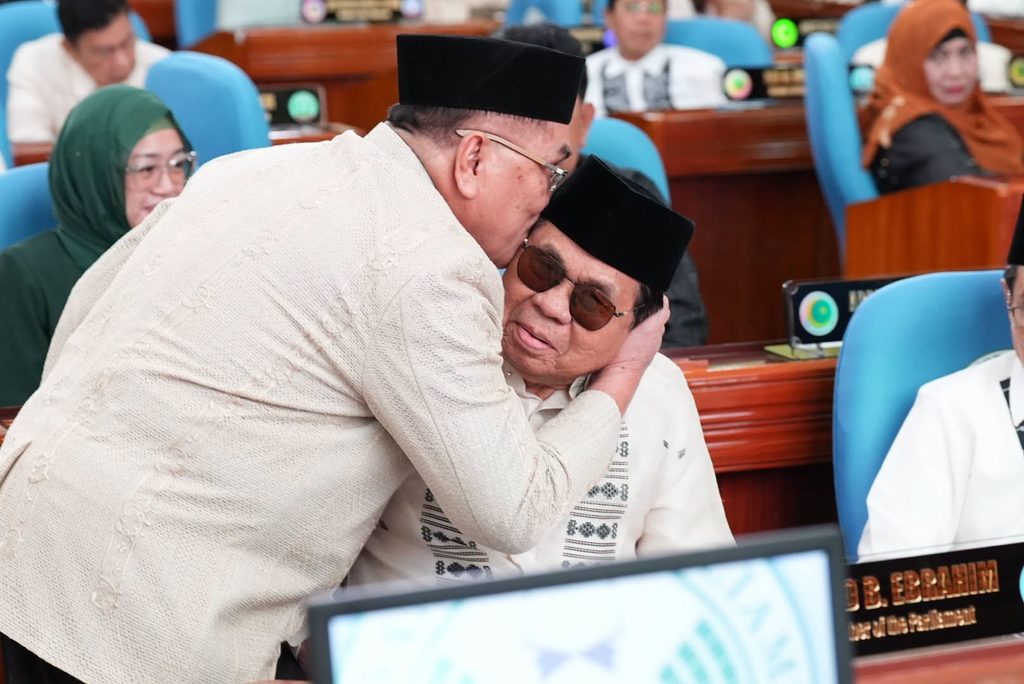
As he called for unity, Macacua acknowledged Ebrahim and vowed to continue the aspirations the MILF pursued from the battlefield to the negotiating table.
“To our chairman in the Moro Islamic Liberation Front, the Honorable Ahod “Al Haj Murad” Ebrahim. Sir, I want to personally assure you that the moral governance agenda you have started and steadfastly championed will remain at the very heart of my leadership,” Macacua said.
Macacua said he recognized the sacrifices, principles and aspirations upon which the vision was built, and called it both a personal commitment and a moral responsibility to carry it forward. He pledged to remain faithful to the vision, not only in words but in every decision and action of his administration, until the very last day of his mandate.
Macacua also outlined six priorities for his administration that he wants to accomplish within his first 100 days.
But the parliament’s opening session was marred by disputes over the minority bloc.
While the majority elected its committee leaders, it did not allow the minority to elect its own leader.(davaotoday.com)

