
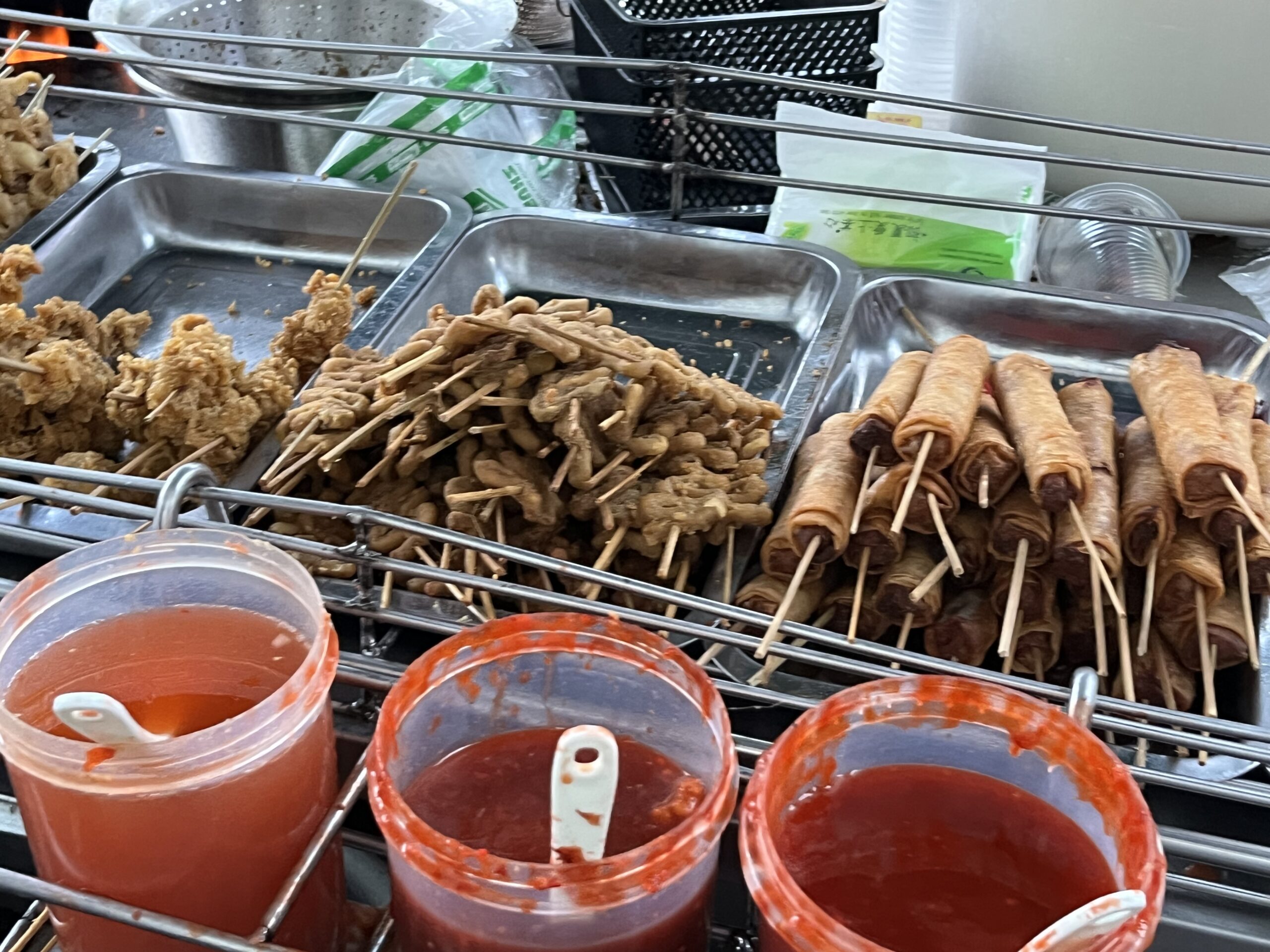
DAVAO CITY, Philippines—Davao health authorities say food samples can be tested for mercury, but a recent study detecting the toxic metal in selected street food samples has yet to reach the government’s health alert system.
The Department of Health in Davao Region (DOH XI) said it would review findings from a study by University of the Immaculate Conception (UIC) researchers, while the Food and Drug Administration (FDA) clarified that monitoring ordinary street-vended food falls under local government units’ responsibility.
The exchange during a DOH media engagement on Oct. 30 raised questions about how the agencies coordinate food safety monitoring, particularly when research identifies possible chemical hazards in food sold in public markets.
Dr. Grace Amistoso, DOH XI officer-in-charge assistant regional director, said the department has laboratories that can test food for contaminants such as mercury.
“We [can] test those foods for mercury content so that we will be able to inform the public,” Amistoso said.
She said the study had only recently circulated online and had not been brought to the department’s attention before the media engagement.
“Currently, it hasn’t been part of our alert. But we will look into that report,” she said in a mix of English and Filipino.
Study detects mercury and lead
The study, titled “Safety evaluation of potential toxic metals exposure from street-vended foods consumed in Davao City, Philippines,” was published June 30, 2026, in the journal Food Science and Preservation.
Researchers examined 60 samples collected from two high-traffic markets in Davao City: 20 each of isaw, kwek-kwek and siomai.
Mercury levels exceeded the reference value used by the researchers in 80% of isaw samples, 80% of kwek-kwek samples and 90% of siomai samples.
Lead exceeded the study’s reference level in 25% of isaw samples, 30% of kwek-kwek samples and 20% of siomai samples. Cadmium was below the detection limit in all samples.
The researchers also estimated exposure based on assumed daily consumption, finding higher exposure per kilogram of body weight among children than adults.
The study reported chronic hazard index values above 1 for children consuming isaw and siomai, at 1.66 and 2.59, respectively. Kwek-kwek had a value of 0.43. The researchers attributed the higher estimates mainly to mercury exposure.
A hazard index above 1 indicates a potential non-carcinogenic health concern under the assumptions used in the assessment. It does not establish that consumers have become ill or that all servings of these foods pose the same risk.
The findings have limitations. Samples came from only two markets and cannot represent all street food sold across Davao City, and the researchers assumed daily consumption of each food rather than using actual citywide consumption data.
Because specific maximum limits for the prepared street-food categories were unavailable, the study used reference levels from the Codex Alimentarius. These should be understood within the researchers’ methodology and not treated as proof that all sampled products violated a specific local regulatory limit.
Researchers urge to report findings
Amistoso said research findings should be reported to the appropriate government agencies so they can be assessed and used to guide public health measures.
“If this is just confined to your school, the research without notifying us, we cannot tackle it, and we will put people in danger,” Amistoso said.
She added that health-related research could help the department develop policies and identify necessary interventions. DOH XI has an environmental and occupational health program, which Amistoso said covers concerns the department needs to monitor.
FDA points to city health offices
Amistoso also mentioned the FDA’s testing capacity in Tagum City.
Eba Marie Antonette Inis, FDA Mindanao East Cluster officer-in-charge Director II, clarified that the agency does not routinely test ordinary street-vended food.
“FDA does not test street food because that’s under the purview of the city health office, the local government unit,” Inis said.
She explained that the FDA regulates prepackaged food products with shelf lives and expiration dates. Packaged fish balls sold in supermarkets fall under the agency’s jurisdiction, while fish balls sold by ambulant vendors are handled by local health authorities.
The distinction places direct responsibility for monitoring street food on city and municipal governments.
Under Republic Act 10611, or the Food Safety Act of 2013, local government units are responsible for food safety in street-food sales, including ambulant vending. The law also provides for national government agencies to support local governments in food safety monitoring.
Davao City’s City Health Office conducts sanitary inspections of food establishments and issues sanitary permits. However, the existence of sanitation inspection does not establish whether routine laboratory testing for heavy metals in street-vended food is also being conducted. (davaotoday.com)


