
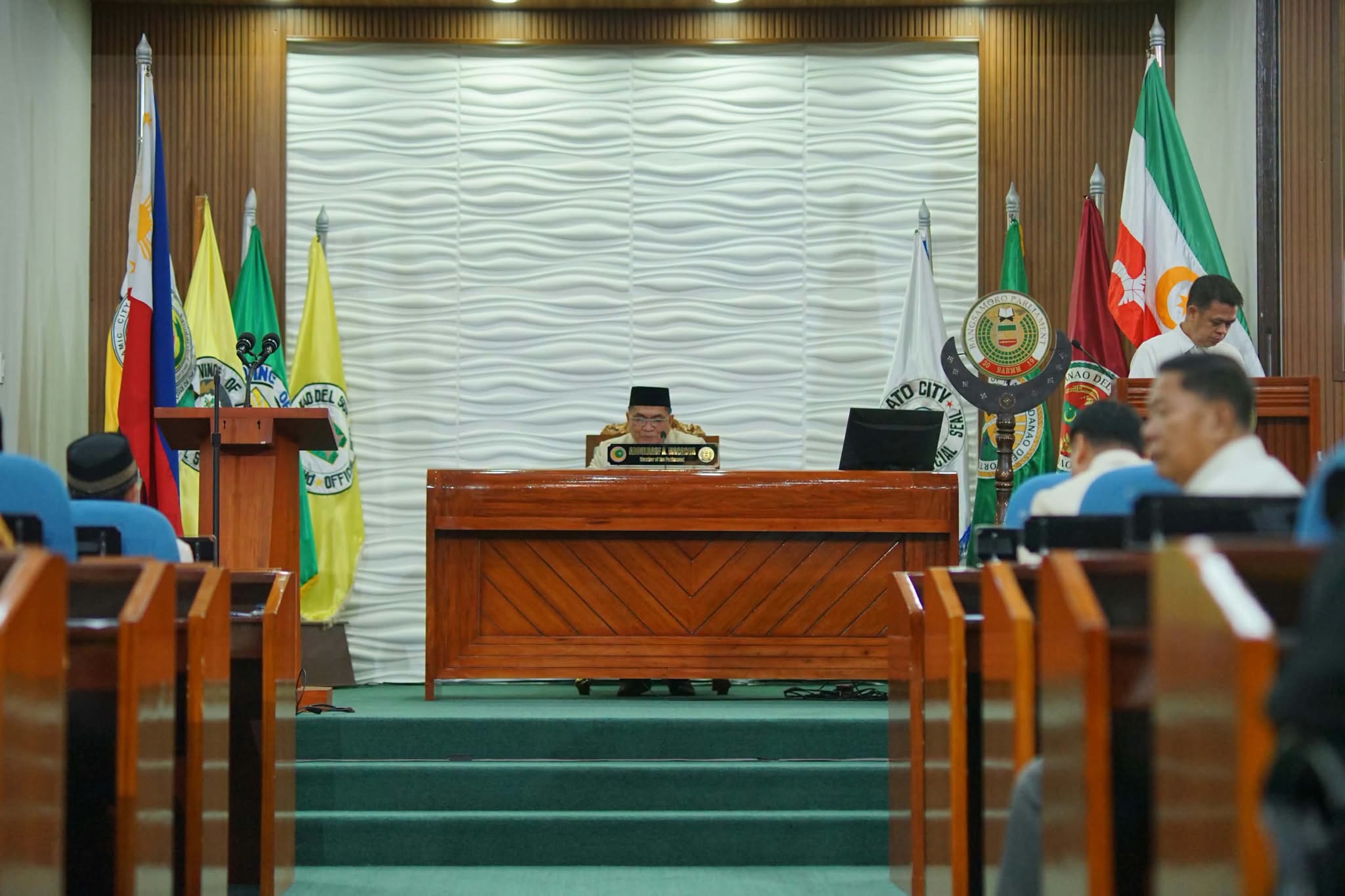
DAVAO CITY, Philippines – A consortium of civil society and progressive groups called on the newly elected Bangsamoro Parliament to make the fight against corruption its defining commitment, and to assert genuine autonomy by rejecting interference from Malacañang.
Katungod Bangsamoro, a non-partisan consortium of civil society organizations, and various progressive groups lauded the birth of the first regular parliamentary government as a milestone in the long years of Bangsamoro peace process.
Abdulraof “Sammy Gambar” Macacua’s election as chief minister of the first Bangsamoro Parliament prompted the groups to warn of Malacañang interference, citing his 2025 appointment as interim chief minister replacing Ahod “Al Haj Murad” Ebrahim who served the autonomous government since 2019.
Macacua, a former chief of staff of the Bangsamoro Islamic Armed Forces, the Moro Islamic Liberation Front’s (MILF) armed wing, and chairman of the Bangsamoro Federalist Party (BFP), won 51 votes to Ebrahim’s 27 during the Parliament’s opening session in Cotabato City on Oct. 30. One member abstained and another was absent.
Macacua’s win came after the Sept. 14 parliamentary elections ended more than seven years of appointed Bangsamoro Transition Authority (BTA) governance and established the region’s first regular parliamentary government.
The Parliament elected Amer Zaakaria Rakim of the BARMM Grand Coalition (BGC) as speaker.
President Ferdinand Marcos Jr., who attended the opening session, challenged members of Parliament to confront the hard part of becoming an effective government — one that sustains the gains of peace by converting the decades-old struggle for autonomy into good governance and economic opportunities for every Bangsamoro community.
Marcos highlighted the significance of responsive legislation, delivery of essential services and prudent management of public resources.
“Above all, it means ensuring that the dividends of peace are felt in the daily lives of every Bangsamoro family,” Marcos Jr. said.
The 80-member Bangsamoro Parliament will serve a five-year term until June 30, 2031. It will pass legislations, approve the budget and oversee the government programs on education, healthcare, infrastructure, agriculture, employment and other services for its constituents.
The Parliament has 40 party representatives, 32 district representatives and eight sectoral representatives from women, youth, traditional leaders, the Ulama, non-Moro Indigenous peoples and settler communities.
Fauzea Guiani, chairperson of Anakbayan-Southern Mindanao, welcomed the political transition as the fruit of decades of peace talks but criticized the intervention in Bangsamoro affairs by the Marcos administration.
“The involvement of the national government contradicts the autonomy accorded to the region,” Guiani told Davao Today.
She recalled that the Moro struggle was born out of self-determination and resistance to human rights violations, especially during the martial law era, citing landlessness, hunger and insufficient social services that resulted in armed movements.
“Surely, the Bangsamoro people are watching and are critical now more than ever,” Guiani said.
Honor peace deal commitments
Katungod Bangsamoro challenged the Parliament to confront historical injustices, deep-seated grievances and political dynasties which contributed to decades of armed rebellion.
The consortium asked the government to take actions on transitional justice, honor its commitments under the peace agreements and respect the region’s autonomy.
“Autonomy must never be reduced to the sharing of political positions, the accommodation of powerful families or the distribution of economic opportunities among favored interests,” Katungod Bangsamoro said in a statement.
Its co-convener, lawyer Carlos Isagani Zarate, warned that previous autonomous arrangements failed to fully address land dispossession, discrimination, political exclusion, economic marginalization and militarization.
“The failure of the earlier arrangements was due to the weakness of the region’s leaders and the intervention of the government in connivance with the local political and economic elite,” the consortium said.
The Moro-Christian Peoples Alliance (MCPA) hoped Macacua’s election would unite Parliament members after a divided electoral campaign.
MCPA secretary-general Amira Lidasan also warned that Macacua’s alignment with the Marcos administration could jeopardize the independence of the regional government.
“We believe the new Parliament will face greater vulnerabilities and challenges, particularly because of the chief minister’s alignment with the interests of Malacañang,” Lidasan told Davao Today.
MCPA accused the Marcos administration of interfering in the political affairs of Bangsamoro, exacerbating divisions within the MILF during the election campaign and threatening the gains of the peace process.
The alliance urged the Parliament to prioritize issues ignored amid political rivalry, such as human rights violations stemming from militarization, the plight of families displaced by the Marawi siege in 2017, and the landlessness of Moro farmers and non-Moro Indigenous peoples resulting from the conversion of agricultural lands into large-scale plantations.
Address AD claims, unequal opportunities
Katungod Bangsamoro urged legislative measures to address ancestral domain claims, land grabbing, resources exploitation and unequal economic opportunities, alongside protection for Moro communities, non-Moro Indigenous peoples and marginalized sectors.
The consortium said there was a need for inclusive governance for farmers, fisherfolk, workers, women, youth and other marginalized groups.
Zarate said it was the national government’s primary duty to address historical injustices and human rights violations through truth-seeking, recognition, accountability, restitution, reparations and guarantees of non-recurrence.
“Peace, after all, cannot be measured simply by the absence of armed encounters,” the consortium added.
Katungod Bangsamoro also cautioned that the parliamentary system can produce the same problems as previous autonomous governments if unchecked by political dynasties, corruption and patronage.
It listed clan domination, money politics, electoral violence, alleged manipulation and factionalism as issues that require urgent attention.
It listed clan domination, money politics, electoral violence, alleged manipulation and factionalism as issues that require urgent attention.
“The new Parliament must make the fight against corruption a defining commitment of its administration,” Katungod Bangsamoro said.
Transparency
As the Parliament started to organize its legislative and oversight functions, Katungod Bangsamoro demanded transparency in government transactions and expenditures, independent oversight, accountability for misuse of public funds, electoral reforms and wider public participation.
In the Parliament’s inaugural session, legislators elected Bantuas Lucman as secretary-general, tasked with overseeing administrative services, legislative operations and the safeguarding of official records.
The Public Information, Publication and Media Relations Division of the Parliament said committee chairpersons were assigned as an initial step to conduct legislative deliberations, public hearings, investigations and oversight of government programs.
“The Bangsamoro people did not struggle for generations merely to establish another regional government or replace one set of political elites with another,” the consortium said.
It said the challenge was clear—that the region must not repeat the failures of past autonomy projects.
“Break the cycle of elite domination, corruption and political exclusion,” Katungod Bangsamoro said. GCA (davaotoday.com)

