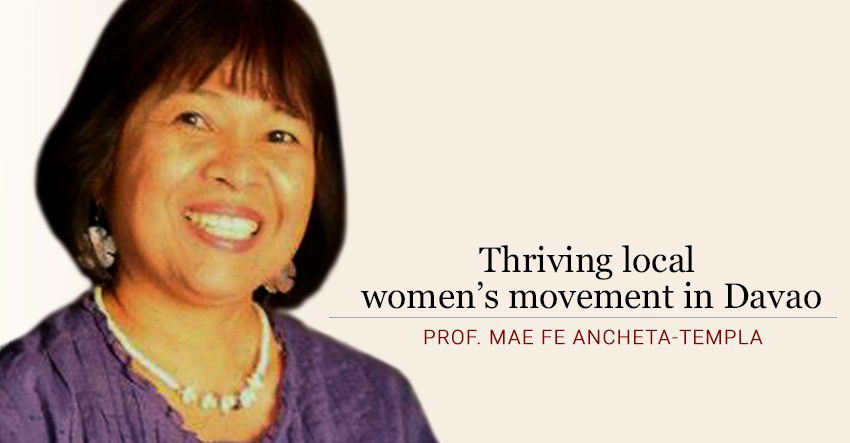
Thriving local women’s movement in Davao
Battering, sexual harassment, sex trafficking, prostitution and dislocation due to land-use and crop conversions and other forms of deprivation continue to haunt local grassroots women.

Battering, sexual harassment, sex trafficking, prostitution and dislocation due to land-use and crop conversions and other forms of deprivation continue to haunt local grassroots women.

In the Philippines, particularly in Mindanao, problems confronting families with members having unmet needs related to ageing are more pronounced today than ever due to further marginalization, deprivation and alienation brought about by chronic economic crisis in the country.

Just two days before New Year and two days after my own daughter's Catholic church wedding rites, the CBCP President, Bishop Socrates Villegas, made a statement that the wedding liturgy stands as is.

Dissent is a requirement for a dynamic democracy to prevail. Yet recent developments in the social movements such as the Lumad struggle for their right to ancestral land and children’s education highlighted in the social and mass media bring us to a mode of reflection what these rights are in light of the historic needs of the indigenous peoples of Mindanao.

For decades the country has proudly produced legal bases on its treatment of women in both private and public spheres. From the Family Code, Women in Nation-building Act, Magna Carta of Women to Reproductive Health, we could say it is indeed a fertile setting, not only in land and other natural resources, but also in social landscape.