
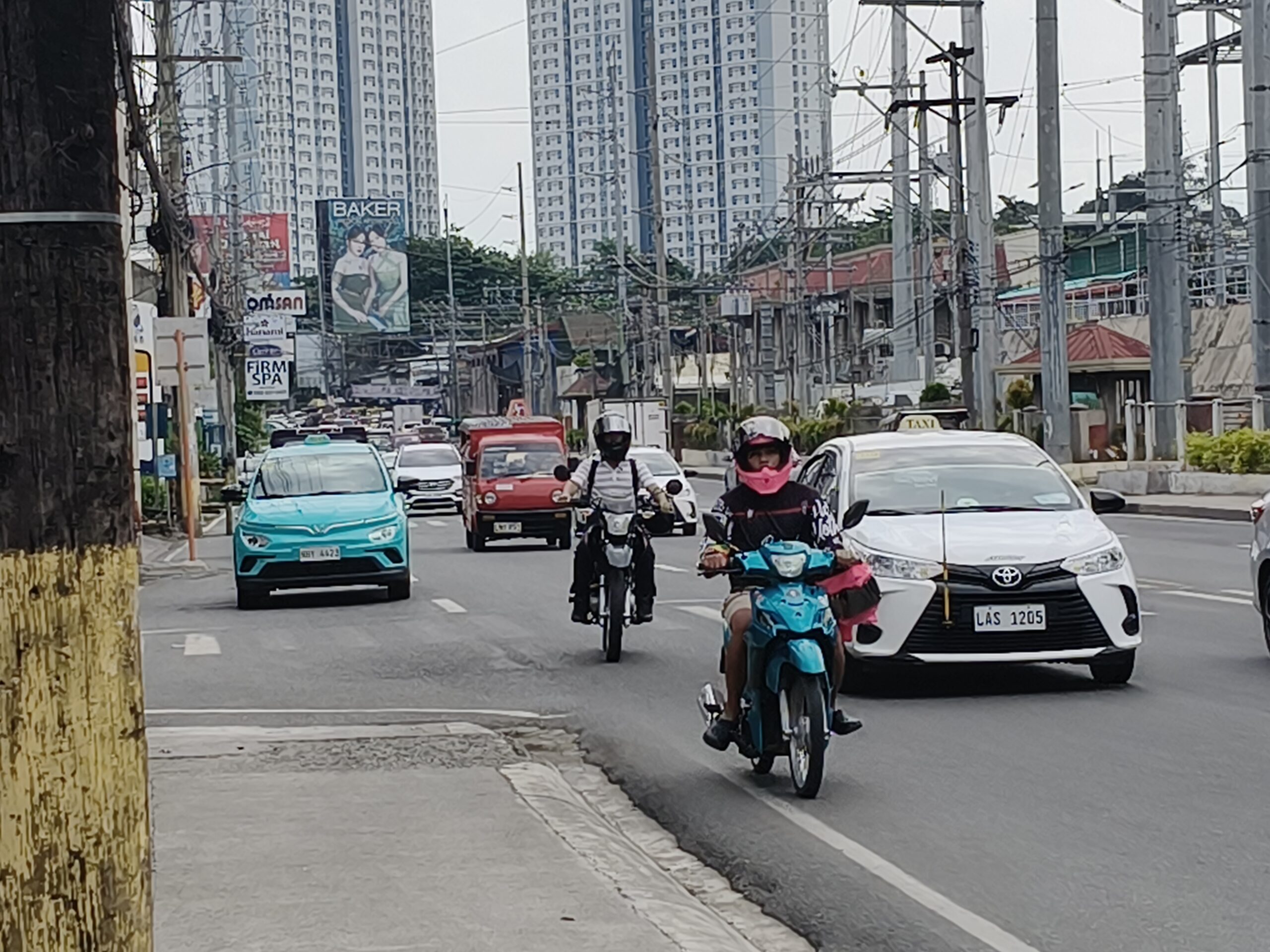
DAVAO CITY, Philippines – Every day for 32 years, Sergio Andaya Jr. started his work the same way — waking up and pulling into a gasoline station to refuel before hitting the roads of Davao City in search of passengers.
Since switching to an electric taxi in September 2025, he doesn’t stop anywhere anymore. He plugs in at the company’s charging station and goes.
Andaya no longer thinks about spending 3,000 a day on fuel.
“Now it’s plug-in. I just need to wait 30 minutes for the battery to charge up to 80 percent. And that’s enough for 480 kilometers or even more,” he said.
The veteran driver sees little else that is remarkable about the switch, aside from one thing passengers notice immediately. “The air-conditioner works better now, and the passengers feel more comfortable.”
But the arithmetic is what matters.
Conventional taxi drivers in Davao spend 3,200 to 3,500 per day on gasoline. Charging an electric vehicle (EV) fully costs 1,500 or less. That is a daily difference of 1,700 to 2,000 money that, for fleet operators with multiple vehicles, adds up to hundreds of thousands of pesos a year.
“In terms of finances, it is a great difference because of the high price of gasoline,” Andaya said.
Maintenance has changed too. “There are no oil changes and no engine servicing anymore,” he said. “We used to change the engine oil once a month before.”
But Andaya is cautious about calling electric vehicles perfect. What worries him is battery replacement.
“It is most likely that the owner will have to replace the battery. It can cost up to P250,000.”
That figure looms large. A typical entry-level electric vehicle in the Philippines which sells for roughly 1.4 million would see a 250,000 battery replacement amount to nearly 18 percent of its purchase price, enough to wipe out months of fuel savings in a single transaction. Though global battery prices fell to an average of about $108 per kilowatt-hour in 2025, replacement packs in the Philippines remain costly due to import duties, limited local servicing, and the fact that few vehicles on the road are old enough to have needed one yet.
Andaya’s story is one example of a shift underway across the Philippines. Electric vehicles (EVs) are gaining traction as an alternative mode of transport, promoted for cleaner air, lower operating costs and reduced dependence on petroleum imports. National policy, local legislation and private investment are all pushing in the same direction.
Davao City has positioned itself at the forefront of this transition in Mindanao. It is the only city on the island with a local ordinance encouraging electric vehicles while actively attracting investment in commercial EV fleets and charging stations.
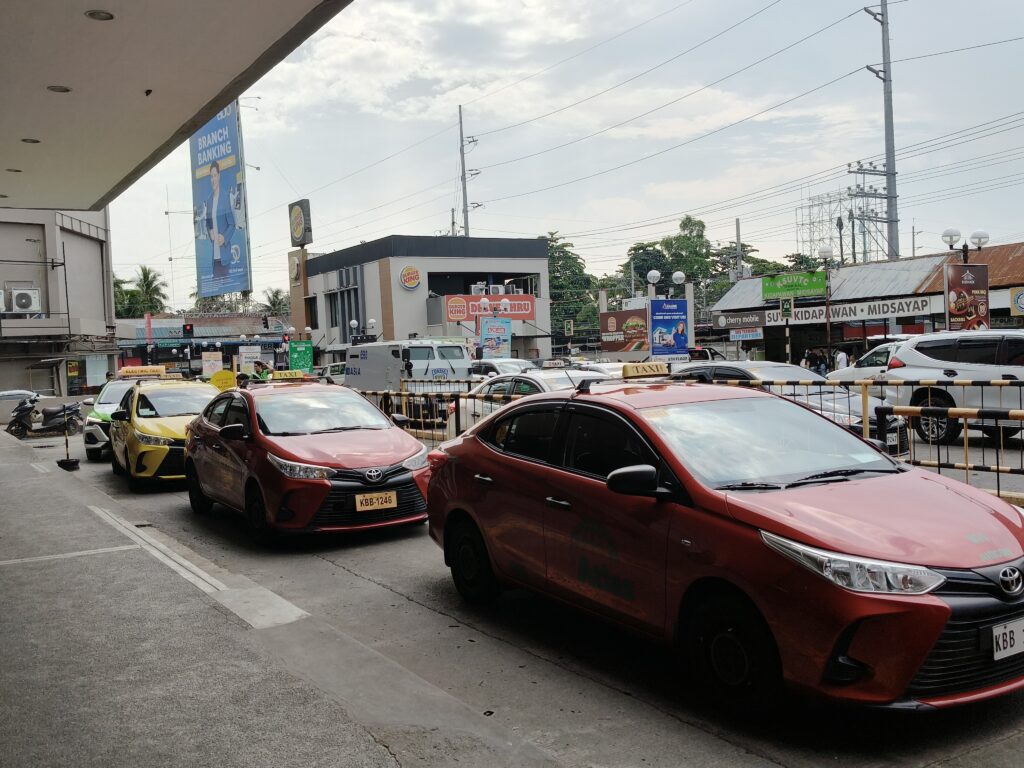
Data from the Land Transportation Office show that 1,688 battery-electric and hybrid electric vehicles had been registered in Region XI as of December 2025 — 603 battery-electric and 1,085 hybrids. Nationwide, the figure stood at roughly 42,000. But in a region with hundreds of thousands of registered vehicles, those 1,688 represent less than one percent of the fleet , a reminder that despite the enthusiasm, the industry is still in its earliest stages.
Most electric vehicles, charging stations and dealerships in the Philippines remain concentrated in Metro Manila, CALABARZON, and Central Luzon. Davao’s numbers, while growing, are a fraction of what is seen in those more developed markets.
The local ordinance
Rather than wait for electric vehicles to appear on its roads, Davao City began building the regulatory groundwork for their arrival. The result was the Electric Vehicle Ordinance of Davao City, initiated by Councilor Temujin “Tek” Ocampo.
“The air quality of Davao is very good at the moment. But we need to prepare ourselves against any future problems,” Ocampo said.
The ordinance supports the national Electric Vehicle Industry Development Act (EVIDA), passed in 2022, which aims to incentivize EV manufacturing, charging station installation and adoption across public and private sectors. But where EVIDA establishes the national framework, Davao’s ordinance creates local mechanisms covering not only privately owned vehicles but also public transport, including the electric taxis already on the city’s streets.
Ocampo sees the ordinance as more than an environmental measure. “We would like to encourage investments into Davao City, not only electric vehicles but also assembly plants and charging stations,” he said.
The ordinance also addresses a problem few local governments have tackled: battery waste. Lithium-ion batteries contain toxic components that require proper disposal and recovery.
“Another reason we decided to develop this ordinance is the problem of waste management related to batteries, since lithium-ion batteries are very toxic,” Ocampo said. The ordinance calls for systems of battery recycling and electronic waste management.
Consumer protection is another pillar. The ordinance prohibits the electronic deactivation of financed electric vehicles due to payment defaults, a provision designed to build public confidence. “It is not going to be economical in the first place,” Ocampo acknowledged. “But it is good for the environment.”
Even after the ordinance’s passage, much remains to be done. The Implementing Rules and Regulations are still pending, held up by questions about charging infrastructure, electricity consumption and implementation logistics.
Ocampo said representatives of Davao Light and Power Company have assured him the current electrical system can handle gradual growth in electric mobility, but he recognizes that further expansion will require additional investment in grid capacity and renewable energy.
From the driver’s seat
After almost 10 years of driving a conventional taxi, Richard Camingawan did not hesitate when the opportunity arose. “When there was an opportunity for EV taxis, I immediately left my regular taxi,” he said.
“The ride is smooth. Everything in the EV is good,” he said. “The air conditioner is better because it runs on electricity. Since it is automatic, it is easier for our feet.”
His daily rental is higher, around 1,900 compared with what he paid before, but the savings on energy offset the difference. Where he once spent 1,500 to 2,000 a day on gasoline, he now pays 1,000 to 1,200 for electricity. His income, he said, stays roughly the same.
Charging has become routine. He plugs in twice a day, in the evening during dinner, and again in the morning after his shift. It takes 30 minutes to an hour. “We got used to the charging time. We just plan everything during dinner time,” he said.
Passengers are curious. They ask how long charging takes, how far the car can travel to Cagayan de Oro, he tells them, is within range. Most prefer the electric taxi when given the choice. “If there is a regular taxi and an EV, they usually prefer EV,” he said.
Unlike Andaya, Camingawan is not worried about battery replacement. He believes modern batteries can last ten years and says he would gladly continue driving an electric taxi under a future car plan, despite the higher rental cost.
The private sector’s bet
Where government policy sets the direction, private investment determines the pace. One company betting on the transition is Electryx, founded by Martin Angelo Hao, who also serves as president of Maligaya Taxi.
“Government incentives are required because they get rid of a lot of barriers in buying electric vehicles,” Hao said.
For Hao, the vehicle is only one piece of the puzzle. “A vehicle is just a part of the ecosystem,” he said.
“Charging infrastructure needs to be built alongside it.” Motorists, he argued, will not adopt electric cars until recharging becomes as convenient and reliable as filling up at a gas station. Until then, uncertainty keeps many buyers away and pushes others toward hybrids as a compromise.
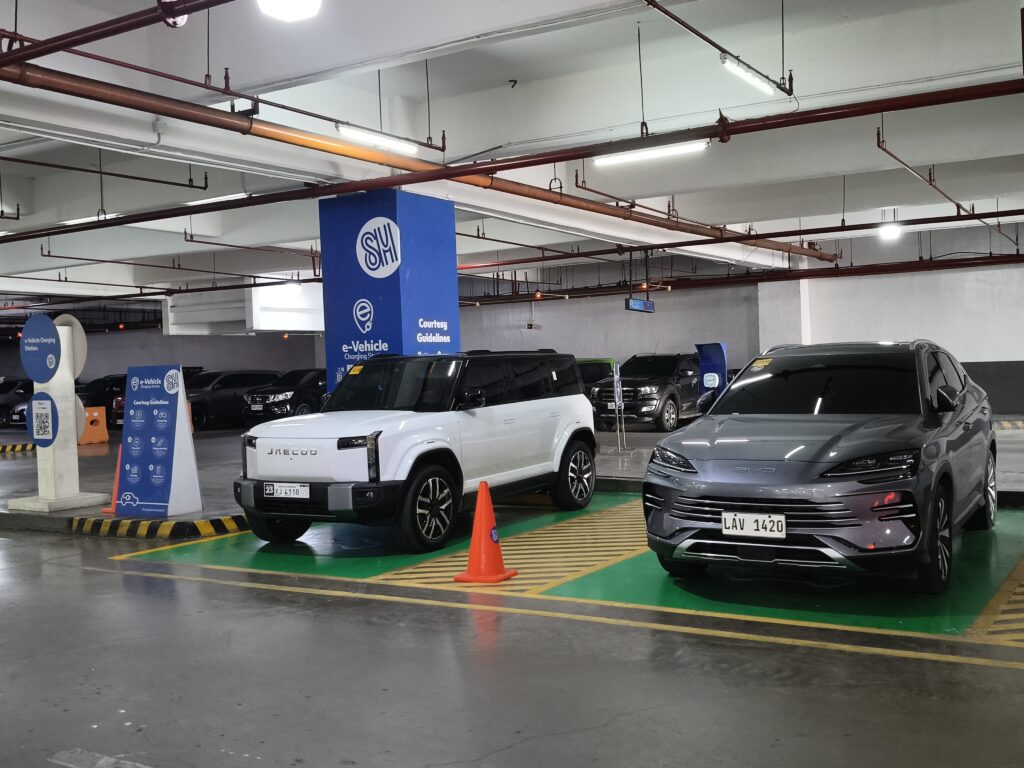
Dr. Angela Magno, a private motorist who regularly travels outside Davao City for work, was initially hesitant about her BYD Seal 5, a plug-in hybrid. She expected cost savings and comfort but worried about maintenance and range.
Those concerns faded as she learned the vehicle’s quirks.
“Every day, I learn something new about the electric vehicle,” she said. “I learned how to maximize charging on the road, when to switch between EV mode and hybrid mode if the battery percentage drops, and how my speed helps conserve battery power.”
Her experience has been positive. “My everyday experience with a BYD has been very cost-effective and time-saving,” she said. “Compared with regular vehicles, I can save up to 60 to 80 percent on the costs of gas. I once went four months before refueling with gasoline.”
Charging takes one to two hours, and Magno admits the vehicle is not without flaws — its low ground clearance demands caution on uneven roads. But the bigger barrier, she believes, is price. “I think the cost-effectiveness needs improvement,” she said.
Reflecting on her experience in China, Magno pointed to a model the Philippines could emulate. Chinese EVs carry green license plates that are cheaper than the blue plates issued to conventional cars.
“That is why the majority of Chinese use electric cars as they are cheaper,” she said. “I think that coming up with such a scheme will encourage more Filipinos to use EVs and will benefit them in the future.”
Her experience underscores the industry’s broader trajectory: hybrids offer a bridge for motorists who want lower costs and cleaner emissions without committing fully to electric, at least until charging networks catch up. But affordable vehicles without charging infrastructure or charging infrastructure without affordable vehicles will only stall adoption.
The question that remains, for Davao and the country, is whether the grid powering all these vehicles can keep up, and whether the electricity flowing into them is any cleaner than the gasoline it replaces. (davaotoday.com)
Reporting for this story was supported by the Local Climate Story Hubs initiative powered by Lyf and Fyt Media.


