
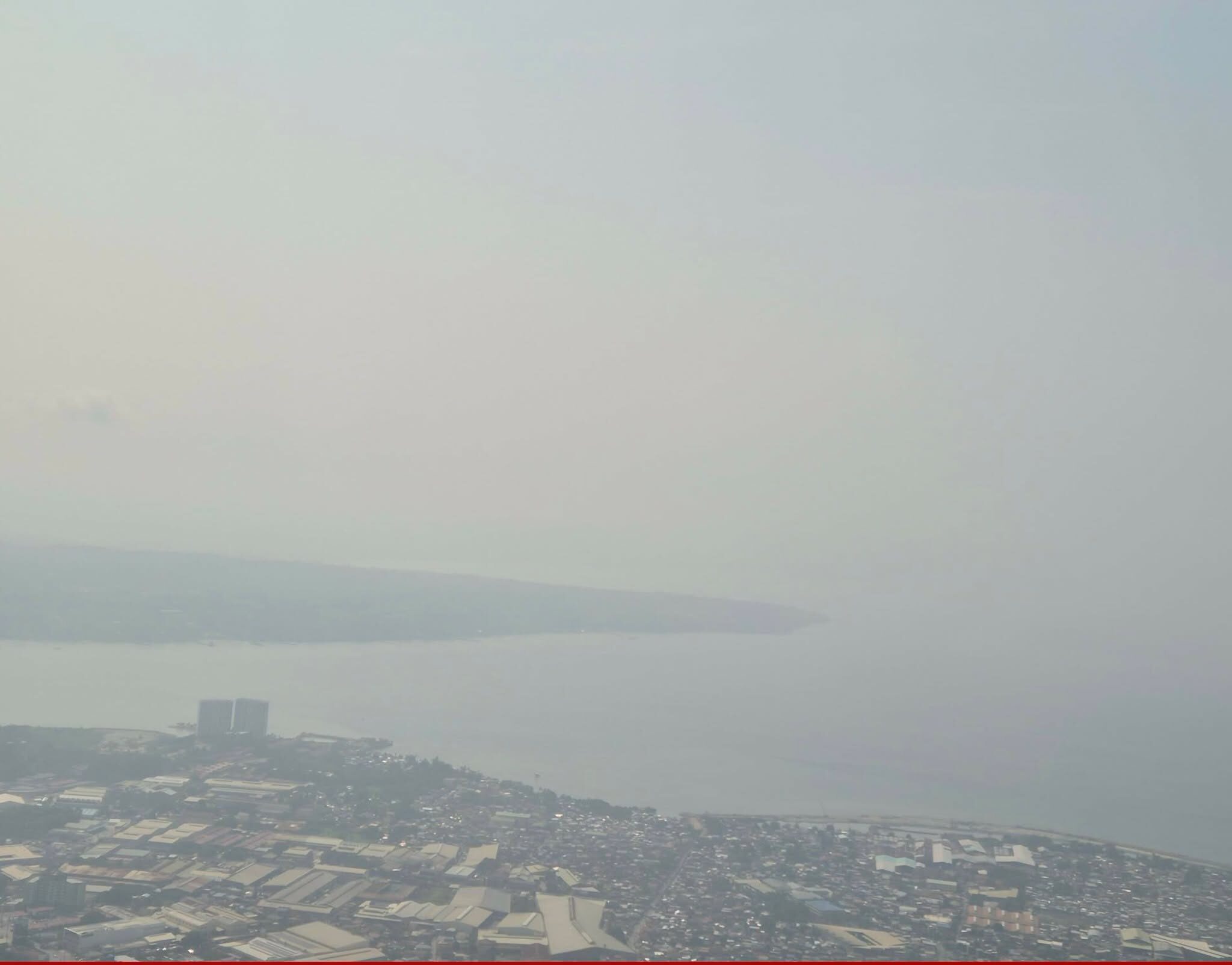
DAVAO CITY, Philippines — Air quality in parts of Davao Region has deteriorated to “very unhealthy” levels for PM2.5, according to the latest monitoring data released by the Environmental Management Bureau EMB in Davao Region on today, Sept. 8.
In its 12 noon air quality update, Calinan and Digos stations recorded “very unhealthy” levels for PM2.5, although both stations remained “fair” for PM10.
The agency said an increase in PM2.5 concentrations was recorded during the monitoring period and may be attributed to the ongoing transboundary haze originating from Indonesia.
PM2.5 levels rise
Miralou Blanco, chief of DENR XI’s Environmental Monitoring and Enforcement Division, said during a news conference Monday, Sept. 7, that PM2.5 is a fine particulate matter that can enter the respiratory system.
She said “children, senior citizens, and those with respiratory illnesses” are among those who need to take greater precautions amid elevated PM2.5 levels.
Blanco advised vulnerable individuals to wear an N95 or appropriate mask when going outside and avoid unnecessary outdoor activities.
“If nabati nila [nga] medyo aggravated na ang ilahang [gibati], better to consult,” Blanco said.
(If they feel that their condition has become aggravated, it is better to consult a doctor.)
The latest EMB data showed that the PM2.5 readings have since reached the “very unhealthy” category, a deviation from the stations’ usual trend of generally “fair” air quality.
Indonesia fires remain a concern
Blanco said the persistence of the forest fires in Indonesia could affect Davao’s air quality further.
“If magpadayon ang forest fires sa Indonesia, there is a possibility nga magpadayon pud ang presence sa PM2.5,” she said.
(If the forest fires in Indonesia continue, there is a possibility that the presence of PM2.5 will also continue.)
She said air quality could eventually move into higher-risk categories if the situation persists, although conditions could improve once the smoke disperses.
Blanco also clarified that PM2.5 cannot be seen by the naked eye, meaning visible haze or morning mist cannot automatically be attributed to the transboundary haze.
“We don’t want to do public scare,” Blanco said. “Gusto nato nga ipasabot sa ilaha what is happening and how affected pud sila and what they could do.”
(We don’t want to cause public panic. We want them to understand what is happening, how they are affected, and what they can do.)
EMB XI advised members of sensitive groups and individuals with heart and respiratory illnesses, including asthma, to stay indoors and rest as much as possible, while also urging the public to avoid unnecessary travel and minimize vehicle use to reduce additional emissions.
The agency said it will continue regular ambient air-quality monitoring and release updates as conditions change. (davaotoday.com)


