
DAVAO CITY, Philippines — Civil society groups and student leaders said Monday that President Ferdinand Marcos Jr.’s State of the Nation Address commitments will only matter if they deliver tangible improvements for ordinary Filipinos.
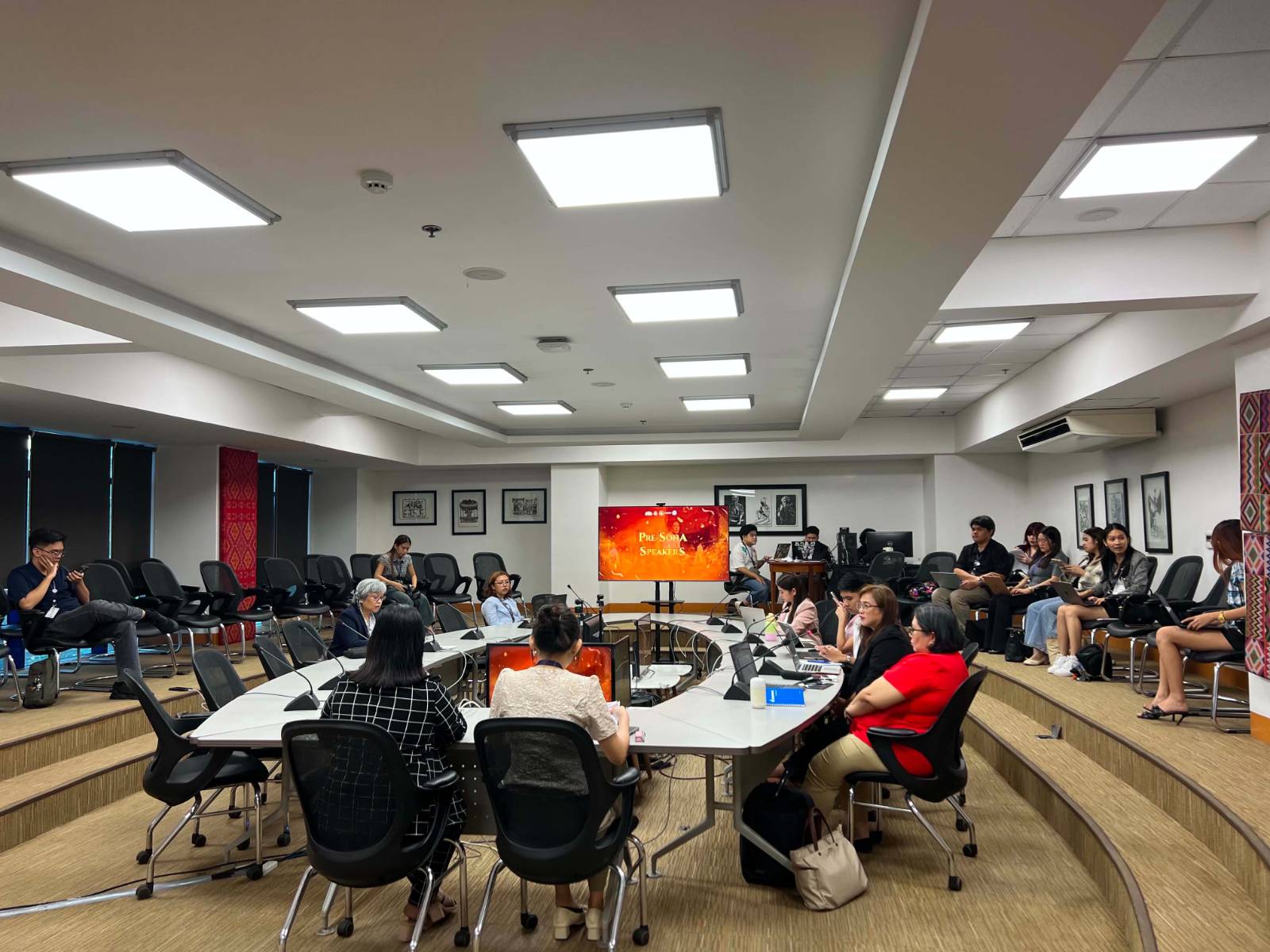
During the TULUBAGON 2026 forum at Ateneo de Davao University on July 27, speakers analyzed the president’s fifth SONA through five lenses: foreign policy, governance, civil society, economic development and political reform.
While Marcos highlighted his anti-corruption campaign, overseas worker assistance, infrastructure projects and tax reforms, critics stressed that implementation matters more than announcements.
“We still have yet to see the practice itself,” said Krizia Dale Pamat, president of the Ateneo International Studies Students Organization (AISSO).
“So we can already see that there’s good or somehow good purpose behind it in development, innovations, but we have to make sure that it meets the practice itself. And at the very end of the day, hindi kawawa ang Pilipinas.”
Pamat acknowledged Marcos Jr.’s emphasis on protecting overseas Filipino workers (OFWs) and expanding economic and diplomatic ties with Middle Eastern countries, Japan, South Korea, Russia and the United Arab Emirates. But she pointed to the West Philippine Sea (WPS) dispute as a case where the public deserves greater transparency.
“With the visit of China’s ambassador for Philippine-China relations… they must provide transparency in terms of the discussions that they have,” Pamat said. “Still we cannot see a proper implementation, especially with the protection of those people on the ground itself, especially our fishermen,” Pamat said.
She also called for clarity on major investment proposals, including Pax Silica and an aerospace partnership with South Korea.
“If they are telling us that it’s for the betterment of the country, then they have to give us transparency of what it really is, from the production, from the budgeting itself, from where it will happen,” Pamat said. “The people who will be affected are those people on the ground.
Silence on VP Sara impeachment
Elliot Dimasuhid, former editor-in-chief of Atenews, questioned whether Marcos’ anti-corruption rhetoric aligns with his administration’s actions. Marcos began his SONA by announcing investigations into flawed flood control projects and declaring that “the wheels of justice are turning.”
But Dimasuhid noted the contradiction of the president receiving applause from lawmakers who likely benefited from the same corrupt projects.
“Marcos castigated officials responsible for faulty, corrupted, tainted flood control projects… while receiving a standing ovation from lawmakers and officials who were likely responsible for the same faulty, corruption-tainted flood control projects,” Dimasuhid said.
He added, “The president himself must account for how hundreds of billions of pesos in public money were raised over flawed projects that failed to mitigate the massive impacts of floods on people’s lives and livelihoods.”
He also criticized Marcos for not mentioning the ongoing impeachment proceedings against Vice President Sara Duterte, which Dimasuhid said had gone unmentioned in two consecutive SONAs despite the president’s anti-corruption pledges.
Deep structural problems on education
On education, Dimasuhid said the administration overlooked deep structural problems. Despite having the largest budget, schools still face classroom shortages, inadequate facilities and insufficient learning equipment. Teachers remain overworked, and guidance counselors are critically understaffed, he said.
Dimasuhid also faulted the government’s response to the recent Tacloban school shooting, arguing that pushing to lower the minimum age of criminal responsibility fails to address why children commit crimes in the first place.
“Turning to punishment as a remedy rests on the flawed assumption that it alone can deter violence,” Dimasuhid said. “As long as the state continues to rely on repression and punishment over rehabilitation and prevention, its promise to safeguard the youth will remain hollow,” he said.
He further criticized the military-heavy approach to armed conflict, saying it has endangered human rights defenders without addressing the root causes of insurgency.
Macroeconomics overshadows realities
Marion Jake Acebo, vice chairperson for Mindanao of KASAMA sa UP, said macroeconomic indicators should not overshadow daily realities for Filipinos.
While welcoming the proposal to expand income tax exemptions for workers earning up to ?350,000 annually, Acebo warned the measure faces fiscal and political hurdles. He emphasized that food security, education, transportation and infrastructure programs require an enabling environment to succeed.
“The reality that we have to confront should be beyond what these data are telling us,” Acebo said. “Ang katotohanan, nakabase siya dun sa pang araw-araw na buhay ng ating kasama at ng ating mga Pilipinos.”
Drawing from research on geographically isolated and disadvantaged areas (GIDAs), Acebo said food insecurity stems partly from accessibility issues in remote communities.
“Food security remains an issue, not only in urban areas, but also in GIDA areas,” Acebo said. “Mas mahirap ang akses ng pagkain kapag mas malayo ka sa syudad. Because you will have to take over the last mile cost… transportation cost, infrastructure cost, and so on,” he said.
Political dynasties: Real problem
Closing the forum, Konsensya Dabaw convener Mags Maglana tied many concerns to the prevalence of political dynasties.
Nearly nine out of 10 Filipinos live under family-dominated governments, she said, citing studies showing political clans dominate local governments, Congress and party-list representation.
“How can you have checks and balances… if families control both the executive and legislative branches and they also manipulate the judiciary?” Maglana said. “Dynasties are a real problem sa ating realidad ngayon.“
The forum ended with speakers urging continued public scrutiny of government policies beyond the annual SONA. (davaotoday.com)


