DAVAO CITY, Philippines—Finding a permanent home remains out of reach for thousands of families in Davao City. The Social Housing Finance Corp. (SHFC) estimated a housing backlog of around 60,000 families as of 2022.
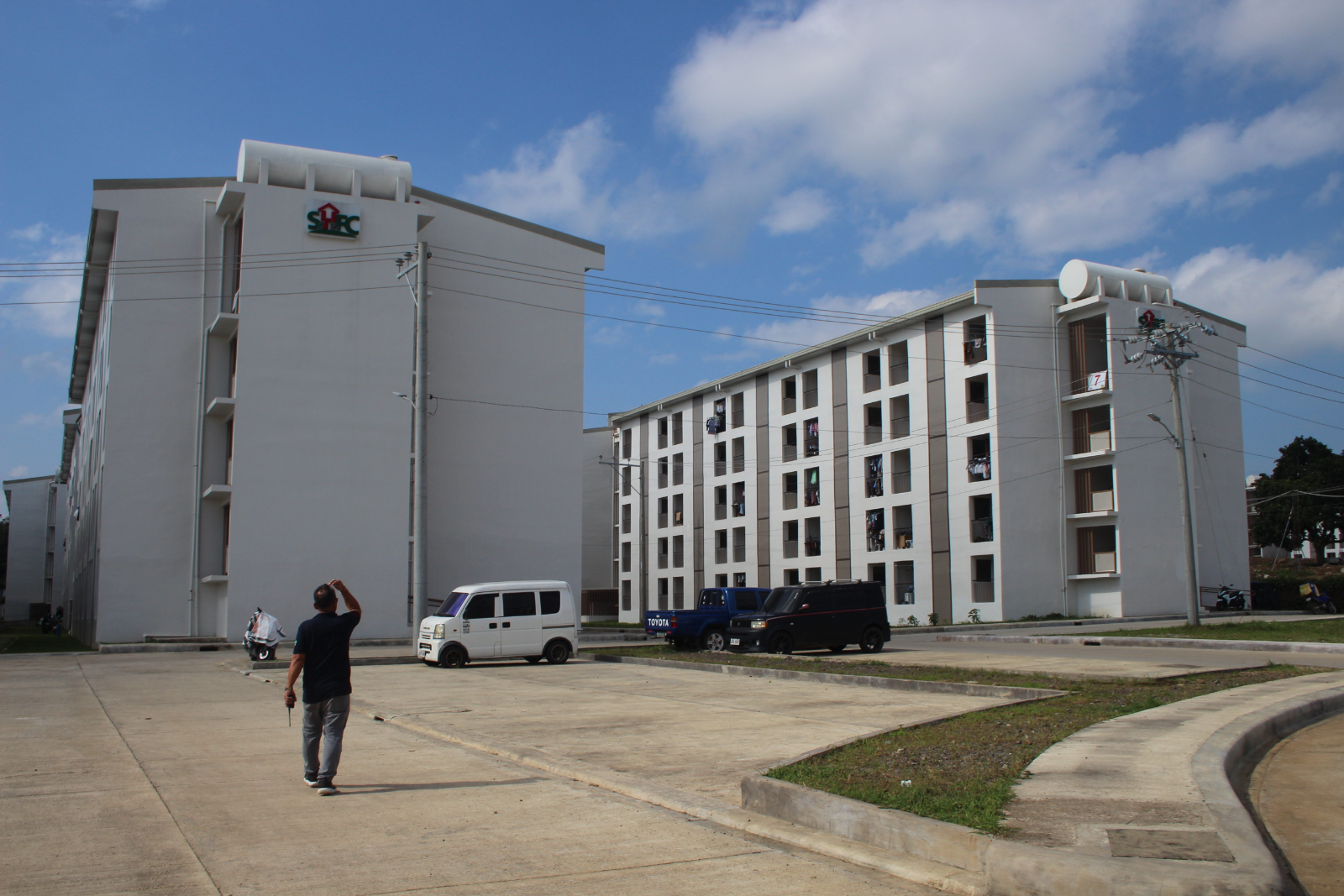
One government response is People’s Ville, a housing development in Barangay Riverside, Calinan District. The project is expected to deliver 7,200 units under the Expanded Pambansang Pabahay para sa Pilipino (4PH) Program.
For some beneficiaries, the project has provided a more affordable alternative to renting. But qualifying for unit requires meeting specific employment, income and financing conditions, raising questions about how accessible the program is to families at the bottom of the housing backlog.
Who gets to own a home?
For 41-year-old Rachelle Luspo, securing a unit at People’s Ville meant ending years of renting. The family of four previously rented homes in Cabantian and Lanang areas, paying as much as P10,000 a month.
The Luspos learned about the housing project from a friend. They applied in 2024, were approved in 2025 and moved in to their unit in March 2026, making it their permanent home in June.
“We really grabbed the opportunity because we wanted a permanent place to live instead of constantly moving from one place to another,” Luspo told Davao Today in Cebuano.
Their monthly amortization is about P6,000, Rachelle said, easing one of the family’s biggest financial burdens and allowing them to direct more of their income toward caring for their youngest child, who has congenital heart disease and epilepsy.
The Department of Human Settlements and Urban Development implements the Expanded 4PH Program and administers SHFC, which manages the People’s Ville.
Margo Babao, head of SHFC 4PH Davao, said People’s Ville sits on a 14-hectare site acquired by the agency. Once completed, the project will consist of 72 five-story residential buildings, with 100 units each.
The construction began in 2023, with about 30 buildings nearing completion. The SHFC has been processing housing loans for 684 beneficiaries through the Pag-IBIG Fund, while about 450 families have already moved into the completed units.
Once the next phase begins, work will continue on the remaining 42 buildings,
The SHFC in partnership with Pag-IBIG Fund processes People’s Ville applications.
To qualify, applicants must be Filipino citizens aged 18 to 65, active Pag-IBIG members with at least 12 months of contributions, first-time homebuyers and owners with no existing property registered in their names.
Applicants must also have a source of income and maintain current Pag-IBIG loan accounts.
Babao said the project follows a graduated amortization scheme, with monthly payments starting at about P2,400, with minimal increases each year.
“Most of our beneficiaries are private or government employees,” Babao said in Cebuano. “We also have small business owners, sari-sari store vendors, and drivers, including Grab drivers.”
The requirements become particularly significant when considered against the wider population facing Davao’s housing shortage, many of whom earn through informal work or have irregular incomes.
Ka Mimi Doringo, secretary-general of Kalipunan ng Damayang Mahihirap (KADAMAY) said government housing programs can become inaccessible to the poorest families when access depends on formal employment and housing finance.
“That’s why we can say even more clearly that the context and purpose of that low-cost housing program are not truly intended for the poor, especially since that is the first requirement imposed on housing beneficiaries,” Doringo told Davao Today in Tagalog.
Doringo cited the Pag-IBIG requirement, saying urban poor communities include vendors, pedicab drivers, jeepney drivers, and other informal workers whose incomes may not allow them to prioritize voluntary Pag-IBIG contributions.
“For poor families, membership is voluntary, but it would not be their priority because their daily income is barely enough to cover basic needs, including food. That is why many poor families still do not have such housing—they are disqualified from the outset and are no longer eligible for the 4PH housing program,” Doringo said.
Chona Taer, a 61-year-old People’s Ville beneficiary, previously lived in a rented home in Barangay Maa, and was among those affected by perennial flooding in the city.
After the 2017 flooding, Taer joined a community association that applied for housing under the government’s then Community Mortgage Program (CMP), a socialized housing program that allows organized low-income community associations to acquire and develop land for their members.
Taer said the association included vendors, small business owners and other low-income families. She worked for a private company while also trading direct-selling products to supplement her income.
“I have four children. A minimum wage isn’t enough, especially when you’re also paying rent. So you need to work two jobs,” Taer told Davao Today in Tagalog.
Taer said the requirements under the CMP project included proof of residency, owned no property, an interview and a membership in community association.
When CMP transitioned to 4PH system, Taer said additional requirements were introduced—an income tax return and permit for her family’s small fish-cage business.
Taer qualified for a unit but her age factored in the monthly amortization prompting her youngest child, a teacher, to take over the application.
“I am a pensioner. So my child, who is a teacher, applied for me because the payments are substantial,” she said in Cebuano.
Taer moved into her unit in May 2026.
Doringo said older applicants also face difficulties with long-term government housing loans like Taer.
“Even under the NHA’s previous housing programs, senior citizens were among those who could not avail themselves of the housing because the payment term is 25 years. But what if you’re already 60 years old?” Doringo asked.
Babao said People’s Ville is intended to provide permanent housing to families who do not own homes, including renters, families living with relatives and those residing in danger zones like the flood-prone areas.
Davao Today requested a demographic breakdown of the 684 beneficiaries from SHFC. As of publication, SHFC had not responded.
Beyond the housing unit
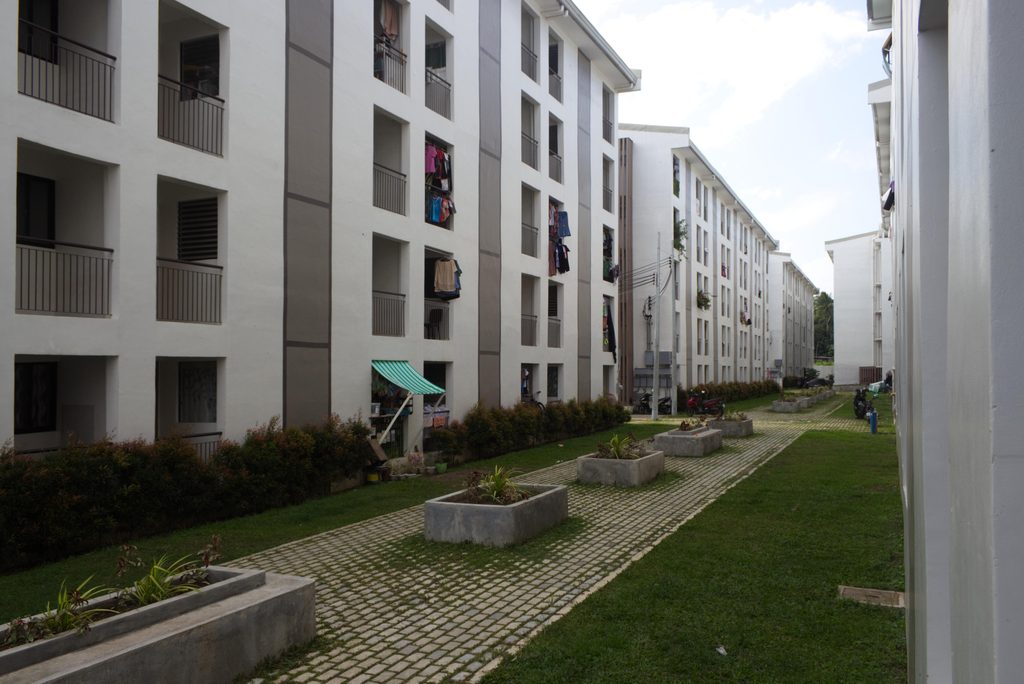
Babao explained that People’s Ville is designed as a vertical housing development to accommodate more families than a traditional horizontal subdivision.
It is also envisioned as a township with schools, daycare centers, commercial areas, wet and dry markets, a clubhouse, parks and other community facilities.
President Ferdinand Marcos Jr., who inspected the project on July 28, 2026 described it as a “complete community,” with schools and other essential services planned near residents’ homes.
Babao said Calinan was chosen because large tracts of land suitable for housing developments had become scarce in other parts of Davao City.
He also cited the project’s proximity to Calinan and Mintal centers, schools, hospitals, and other basic services.
“It is ideal because it’s close to Calinan town center and also near Mintal town center. There are schools, hospitals and other basic services nearby. They can easily reach them— just minutes away,” Babao told Davao Today.
Doringo also highlighted that relocation programs can create difficulties when residents lose access to the livelihoods that supported them in their previous communities.
“When developing a housing program, it should not be limited to the structure itself. Do people have jobs there? Or are they simply being dumped somewhere like garbage? There should be livelihoods and comprehensive social services,” Doringo added.
People’s Ville is among the earliest Expanded 4PH developments to reach the occupancy stage.
Other 4PH projects are underway in Tagoloan, Misamis Oriental; Pilar, Bataan; Bacolod City; and Tarlac. (davaotoday.com)