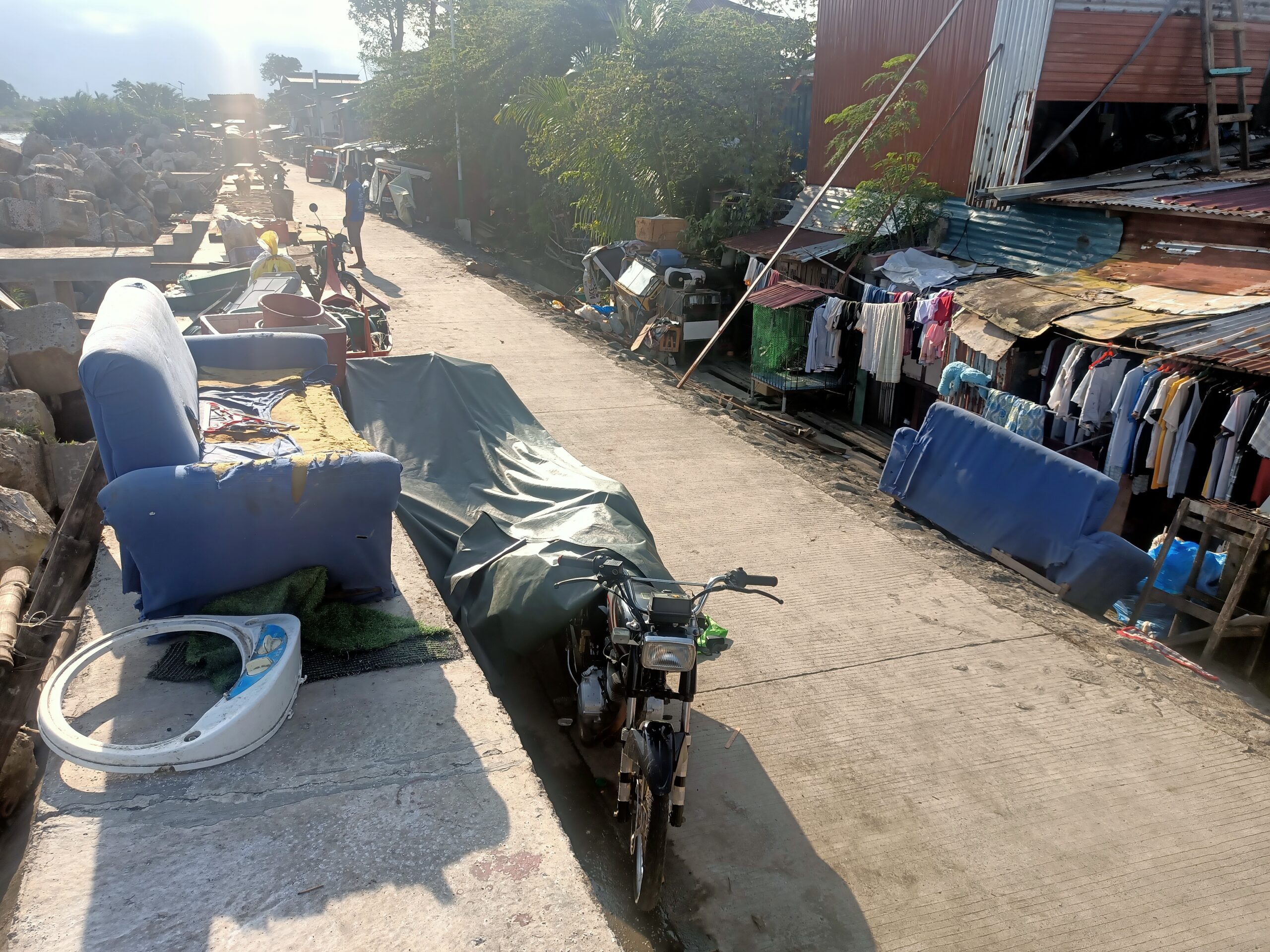
DAVAO CITY, Philippines — When floodwaters breached the doorways of Purok 4-B on July 24, Luzminda Labor watched her family’s livelihood disappear into the surge.
Her appliances sank beneath murky water, kitchen utensils floated away, and months of care gone with fishponds swept empty of harvest-ready catfish.
Labor, 59, knew there was nothing to do but salvage what they could and wait.
“It’s the worst the community has seen since 1994, worse even than 2019,” she told Davao Today on Tuesday, July 28.
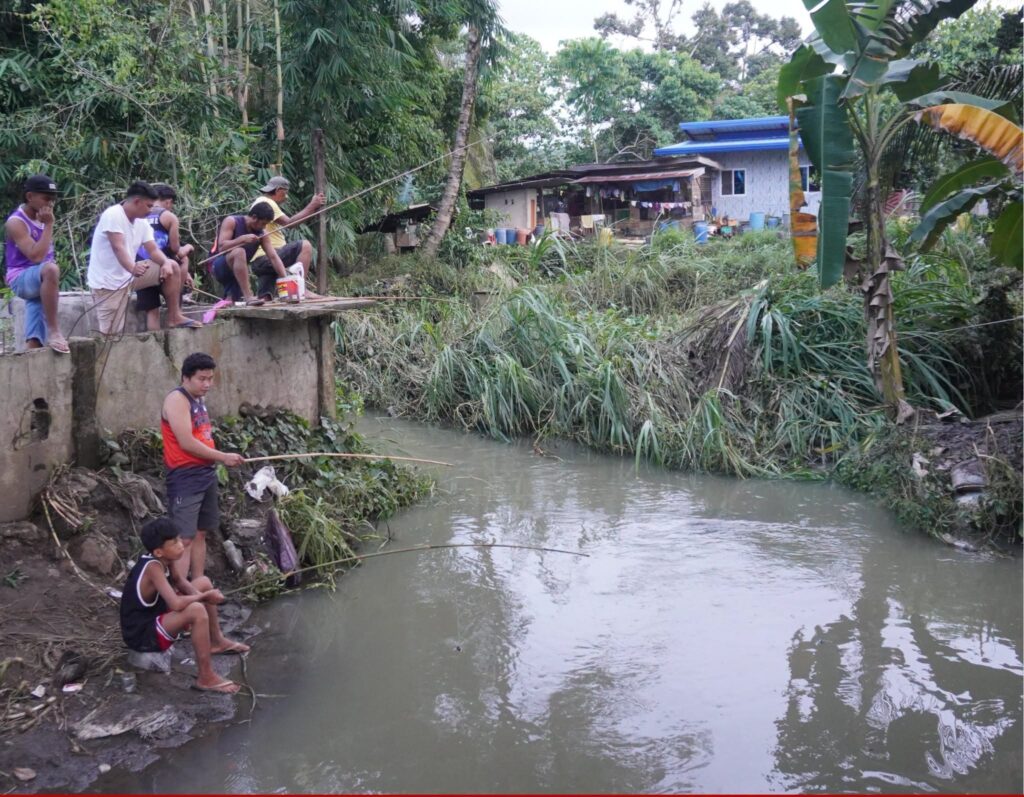
Labor’s neighborhood in Barangay Los Amigos was among six communities across Davao City where 1,311 people — 314 families — faced flood damage after the Talomo and Matina rivers overflowed during weeks of moderate to heavy rains coupled with the southwest monsoon. One person died.
Five feet of water stranded residents in some areas. Rescue teams from the CDRRMO, BFP, PCG, PNP, AFP and volunteers evacuated hundreds before waters receded.
About 80 percent of Los Amigos’ 3,000 residents were affected. Fifty-five families, roughly 200 people, were temporarily displaced.
This marked the third major flooding event to strike parts of Davao City in July alone.
Billions spent, floods continue
Residents are asking why the same neighborhoods drown repeatedly despite massive government investment in flood control infrastructure.
Davao City’s First District received approximately ?51 billion for infrastructure projects from 2020 to 2022, according to Department of Public Works and Highways records. Of that, only ?9.12 billion went to flood control projects.
Questions about those projects intensified after ACT Teachers Party-list Rep. Antonio Tinio flagged anomalies in 80 of 121 flood control initiatives worth roughly ?4.35 billion. Tinio cited overlapping contracts, duplicate funding and discrepancies in project implementation.
First District Rep. Paolo Duterte rejected the allegations, saying all projects underwent Depart of Public Works and Highways (DPWH) inspection and Commission on Audit (COA) review. The complaints prompted an investigation by the Office of the Ombudsman, though no court ruling has been issued.
Similar concerns emerged in NHA Bangkal, Barangay Talomo Proper, where residents said they were trapped in their homes despite early warnings from authorities as floodwaters rampaged. They reported receiving no government assistance yet while suffering losses including damaged appliances and submerged merchandise..
Governance debate widens
Following flooding, online debates erupted over whether flood control spending has delivered results. Critics tied the issue to the Duterte political dynasty, which has led Davao for decades.
Others argued extreme weather patterns exceeded infrastructure capacity.
Some noted Davao’s floods recede faster than in Manila, a comparative advantage some residents emphasized.
Former Philippine National Police Chief Gen. Nicolas Torre III, now Metropolitan Manila Development Authority (MMDA) chief, added weight to criticism after posting photos from his own flood-damaged NHA Bangkal home, where appliances floated through living rooms.
“Flood controls are meant to prevent floods from entering our homes. My question is simple: Given what has happened, is the system working?” Torre wrote on Facebook. https://www.facebook.com/share/p/18zvTqStVY/
He continued: “Flood controls are not measured by how many projects you made, but rather by how many families are saved from floods.”
President Ferdinand Marcos Jr. addressed the broader pattern in his 2026 State of the Union Address (SONA), announcing cases filed against several contractors, senior DPWH officials and former lawmakers. He said billions of pesos in assets had been frozen or recovered, hundreds of millions returned to the National Treasury, and payments halted for allegedly defective or ghost projects.
Interfacing Development Interventions for Sustainability (IDIS), a Davao-based environmental organization, urged a broader perspective following the president’s remarks. Flooding should not be viewed solely as infrastructure failure, the group said. Degraded watersheds, lost natural waterways, poor land use planning and weak environmental governance also require attention.
Dabawenyos deserve answers
Activists pressed for accountability. Cobbie Jan Canda, chair of Kabataan Party-list Southern Mindanao, noted 140 flood-prone areas exist within the First District alone.
“We deserve answers, we deserve more than this,” Canda said. “Praising them for their successes in the past can coexist with holding them accountable in the present.”
Los Amigos residents continue requesting a wider box culvert, arguing runoff from three converging waterways exceeds the current drainage capacity. In NHA Bangkal, residents await assistance.
Families across the affected districts clean mud-filled homes, replace damaged belongings and rebuild livelihoods as another rainy season begins.
The water has receded, but questions remain — not only about how public funds were spent, but whether the next disaster can truly be prevented. (davaotoday.com)
(With reports from Shane Angela Banzon and Marianne Guinoo,Contributors)