
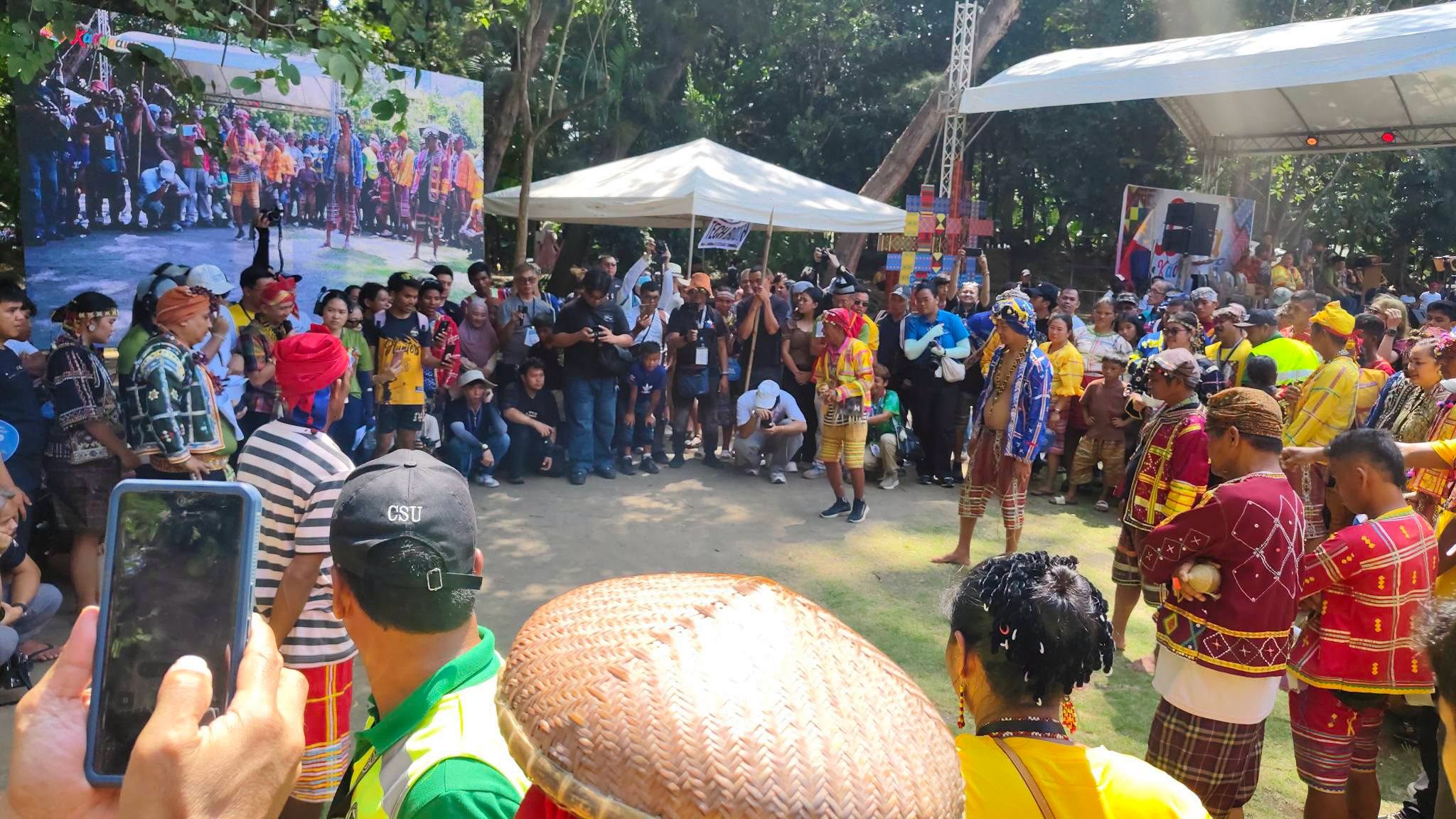
DAVAO CITY, Philippines — Eleven ethnolinguistic groups set up booths at Magsaysay Park on Aug. 7 to showcase their culture during Kadayawan, but some say the festival’s recognition of indigenous heritage has lost some of its essence.
The Kadayawan Tribal Village displays indigenous houses, crafts, food and clothing, with the Bantawan Cultural Celebration highlighting music, dances and rituals. But attendees noted fewer visitors compared to previous years.
“Amoang advocacy kay para ma-ila mi. Kay ang tribo namo wala nailhan. Naga-exist mi diri pero murag wala,” Febelyn of the Kagan tribe told Davao Today.
(Our advocacy is for us to be recognized. No one knows about our tribes. We exist, but we remain invisible.)
It is a celebration of the 11 recognized ethnolinguistic groups that inhabited Davao, consisting of five Lumad tribes: Ata, Bagobo-Klata, Bagobo-Tagabawa, Matigsalug, and Obu-Manuvu and six Moro tribes: Iranun, Kagan, Maguindanaon, Maranao, Sama, and Tausug.
Joela May Bontilao of the Ata tribe flagged stigma tied to her community’s name.
“Sa pagsugod jud sa Tribal Village katong 2017, didto-a naipakita ang talent ug gina-showcase kung unsa jud ang Ata. Naa man guy uban na ginahimo nalang og kabuang ang word nga Ata. So mao nang tungod sa Kadayawan, privilege namo na ipahibalo nga ang Ata nga word kay tribo. Karon, ginahimo nilag pamalikas o diskriminasyon na sa amoa. Ang Ata, mga tao man siya,” Bontilao told Davao Today.
(When the Tribal Village started in 2017, we showcased our talent and our identity as Ata. People make fun of the word Ata. So that is why, through the Kadayawan, it is our privilege to inform the public that Ata stands for a tribe. Now, they use that word as an insult and discrimination against us. The Ata are people.)
Few visitors, different spotlight
Despite the preparation, the groups in the Tribal Village this year noticed a very low turnout of visitors and tourists compared to the previous years.
“Dili kaayo daghan ang tao. Siguro tungod naa sa coastal ang tao, naa sa Osmeña Park, naa sa Night Market. Dili parehas sa una na busy kayo mi mag ilis-ilis sa tribal attire,” a member from Bagobo-Tagabawa tribe said.
(Not many people came. Maybe they flocked to the Coastal Road, Osmeña Park, the Night Market. It wasn’t like before when we kept on changing our tribal attire for the visitors.)
Throughout this year’s festival, the Indak-Indak competition still attracted the most audience.
Most attention was given to events that featured celebrities and musicians, such as the music festival in Davao Global Township and in Freedom Park.
The Dula Kadayawan, an event showcasing tribes participating in traditional sports and games, only attracted media and photography hobbyists to record the event.
One of the tribal representatives noticed how different the Kadayawan has been promoted.
“More on naa nalang gani sa screen, wala na masyado diri sa baba. Kanang ang pagpromote is more on naging makabago na. Nawala na ang essence,” he lamented.
(It’s more of showing things on the screen, but nothing here on the ground. They’re promoting what’s modern. The essence is gone.)
Tribes left out
Festival organizers traced the word of Kadayawan from the Mandaya tribe’s word “dayaw,” which means “good” or “valuable.” But the festival has not formally recognized the Mandaya tribe, which traces its roots in Davao Oriental.
This raises voices from tribes across Davao Region who want to claim recognition to what is touted as the “king of festivals” in Mindanao.
“Many Kadayawan occasions happened without an entry from our Manobo/Blaan tribe from (Davao) Occidental. I hope someday they will bring us as delegates and recognize our tribe,” a netizen commented on a video posted by Davao Today on its social media.
The festival’s Indak-Indak is open to schools, cultural groups and tribes even from those outside of Davao City to participate.
Festival organizers said Kadayawan is celebration of Davao’s cultural wealth and abundance in food.
But in the middle of the Indak-Indak parade, a small group of Lumad walked through the busy streets, asking for money from spectators.
Issues facing Moro and Lumad communities, particularly in the Davao Region, remain unresolved —including ancestral land disputes, military presence in territories, and limited access to education and other basic services.
The celebration had become distant from the lived realities especially once the festivities ended. (davaotoday.com)


![Read more about the article [STANDPOINT] On the 12th year after the Ampatuan Massacre, 12 reasons why “forgetting isn’t an option”](https://davaotoday.com/wp-content/uploads/2017/11/Hernani-5-300x200.jpg)