
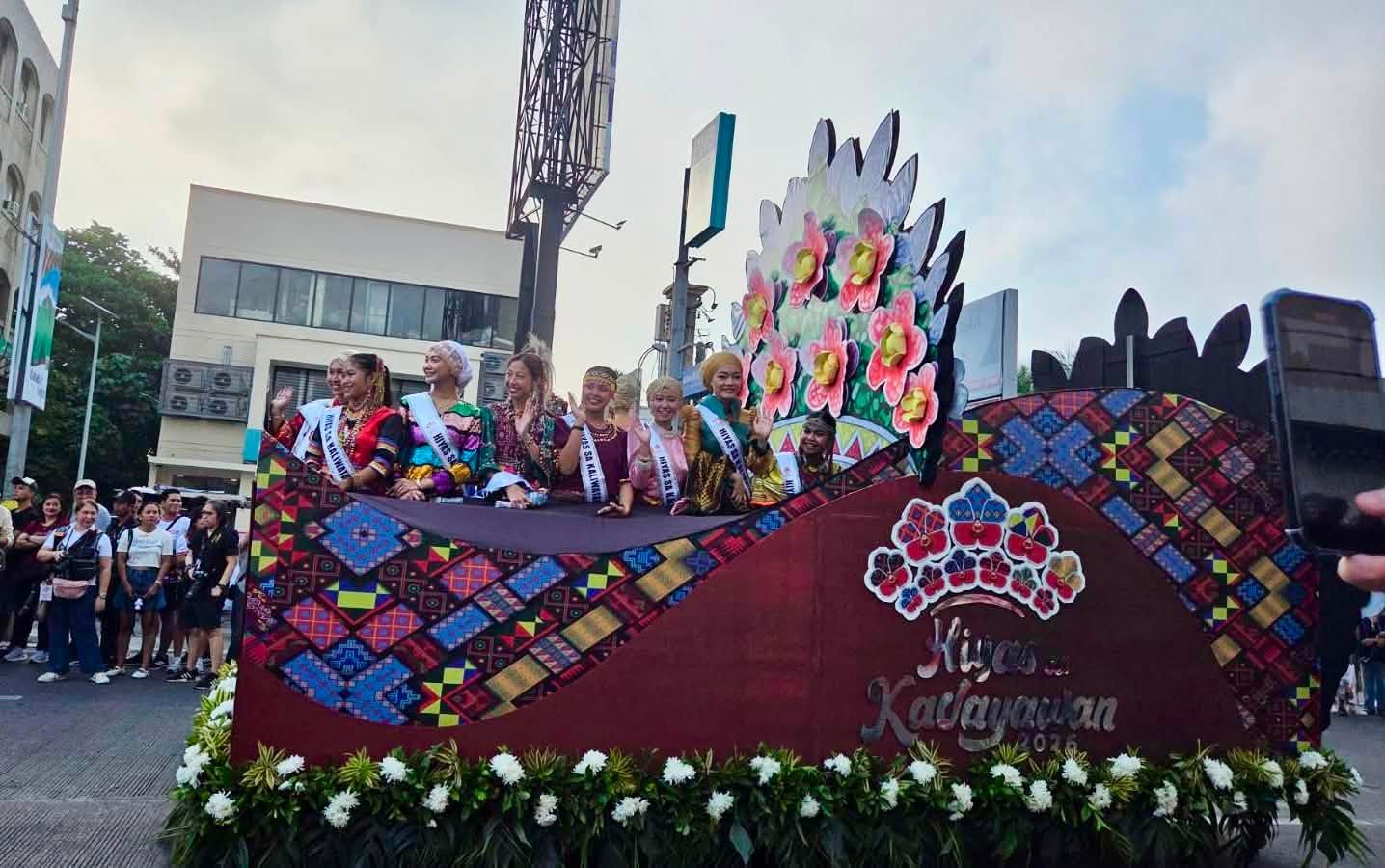
DAVAO CITY, Philippines – While Vice President Sara Duterte describes Kadayawan as a reminder of a true prosperity anchored on preserving culture and building a fair, just, and peaceful society, Bagong Alyansang Makabayan in Southern Mindanao Region sees the festival as a stark reality of the lived experiences of the Lumad and Moro peoples in Davao City.
Duterte opened the celebration dubbed as “Pag-abli sa Kadayawan 2026” with the theme, “We are one, KadayawONE!” at Magsaysay Park on Aug. 7. The festival centers the heritage of the Lumad and Moro peoples—Davao’s ethnolinguistic groups—whose cultural performances took the center stage.
She described Kadayawan as “more than a celebration of culture, harvest, and gratitude.”
“Many people struggle with high commodity prices, lack of jobs, and varied opinions over politics. But Kadayawan teaches us that it’s more important to help one another, respect each other, and give thanks for the blessings we have received,” she said, adding Davao City has endured poverty, terrorism, insurgency, and a pandemic and through every challenge they have remained united and hopeful.
‘Dili magstorya ug patapos’
For Rauf Sissay of BAYAN-SMR, the city still needs to address problems ranging from the cost of living and unemployment to flooding, public transportation, and accountability in governance.
Sissay said Duterte should not portray Davao’s problems as already overcome.
“If I were VP Sara personally, I wouldn’t speak as if everything is already done, because there are still many issues and problems that need to be addressed, responded to, and solved,” Sissay said.
Sissay challenged the vice president for acknowledging economic problems without showing results on wages, jobs or fuel taxes.
“It’s right to acknowledge what the problems are, but on the other hand, what is someone like VP Sara doing as a government official?” he said.
He also questioned what policy recommendations Duterte made as vice president and education secretary under the Marcos administration.
“If you look at it, the government is supposed to play a big role in addressing the problems of cost of living, prices, low wages, unemployment,” he said.
Sissay criticized Duterte for claiming Davao defeated insurgency, arguing the government must address poverty, landlessness and unemployment.
“In our view, it’s mass poverty. Farmers lack land. No jobs,” he said.
He called for the National Democratic Front of the Philippines (NDFP) peace talks and questioned “insurgency-free” claims where armed clashes still continue.
“There’s something wrong if such incidents still occur,” he said.
Contradiction
Sissay acknowledged the local government’s efforts to promote Indigenous and Moro culture and arts but said there is a gap between the image presented during Kadayawan and the everyday realities of these communities.
“There’s a disconnect between what image is depicted in the Kadayawan Festival and what reality is experienced by our Lumad and Moro peoples on the ground… The celebrations once or twice a year are not enough… .”
He cited the presence of indigenous people from upland communities who come to Davao City during holidays begging for money or food as an example of the gap between festival celebration and lived conditions.
“That’s a reflection… Can you think what the local government and national government have done to uplift the condition of our Lumad compatriots?” he said.
Sissay said addressing the social and economic problems faced by Indigenous, Moro and other communities would make the cultural celebration more meaningful.
He also raised concerns about indigenous education access, citing closures of Lumad schools during the Duterte administration as proof of the contradiction between promoting indigenous culture and government policies.
In 2019, the Department of Education in Davao region ordered the closure of 55 schools operated by Salugpongan Ta’ Tanu Igkanogon Community Learning Center Inc., which served Lumad children in the region. DepEd said the decision followed a fact-finding investigation into the schools’ operations.
From Hiyas to Indak-Indak
Christine Faith Gawilan of the Matigsalug tribe was crowned Hiyas sa Kadayawan 2026 during Aug. 13’s coronation night at the University of Southeastern Philippines (USEP) Gymnasium.
Gawilan was one of three top finalists for Best in Cultural Performance alongside Jamaica Prado of the Kagan and Marisol Barani of the Sama. Her placement among the finalists featured her cultural presentation before she won the overall Hiyas title.
Major street celebrations followed Aug. 16 with Pamulak ug Indak-Indak sa Kadayawan and the Indak-Indak sa Kadayawan Grand Showdown.
In the Open Category, Mati City’s Balangay City High Performing Arts won the grand championship for the third consecutive year, earning a ?2 million prize. The group highlighted Mandaya cultural heritage and traditions. It also won Best in Artistic Design, Best in Choreography and Best in Street Dance.
Sindac Anib Performing Ensemble of Bislig City, Surigao del Sur placed second and won Best in Music. Nagadaya Dance Artist Ensemble of Pantukan, Davao de Oro placed third, Panay National High School Hamungaway Performing Arts Group of Sto. Niño, South Cotabato fourth, and Lumad Mainitnon Folkloric Group of Surigao del Norte fifth.
In the Davao City School-Based Category, Mana Performing Arts Ensemble of Daniel R. Aguinaldo National High School defended its title for the second consecutive year. Mana also won Best in Artistic Design, Best in Music, Best in Choreography and Pocari Sweat Best in Street Dance. Sta. Ana Performing Arts Guild of Sta. Ana National High School placed second, followed by Lapulapu Elementary School Performing Arts Company third, Tribong Bago Gallerahanun Performing Arts Guild of Don Enrique Bustamante National High School fourth, and San Roque Central Elementary School Dance Troupe fifth.
Kagikan Pro Arts won the Dako Category, and Alorica Teleservices Inc. took the Gamay Category.
Other activities included Agong ug Kulintang sa Kadayawan, Konsierto Kadayawan, Dula Kadayawan, arts and film activities, trade fairs and other cultural events. (davaotoday.com)


