EDAVAO CITY, Philippines – Employment rose across provinces in Davao Region, but Davao City registered the highest unemployment rate in 2025.
This was based on the preliminary results of the 2025 Labor Force Survey by the Philippine Statistics Authority (PSA) recently released, showing a relative rise in employment across sectors.
Davao Region added around 86,000 employed persons in 2025, increasing total employment to 2.48 million from 2.39 million in the previous year.
The services sector remained the largest source of employment in Davao Region in 2025, with around 1.39 million workers, or 56.4% of the region’s employed population.
Agriculture followed with 694,000 workers (28%), while industry accounted for 385,000 workers (15.5%).
Agricultural growth
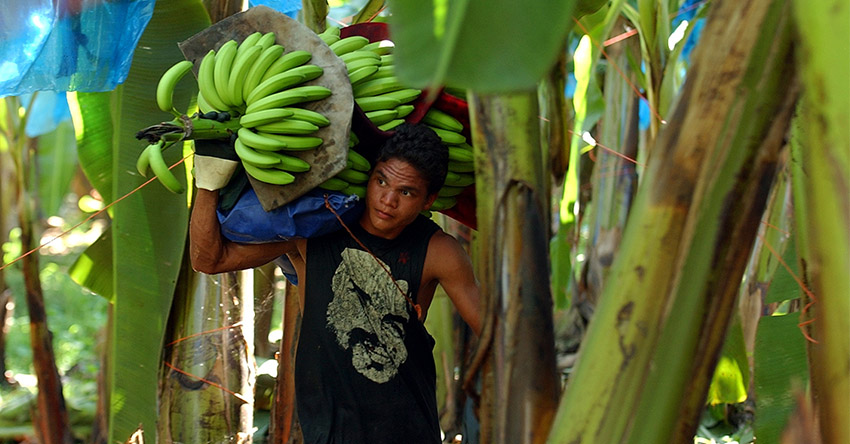
Agriculture posted the largest increase in workers in 2025, adding 35,000 jobs in agriculture and forestry activities.
The Department of Labor and Employment (DOLE) Region XI attributed part of the employment growth to gains in agriculture and selected service industries.
“The increase in employment in the agricultural sector likewise indicates the gradual recovery and stabilization of agricultural activities in the region,” DOLE XI Regional Director Atty. Randolph Pensoy said.
Pensoy attributed the increase to improvements in crop production, agribusiness operations, fisheries, and government interventions aimed at strengthening food production and rural livelihoods.
Uneven jobs growth
The wholesale and retail subsector, which include stores and shops in malls, remained the region’s largest service employer, followed by transportation and storage, and public administration and defense.
Administrative and support service activities also recorded some of the largest employment gains, which include call centers, security services, janitorial work, and manpower agencies.
Education and public administration jobs also registered increases.
DOLE noted employment gains in construction, education, public administration, financial services, and administrative support activities, saying these reflected improving economic conditions and increased business activity in the region.
However, not all service industries expanded.
Transportation and storage lost around 7,000 workers, offsetting gains posted by wholesale and retail. Accommodation and food service activities also declined by 4,000 workers.
Despite the broad labor gains, Davao City recorded the region’s highest unemployment rate at 3.8% in 2025, while Davao del Sur posted the lowest at 1.5%.
Davao City also registered the lowest employment rate among provinces and highly urbanized cities at 96.2%, even as the region’s overall employment performance improved.
But region-wide unemployment declined to 2.9% from 3.2% in 2024, equivalent to around 73,000 unemployed persons, down from 79,000 the previous year.
Labor force participation likewise increased to 65.4%, translating to around 2.55 million people either employed or actively seeking work.
Pensoy said sustaining labor growth would require continued support for higher value-added sectors, job facilitation programs, skills training, and stronger productivity in agriculture.
The agency also cited the need to strengthen employment opportunities for women, youth, and vulnerable workers, while expanding labor-market interventions under the Philippine Labor and Employment Plan and the Trabaho Para sa Bayan framework. (davaotoday.com)