DAVAO CITY, Philippines—Holding the first Bangsamoro elections is a historic milestone in the region’s long-standing struggle for self-determination, but the votes don’t signal completion of the peace process.
Resource persons from the Bangsamoro peace, indigenous peoples, human rights, climate justice, and youth gathered online in a forum hosted by Kinaiyahan Youth for Climate-Marawi on September 1.
They voiced that the election should be judged by how its promised gains translate into safer communities, meaningful representation, climate-resilient public services, and improved lives for people affected by conflict and displacement.
Tirmizy Abdullah, co-convener of PANALIPOD Peoples’ Coalition, said the significance of the election cannot be separated from the decades-long negotiations that produced the Bangsamoro Autonomous Region in Muslim Mindanao (BARMM).
“The BARMM is a negotiated political settlement. It is a result of a long period of negotiation between the government of the Philippines and the Moro Islamic Liberation Front (MILF). It wasn’t just created by a simple government decision… it came from many years of peace negotiation agreements,” added Abdullah.
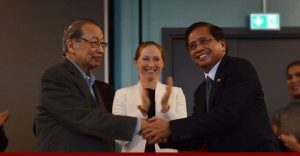
The peace negotiations between the Government of the Republic of the Philippines and the MILF date back in 1997 culminating in the 2014 Comprehensive Agreement on the Bangsamoro (CAB).
The parliamentary election, he said, marks the shift from an appointed transitional government to a regular one whose members will be elected by voters.
But he stressed that the political track of the peace agreement has always existed alongside the normalization track, which addresses the conditions needed for peace to be sustained on the ground.
Measure of peace dividend
Abdullah said the election is a highly critical bridge from transition to regular democratic government whose meaning is measured if communities are secure, former combatants are reintegrated, decommissioned and conflict-affected people experience the peace dividend.
He added that one of the clearest measures to gauge whether that peace dividend has reached ordinary people is—Marawi.
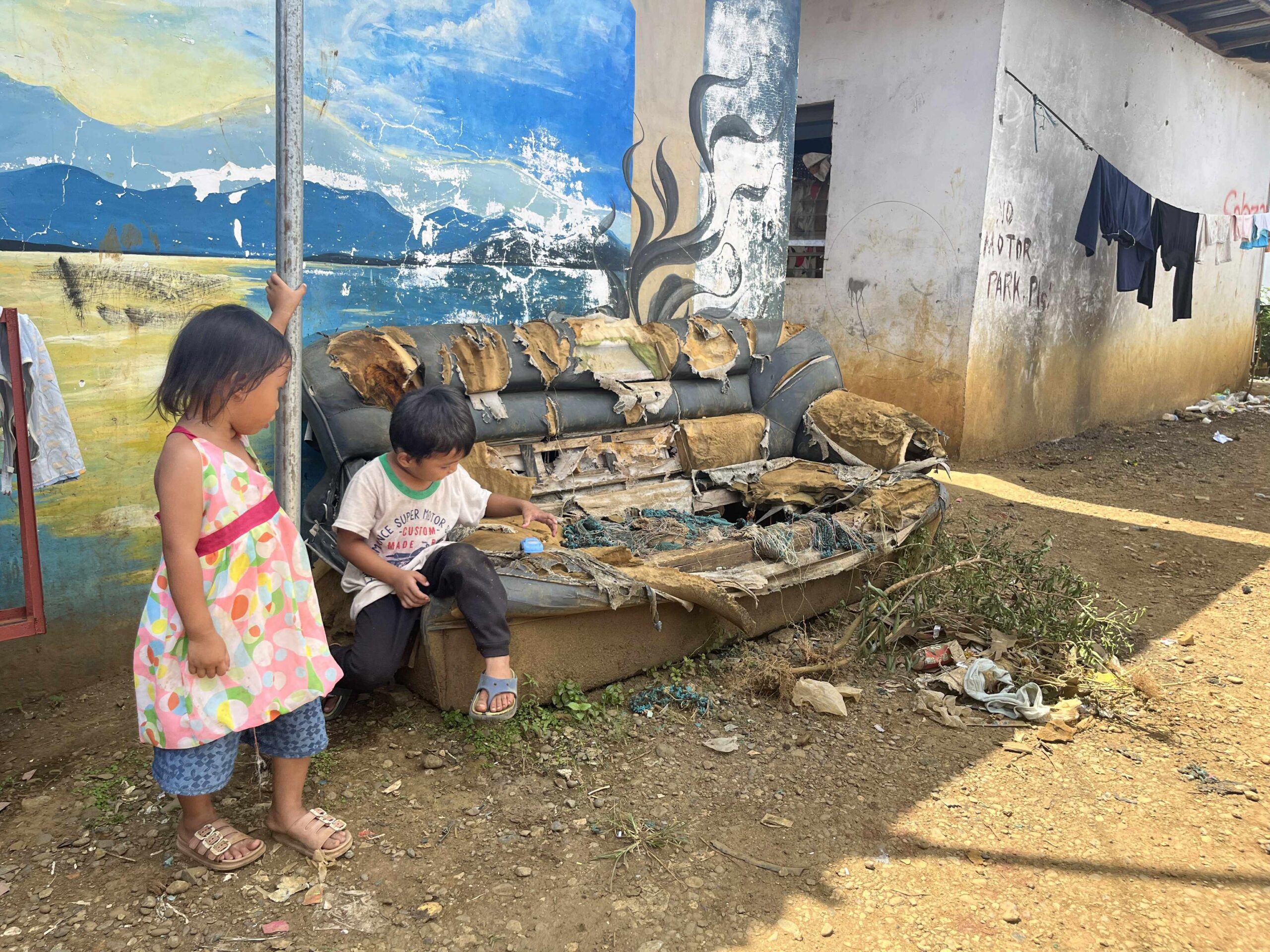
Thousands of internally displaced persons (IDPs) have yet to return to their homes nearly a decade since the 2017 Marawi siege. Rehabilitation continues to be a major concern.
The experience of Marawi, he said, should not be treated as separate from the success of failure of the Bangsamoro transition.
“Even now, there are still many — still thousands—of IDPs in their temporary shelters… There are still around 15 temporary shelters. I’m not saying the transition was an entire failure, but it says something about the success of the transition.”
He said the rehabilitation should ultimately be gauged by whether displaced families can return safely and whether their needs are reflected in decisions about their communities.
Indigenous and climate justice in the peace process
Archie Buaya, former senior commissioner of Bangsamoro Human Rights Commission and Indigenous leader, said the election will also test if the Parliament’s formal recognition of non-Moro Indigenous peoples will have meaningful representation.
He said the election should not create the impression that peace and justice will automatically be felt in every community.
“Go down to the ground and ask the community: has anything changed in your lives? After the peace process, after the comprehensive agreement, after six years of transition—especially for those on the margins—it seems the answer is nothing.”
Buaya said indigenous peoples should ask if their ancestral domains are protected, their communities are safe, their customary laws are respected, and their voices genuinely influence decisions.
He emphasized that indigenous justice should not be seen as a rival to, but as an integral part of, the Bangsamoro peace process.
“There can be no lasting peace in the Bangsamoro without indigenous justice. It is highly important. Despite the transition period, we know that there are a lot of experiences among indigenous people, especially on the various form of human rights violation.”
He also warned that a reserved seat for non-Moro indigenous peoples in Parliament does not automatically mean political influence. The representatives will have to navigate the realities of parliamentary politics, where the two reserved seats for non-Moro Indigenous peoples make up only a small portion of the 80-member chamber.
Meanwhile, Nosaira Gasmala of the Mindanao Climate Justice Resource Facility said climate vulnerability must be understood through the unequal distribution of responsibility for the crisis.
Gasmala said accountability does mean equal responsibility as they have a role in protecting their communities, yet they don’t carry the same responsibility.
“A farmer trying to save a failed harvest cannot be treated as equally responsible as a corporation’s property from fossil fuels… Those who hold the greatest power, control the largest resources while those who contributed most to the crisis must carry the greatest responsibility. The people are rights-holding. The state is the principal duty-bearer,” she said.
Gasmala linked climate vulnerability to the region’s existing problems of displacement, poverty, and conflict.
She stressed about repeated displacement, noting that a family can flee armed violence, but return without a secure livelihood and then get displaced again by flooding or drought.
Displacement, she said, is not only a humanitarian emergency but it is equations of land, livelihood, public services, human rights, and political powers.
“Marawi teaches us that displacement does not end when fighting, bombing, or flooding stops. It continues when people cannot recover their homes, lands, and livelihoods, community, and dignity.”
She also challenged the incoming Parliament to protect displaced communities and give affected sectors a meaningful role in decisions on policies, programs, and budget.
Youth voters, politics beyond election day
Asmana Umpat, a youth and student leader at Mindanao State University-Marawi, said young people are not merely future participants in governance but a major political constituency.
“We have this concept they call youth quake—earthquake or youth quake—because the majority of voters in BARMM come from the youth sector. We can see here that 60.8% are youth, or more than 1 million young people,” Umpat said, citing numbers from the Commission on Elections (COMELEC).
Umpat said it is historic not just in numbers but in meaning.
“For the first time, a generation that grew up amidst conflict, displacement, and uncertainty now has the power to shape the peace they have inherited. We have to sustain this peace.”
The first regular Bangsamoro parliamentary election will be on Sept. 14, following the resetting of the polls under Republic Act No. 12317. (davaotoday.com)