DAVAO CITY, Philippines – Mindanao needs additional power generation facilities to meet growing demand, with current reserves sufficient for only another four to five years, according to warnings raised during the Davao City Council’s Tuesday session.
On Aug. 4, the council approved a resolution urging Davao Light and Power Co. (DLPC) to secure emergency and long-term bilateral power supply agreements with other baseload power plants to reduce reliance on the Wholesale Electricity Spot Market (WESM), where prices have surged in recent months.
Councilor Louie John Bonguyan, chair of the Committee on Energy and Water, said Department of Energy officials reported that Mindanao currently holds a power reserve of 729 to 1,000 megawatts.
Despite the surplus, consumers face higher rates because electricity generated locally trades under the national market system established by the Electric Power Industry Reform Act (EPIRA).
“If only the power plants in Mindanao served Mindanao alone. But that is not the case. There’s the EPIRA law, many regulations… It has to go through the Energy Regulatory Commission (ERC). It’s really not allowed that we in Mindanao simply cooperate among ourselves,” Bonguyan said.
Electricity from Mindanao plants sells through the national grid and WESM, while part of the island’s supply transmits to the Visayas via the Mindanao-Visayas interconnection, leaving local consumers exposed to price fluctuations despite adequate generating capacity.
Bonguyan suggested DLPC pursue emergency procurement from other baseload generators in Mindanao instead of sourcing more power from WESM.
“Hopefully, in two to three months, electricity costs in our city will go down,” he said, noting the move remains subject to existing ERC rules.
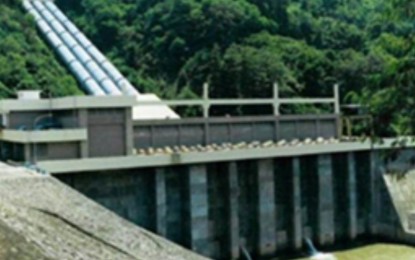
He cited the Agus-Pulangi hydropower complex, operated by the Power Sector Assets and Liabilities Management Corp. (PSALM), as a cheaper source, though aging facilities have reduced its output.
“Mentioned earlier that PSALM’s rate is only half the price… But the problem now is with the Agus-Pulangi hydro power plant… it can now only generate very little power,” Bonguyan said.
The national government is proceeding with rehabilitation efforts after PSALM announced talks with a prospective private partner.
Repeal EPIRA
Progressive group Bagong Alyansang Makabayan Southern Mindanao Region (BAYAN SMR) welcomed the council’s initiative but argued local measures alone cannot address structural causes of high electricity prices.
“The local government can only do so much… If it were up to us, we would push for the regulation of our electric services and eventually, the repeal or scrapping of EPIRA, which puts control of electricity distribution in the hands of some private companies,” said Rauf Sissay, spokesperson for BAYAN-SMR.
Sissay called for greater investment in renewable energy over coal dependence, noting that a coal-fired plant near Toril has not provided adequate supply.
Mindanao already draws power from renewable sources including Mount Apo geothermal plants in North Cotabato and Davao del Sur, alongside various solar projects across the region.
Sissay highlighted regulatory actions contradicting President Marcos’ fifth State of the Nation Address promise to lower electricity costs.
The Feed-in Tariff Allowance (FIT-ALL) rose from ?0.2011 per kilowatt-hour to ?0.3359 beginning the August billing period—a charge supporting renewable energy developers under the Renewable Energy Act.
The group urged the government to ensure future energy projects remain environmentally sustainable while protecting farmers, Indigenous Peoples, and rural communities. (davaotoday.com)