
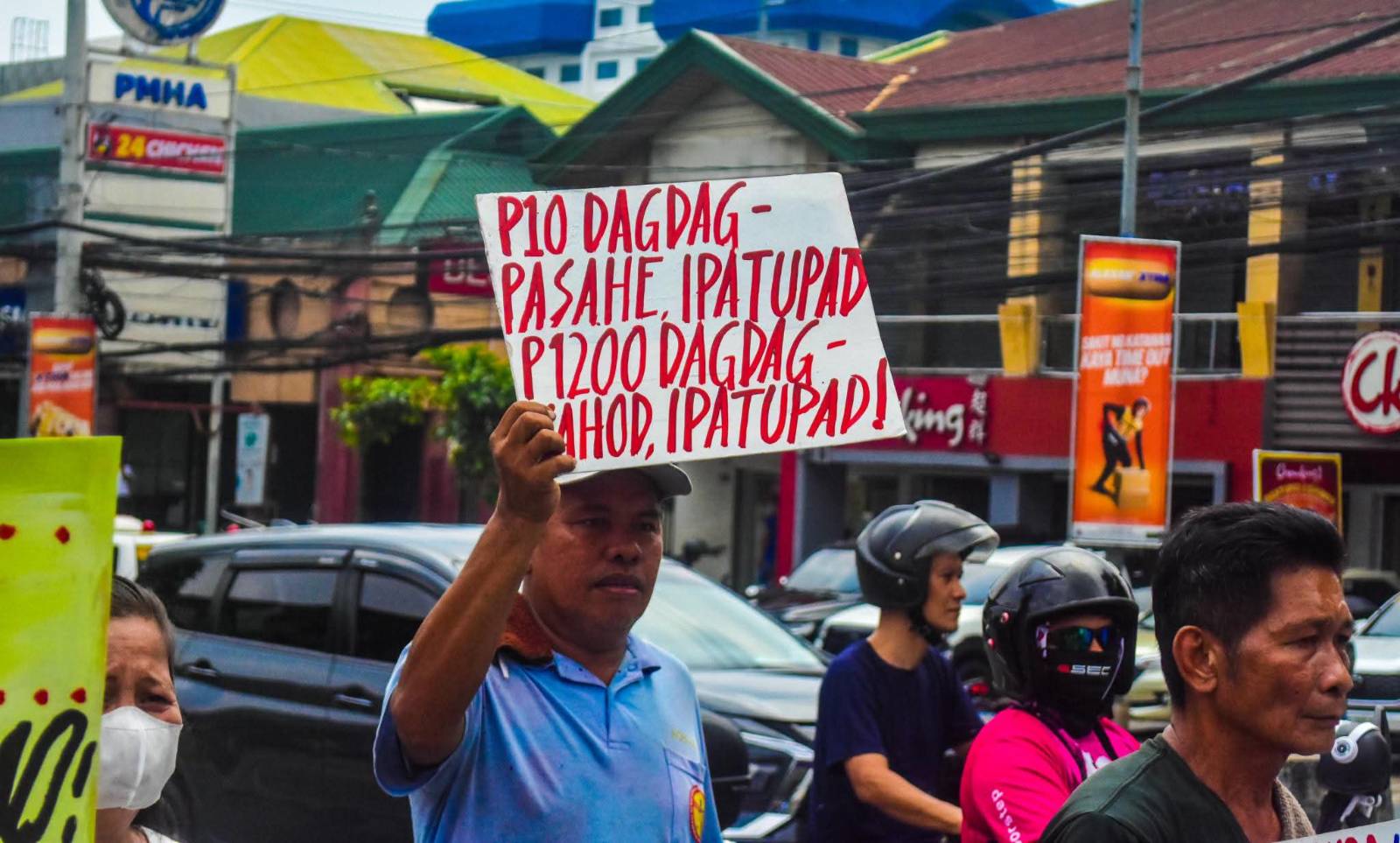
MANILA, Philippines — Transportation groups faulted President Ferdinand Marcos Jr.’s fifth State of the Nation Address for failing to address the structural issues plaguing the sector, particularly rising fuel prices and inadequate subsidies, despite the president’s assurances of continued government support.
Transport leaders acknowledged the administration’s interventions including a ?10-per-liter diesel subsidy for public utility jeepneys and UV Express units, cash assistance through the Assistance to Individuals in Crisis Situation (AICS) program, and expanded fare discounts, but said these measures fall short of solving the industry’s fundamental economic woes.
“As the price of oil continues to increase, we see a bigger loss for the drivers,” said Ely Villena, NCR president of Pagkakaisa ng mga Samahan ng Tsuper at Operator Nationwide (PISTON).
“Nothing has gone down. It’s just that it’s increasing. It’s increasing every week. First, it was P3, P4. Now, it’s suddenly P10,” Villena said.
Fuel costs represent one of the largest operating expenses for public utility vehicles, and the Philippines’ reliance on imported petroleum leaves domestic pump prices vulnerable to global market fluctuations. Middle East tensions have further intensified concerns over supply disruptions, contributing to the recent price volatility.
PISTON renewed its call to repeal Republic Act No. 8479, known as the Oil Deregulation Law, which liberalized the downstream oil industry and allowed fuel prices to be largely determined by market forces.
“First of all, the oil deregulation law should be removed because under the law that they passed, our government can’t do anything about it,” Villena said.
“If the oil deregulation law is removed, or if the tax is suspended, it’s a big thing because we’re not the only ones who benefit. The whole country benefits.”
In Monday’s address, Marcos Jr. described transportation as among the sectors hardest hit by the global energy crisis and pledged continued investments in railways, bus rapid transit systems and electric vehicles.
He promised the Public Utility Vehicle Modernization Program (PUVMP) would be implemented in a manner that is “humane, affordable, and fair.”
However, Villena expressed skepticism about the modernization push, warning that drivers unable to pay their debts could lose their franchises, which might be sold to larger corporate entities.
“The president is saying that our unit will be replaced by an electric one. If we don’t pay our debts, because of their consolidation, it’s just a franchise; it can be easily sold to capitalists,” he said.
The PUV Modernization Program, launched in 2017, requires operators to consolidate into cooperatives or corporations while phasing out aging vehicles for safer, environmentally friendly units. Transport groups have repeatedly raised concerns about the affordability of modern vehicles, loan obligations and potential displacement of small operators.
For PISTON, long-term modernization must coincide with immediate relief from rising fuel costs to protect the livelihoods of drivers who serve millions of Filipino commuters while bearing the brunt of volatile oil prices. (davaotoday.com)


