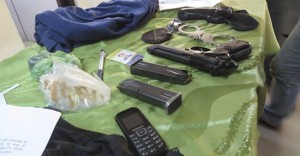
DAVAO CITY, Philippines – A probe is sought over the killing of 19 people that included two teens, American solidarity workers and civilians in a military operation in the rural area of Toboso, Negros Occidental on April 19.
The Armed Forces of the Philippines (AFP) claimed that all 19 are members of the New People’s Army (NPA), but this is challenged by rights groups and journalists.
The Communist Party of the Philippines (CPP) have identified all 19 victims in a statement on April 27, which claimed 10 as members of the NPA including its Negros Commander Roger Fabillar aka Ka Tapang, and the rest as civilians. This has enforced calls for an independent investigation to determine the circumstances of their deaths.
The nine included student council leader Alyssa Alano, age 22, from the University of the Philippines Diliman; community journalist RJ Nichole Ledesma, 30, from Pahimutad Negros; Maureen Keil Santuyo, 24, of the National Network of Agrarian Reform Advocates Youth (NNARA-Youth); Errol Wendel, also 24, of the Unyon ng Manggagawa sa Agrikultura (UMA); Filipino-American Lyle Prijoles, 40, from San Francisco, a council member of the International Coalition for Human Rights in the Philippines, and Kai Sorem, 26, from, Washington, USA, a founding officer of Anakbayan Seattle.
Initial statements from the AFP claimed that they engaged the NPAs in a 12-hour firefight that started at 4 am on April 19. But journalists noted the lack of details on the incident.
There were inconsistencies on the number of firearms reportedly seized by the soldiers, from an initial seven, it “later expanding to 9 and 20” according to Kodao Productions.
Journalist Dana Batnag writing for RightsReport raises questions on the AFP’s narrative that there was a 12-hour long “series of clashes” that stretched three kilometers from Sitio Sinugmawn to Sitio Plaringding where the bodies were recovered.
“A 12-hour running gunfight should leave plenty of evidence: spent casings, trampled paths, bloodstains, bullet holes in trees or structures. These should have been documented by now, but there are no reports of any independent investigator having returned to the encounter area. What proof exists that the guns recovered were actually fired?” Batnag asked. <https://rightsreport.org/2026/04/26/toboso-questions/>
She also raised the question on how residents in Sitio Salamanca evacuated. “Did they leave on their own, as sometimes happens when fighting breaks out, or were they guided out? Did the military clear the area when the clashes started? That question matters because, if so, the AFP’s logic seems to be: the casualties must be rebels, because soldiers had already cleared out the civilians.”
RightsReport also raises issue on the deaths of two minors, age 15 and 17, as they point out that their presence in the military operations show the lack of discrimination on the military’s side.
“It points, powerfully, to the civilian character of the location itself. Communities where families live, where children are present at 4 in the morning because it is their home, are not military objectives” it wrote.
<https://rightsreport.org/2026/04/28/toboso-npa/>
Their deaths, the group added, run counter to international laws (ICRC Customary IHL Rule 135 and the UN Convention on the Rights of the Child) which the country upholds protecting children caught in armed conflict.
Human rights and farmers groups gave out details on why the victims were in the area, an issue that is hugely debated online that is believed to be set by influence groups.
Human Rights Advocates Negros (HRAN), in its account of the incident, said Ledesma was not at the site of the initial clash but was shot in Plarinding during the military pursuit operation.
Santuyo and Wendel’s organizations said the two were working with farmers in Negros who oppose the oil palm plantations in Candoni and quarrying in their areas.
“The military’s framing of the incident as a conventional clash serves to obscure the reality on the ground and evade accountability,” said Kilusang Magbubukid ng Pilipinas, which condemned the murders and the military operations that have displaced over 600 people.
Karapatan scored the continuing reports of harassment, surveillance and red-tagging in Toboso.
The Commission on Human Rights Negros has said it is conducting its probe on the incident following the statements of various groups.
But National Union of Peoples’ Lawyers President Ephraim Cortez doubts if this probe at this time could shed light.
“The AFP has cordoned off the area. Only army personnel, and some paid trolls like Noel Legaspi, and a spurious group of self-confessed rebel returnees, who are actually military assets bankrolled by the AFP, were allowed access to the area. It is evident that the crime scene was not preserved. It was sanitized to dispose of any damning evidence and erase any trace of the atrocities committed during the operation. They had more than a week to do so,” Cortez said in a post over social media.
But NUPL said there are still ways to find answers to what happened at Toboso, such as an autopsy of the bodies,
“…it failed to consider one crucial detail, the remains of the dead victims as silent witnesses that will haunt them and expose their atrocities. Dead men do tell tales.”
Such actions could lead to further probe and question the conduct of the military operation that has extinguished the lives of farmers and six people who visited the area in Negros.(davaotoday.com)