
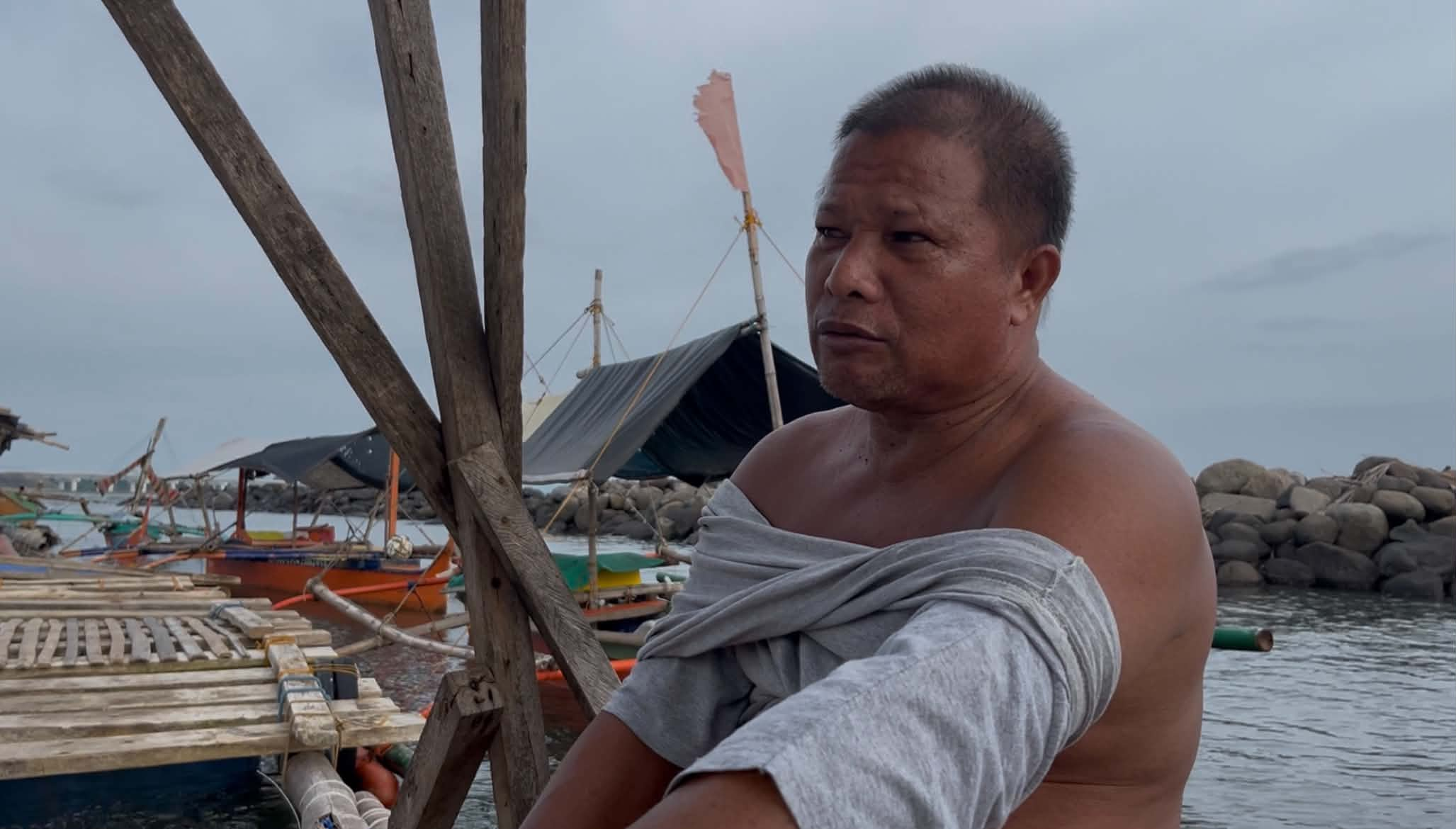
DAVAO CITY, Philippines—After three decades of fishing, Generoso Olasiman turns to construction work when poor catches leave him without enough income to support his family.
At 48, Olasiman has learned that sometimes, the only way to bring food home is to find work elsewhere.
With a forecast of a “very strong” El Niño expected to persist into the first half of 2027, Olasiman fears he may have to do that more often.
He remembers a previous El Niño when fish became scarce and catches fell short.
The prospect of another prolonged period of warmer temperatures and below-normal rainfall puts added pressure on fishers like Olasiman, whose earnings already depend on uncertain catches and the rising cost of going to sea.
For him, a poor catch does not simply mean a disappointing day. It can mean losing money on fuel and having to find the next meal elsewhere.
Uncertain catch, uncertain income
The Philippine Atmospheric, Geophysical, and Astronomical Services Administration (Pagasa) warned Sept. 23 that the ongoing El Niño could intensify into a Very Strong El Niño between September and December 2026 and persist through the first half of 2027.
El Niño is associated with warmer conditions and below-normal rainfall across much of the Philippines, increasing the risk of dry spells, drought, and water shortages. Warmer marine conditions may also affect fish availability, although the effects can vary. Declining catches cannot automatically be attributed to El Niño alone.
Olasiman’s experience shows how vulnerable a household can be when its income depends on the catch.
His largest catch can reach about 10 kilograms, worth roughly P2,000 before the proceeds are divided. His share may be just over P500. He uses the money to buy groceries and rice and, when he can, helps his nephews with food and school expenses.
When fishing brings in little or nothing, he turns to construction work.
Fuel costs add to the strain. Even when fish are available, the expense of going out to sea cuts into the money Olasiman can bring home.
Leo XL Fuentes Jr., Mindanao regional coordinator of farmer-scientist network Masipag, said El Niño could contribute to declining catches by reducing plankton populations and driving fish toward cooler waters. But he cautioned that the phenomenon is not the only factor affecting fisheries production.
Rising fuel prices have already forced small-scale fishers to spend less time at sea, Fuentes said.
“A fuel supply worth P1,000 used to last 12 hours at sea. Now, it lasts only six hours,” he said.
Less time at sea means fewer chances to catch enough fish to cover the cost of a trip and earn a living.
Pambansang Lakas ng Kilusang Mamamalakaya ng Pilipinas (Pamalakaya), also warned Oct. 9 that the coming El Niño could further burden fishing communities by making fish harder and more expensive to catch while exposing fishers to dangerous heat.
National Chairperson Fernando Hicap said fish and other marine life tend to move farther offshore as they seek cooler conditions, forcing fishers to spend more time and fuel looking for a catch.
The group warned that small-scale fishers may struggle to adapt while fuel prices remain high.
Damaged boat adds to burden
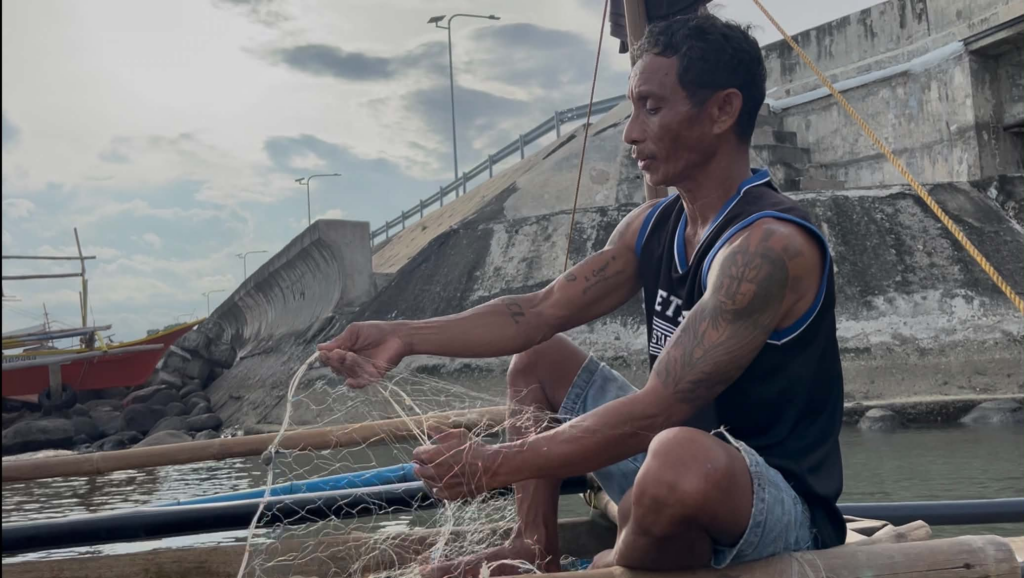
For 56-year-old Mansueto “Jojo” Bayale Jr., preparing for another difficult season is complicated by a setback that has already affected his livelihood.
In August, strong waves during the southwest monsoon, locally known as Habagat, overturned and damaged the boat he uses for fishing. Repairs cost about P5,000.
A donation drive organized by University of the Philippines Mindanao students who worked on a film production in the community had raised about P2,000 at the time of the interview.
The boat belongs to Bayale’s cousin, with whom he has worked for years. Since it was damaged, Bayale has had to join other fishers and share their catch, reducing his take-home income.
He has fished since he was 13. At 56, he helps support his wife, children and grandchildren earnings that can reach P500 or P1,000 on a good day but sometimes barely cover food.
Like Olasiman, Bayale has experienced El Niño before. He said surviving means finding other work when fishing is no longer enough.
“You really have to find ways to survive, because if you do not, your family will suffer. You have no other choice,” Bayale told Davao Today in Cebuano.
For Bayale, another difficult season offers no guarantee of a better alternative. Construction and other labor may provide temporary income, but they do not erase the uncertainty of relying on fishing to support his family.
Threats beyond the catch
Pamalakaya said the coming El Niño could bring more than declining catches and higher operating costs. Fishers who work for hours in direct sunlight and high humidity also face risks of heat exhaustion, heatstroke and other illnesses.
Roselyn Regalado, president of the Subic-based Samahan ng Cangaan 3 Fishermen’s Unity and a barangay health worker, said fishers in her community had experienced heatstroke and high blood pressure at sea.
She also cited limited first-aid equipment and training, which can make it difficult to respond to medical emergencies far from shore.
Regalado’s account comes from Zambales but highlights a health risk that Pamalakaya says fishing communities should prepare for as extreme weather intensifies.
The group urged the government to provide adequate fuel subsidies so fishers can remain at sea longer, extend economic assistance to families unable to fish, and distribute fishing boats with first-aid kits and emergency-response training.
Preparing before the effects worsen
The warning comes as Davao Region’s fisheries production has already declined. Philippine Statistics Authority data released Sept. 30 showed the region produced 14,638.52 metric tons of fish in the second quarter of 2026, down 13.2% from the same period in 2025. Commercial fisheries production fell by 38.4%, while marine municipal fisheries production declined by 14.7%.
The figures do not prove that El Niño caused the decline, but they do provide context for the challenges fishers face as the climate phenomenon is expected to intensify.
Fuentes said Masipag is conducting community-based training to help communities prepare for El Niño in 2027 and develop community disaster action plans.
The group is also promoting water-impounding systems in communities with remaining water sources and aquaculture as part of diversified, integrated farming systems. It recently held a Mindanao-wide training of trainers on organic aquaculture to equip more farmer-trainers to share the practice in their communities.
Fuentes said the government should listen to small-scale producers, support sustainable solutions to food insecurity and move away from an agricultural and fishing economy dependent on exports and imports.
October is observed as Peasant Month, drawing attention to the conditions of people who produce the country’s food. For small-scale fishers, these preparations could help build alternatives, but immediate concerns remain: whether a day at sea will cover its costs and whether the next trip will bring home enough to feed a family. (davaotoday.com)


