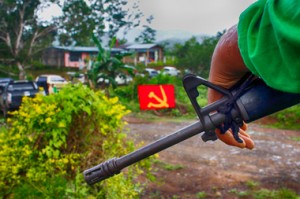
DAVAO CITY, Philippines—Three deadly school shootings across the Philippines in 2026 have forced public schools in Davao City to tighten campus security, but teachers say they still lack some of the facilities and preparedness measures needed to respond if an attack occurs.
Making do with what they have
At Mabini National High School, students undergo daily bag inspections and screening with a handheld metal detector. Guards inspect students’ bags and confiscate prohibited items, with minimal physical frisking.
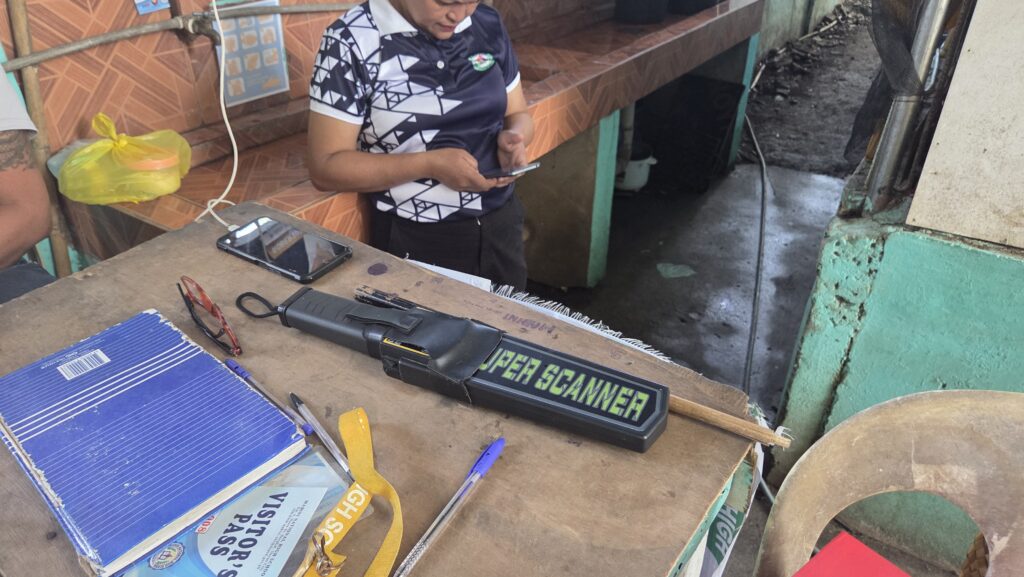
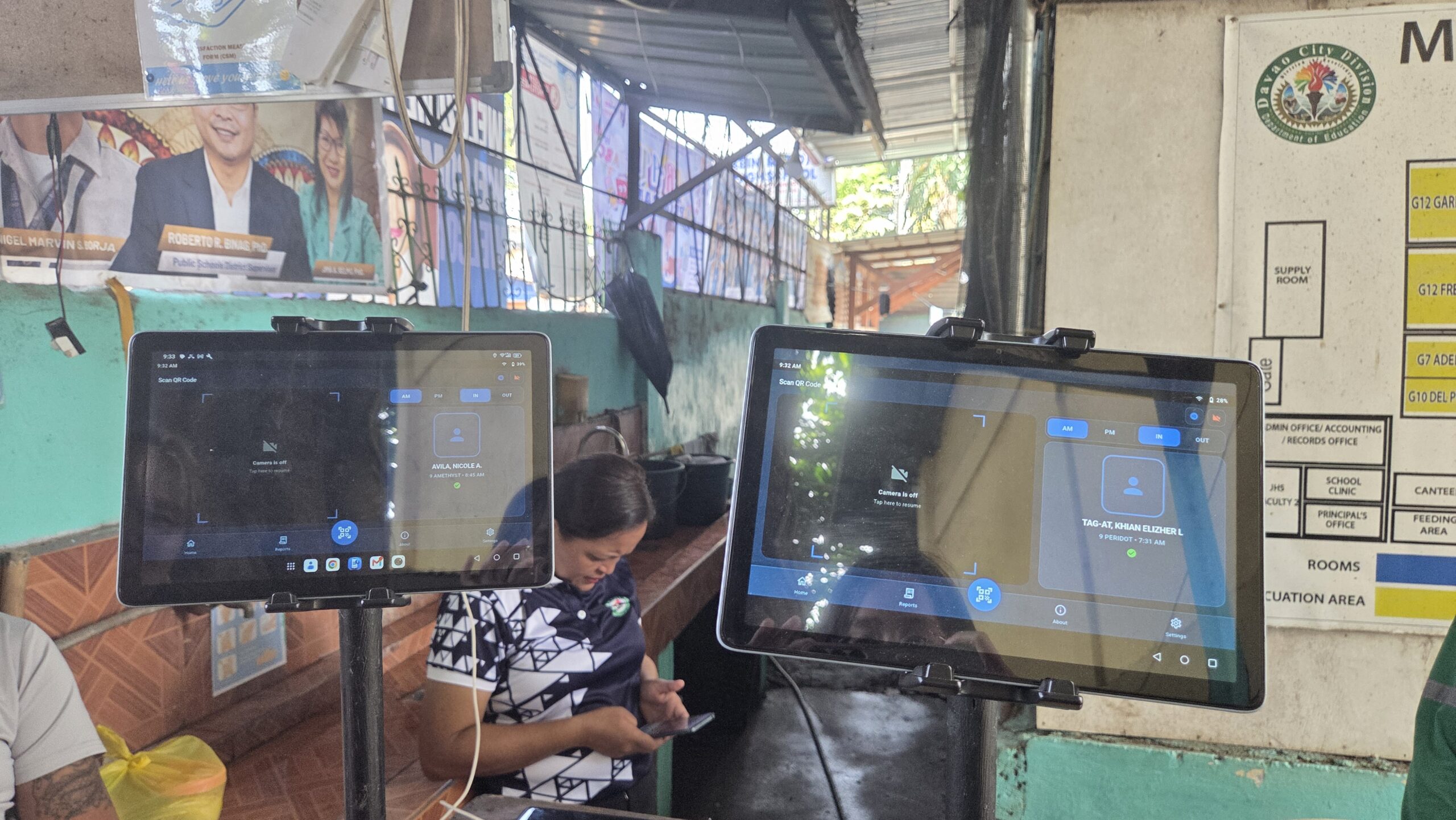
The school acquired the metal detector through a donation from the Parents-Teachers Association and has assigned three guards to different shifts. An electronic identification system sends parents messages when their children enter or leave campus.
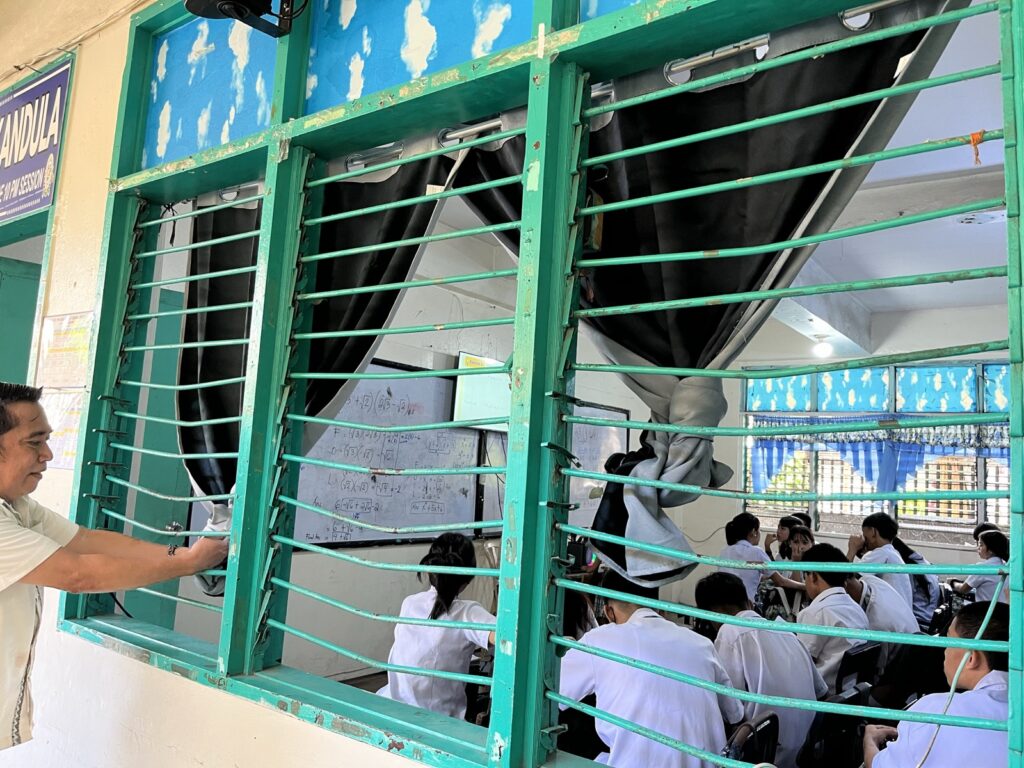
Meanwhile, at Sta. Ana National High School, teachers have installed blackout curtains to close if a shooter enters the school, placed barrels against large doors as barriers, and added screens to damaged windows.
Both schools have conducted orientations for students and parents, but neither has conducted any active-shooter drills so far.
“It has been very rampant, the news today is really frightening,” Marife Robles, a Grade 7 English and Special Program in the Arts Theatre Arts teacher at Mabini National High School, told Davao Today in Cebuano.
Reynaldo Pardillo, a Grade 10 Science teacher at Sta. Ana National High School, said orientations were ongoing but emphasized the limitations schools face.
“There are ongoing orientations, but unlike other schools, we haven’t done any active-shooter drills,” he said in Cebuano.
Citywide security gaps
The measures follow attacks at San Jose National High School in Tacloban City on June 22, Ateneo de Zamboanga University on Aug. 18, and Banga National High School in South Cotabato on Sept. 18. The incidents killed students, and in the latter two cases, the students who carried out the attacks also died.
Data from the Department of Education-Davao and the Public Safety and Security Office showed that 93% of the city’s 438 public schools were gated or fenced, while 73% had assigned security guards or Civil Security Unit personnel. Only 39% had functional closed-circuit television systems, and 35% had metal detectors.
Following the shooting in Zamboanga City, the Davao City government announced additional security personnel and coordination with police and education officials. The city has been working to strengthen its School Safety Ordinance and establish minimum safety protocols across its schools.
At a Sept. 23 media briefing, Councilor Luna Acosta, chairperson of the City Council Committee on Public Safety, said the proposed protocols would be adjusted according to schools’ capacities.
“Minimum safety protocols will apply to each of these schools. We will assess what each school is actually capable of implementing regarding these protocols, to avoid burdening the smaller schools,” Acosta said in Filipino.
Beyond physical security
Teachers say student safety also requires attention to mental health, parental involvement and the environment in which young people grow up.
“We cannot educate [and] nurture the student alone [with just the] teachers, but [we need] the whole village,” Pardillo said.
At Mabini, Robles said teachers refer students with serious personal concerns to the guidance office or relevant social welfare agencies. However, the school has only one designated guidance staff member serving around 800 to 900 students.
Each grade level has a prefect of discipline to help address concerns, she said, while more serious cases may be referred to the City Social Welfare and Development Office or other agencies.
Robles said teachers are now encouraged even more to speak calmly with students, avoid escalating confrontations and seek help from school administrators or police when necessary.
Pardillo raised concerns about children’s online activities, referring to what he sees as insufficient parental attention. “Based on research, this is particularly on the absence of the parents, or lack of concern from the parents,” he said.
The role of online platforms came under renewed scrutiny after the Tacloban shooting, when initial police findings drew attention to a student’s reported use of GoreBox, a game featuring graphic violence.
The Cybercrime Investigation and Coordinating Center (CICC) temporarily blocked the game pending investigation, although authorities had not established that playing it caused the attack.
Senate President Sherwin Gatchalian renewed his proposal to prohibit social media access for children aged 16 and below.
“Many of our young people are becoming addicted to social media and violent games, and numerous studies indicate that this influences their mental health,” Gatchalian said in Filipino last June.
Senator Bam Aquino, however, opposed a blanket ban on video games. “Video games have been here for 50 years yet they still remain a convenient scapegoat whenever a violent incident occurs,” he said in Filipino.
The Senate reopened its inquiry into online grooming, violent digital communities and the potential exploitation of children through gaming platforms.
Senator Risa Hontiveros, who chairs the Senate Committee on Women, Children, Family Relations and Gender Equality, said the inquiry would examine whether online spaces were being used to spread violent ideas and manipulate minors.
“We will reopen the hearing to determine whether online platforms play a role in the spread of violent ideas. They are becoming a breeding ground for groups that brainwash and radicalize children,” Hontiveros said.
The government’s response extended beyond investigations into gaming.
On Sept. 23, the Department of Information and Communications Technology (DICT), through the CICC, moved to restrict access to Discord after the platform was given a 24-hour deadline to address child-safety concerns.
Reddit was also directed to comply but was granted additional time after engaging with authorities. The temporary restriction on Discord was lifted the following day after the platform committed to strengthening its child-protection measures.
CICC Executive Director Renato “Aboy” Paraiso said authorities needed direct channels with online platforms to respond when children were at risk.
“We are not asking platforms to police the internet for the government but to be reachable, accountable, and responsive when activities on their platforms put Filipino children and communities at risk,” Paraiso said.
Authorities also moved to remove videos of the Banga school shooting that circulated on social media, warning that sharing graphic footage could intensify public fear and potentially encourage copycat attacks.
DepEd announced a Digital School Safety Campaign to teach students, parents and teachers about online grooming, child exploitation, cyberbullying, privacy, safe gaming and digital well-being.
Education Secretary Sonny Angara said schools must help children navigate online spaces, particularly when their parents are absent or other relatives are responsible for their care.
“Talk to them, understand their situation, and provide them with proper guidance on using the internet,” Angara said in Filipino.
For teachers, however, addressing these risks also requires understanding what students may be experiencing beyond their online activities, as mental health concerns and difficult family circumstances can require professional intervention.
Who bears the responsibility?
Elenito Escalante, president of the Alliance of Concerned Teachers Partylist Davao Region (ACT-Davao), said that while stronger school security was necessary, it should not leave teachers and students carrying the responsibility for preventing attacks.
“This does not mean that the burden now has to fall on the teachers and the students,” Escalante said in Cebuano.
He questioned how children obtained the firearms used in the attacks. “If we look at it, where do the weapons used by the children come from? They don’t come from the school. They don’t come from the students. They don’t come from the teachers,” he said.
Escalante’s remarks echoed concerns raised by the Educators’ Forum for Development (EfD) in Mindanao, which called for an independent commission of educators and social scientists to investigate school violence beyond campus security.
In an Aug. 20 statement after the second school shooting, EfD urged a broader examination of firearm access, adolescent well-being, the normalization of violence and shortcomings in the education system. “The question is not merely how a child obtained a gun, but how that gun existed,” their statement read.
EfD argued that responses focused only on fortified gates and stricter regulations would not address the wider conditions surrounding school violence. It called for educators and social scientists to examine these conditions and recommend measures that go beyond security enforcement.
Acosta cautioned against treating transparent bags as a sufficient response to school violence.
“The bag is just a precautionary band aid measure. It’s not gonna solve all the problems for school safety. We would rather use the funds for long-term infrastructure projects,” she said.
She also warned that emergency drills needed to account for children’s ages and psychological well-being.
“Even if you drill the students repeatedly, they are still really just minors; they’re kids looking for guidance from staff and teachers,” Acosta said in Cebuano.
For now, the teachers in Davao City look to screening students upon entry and preparing classrooms as immediate steps they can take.
Their accounts also point to the need for workable emergency procedures, adequate student support and action on the wider factors that allow school violence to occur. (davaotoday.com)