
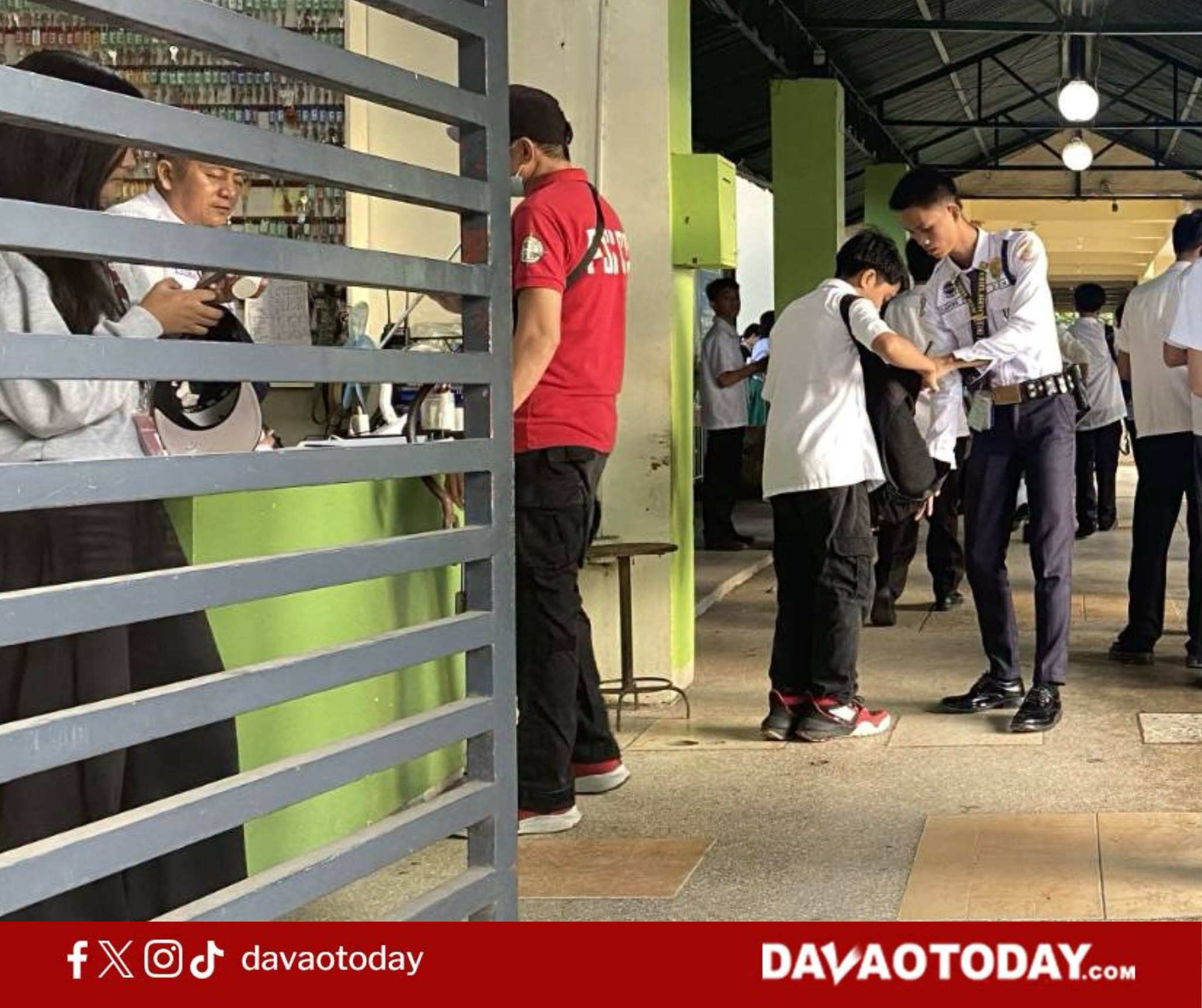
THE SHOOTING at Ateneo de Zamboanga on Aug. 18, which killed two students including the gunman, continues to reverberate across Mindanao schools.
In news reports, two colleges in Davao City suspended classes following a message chain claiming they were targets of an attack. Alleged minors orchestrated threats against a public high school and one college campus in Digos, Davao del Sur. Elsewhere municipalities including Laak and Mawab in Davao de Oro received similar threats.
Schools have resorted to tighter security measures, frisking school bags that often clog entrances at institutions such as Daniel Aguinaldo High School and the University of Southeastern Philippines in Davao City. One private school is considering a new policy requiring students to switch to transparent bags.
The Department of Education initially planned a “shooter active threat” drill last week but canceled it after psychologists and counselors warned it could instill fear in the students and teachers it was meant to protect.
Across social media, parents and netizens are calling for more security measures in schools, from metal detectors to increased deployment of security personnel and police officers.
But these efforts appear to miss the point.
The Educators Forum for Development in Mindanao observed that policymakers view this issue primarily as a peace and order matter, yet fail to see students as victims—including those who commit violence or make threats.
Framing school safety around armed attackers emphasizes reacting to violence rather than understanding and preventing its underlying causes.
Schools are microcosms of society, and violence in schools can reflect broader problems such as social alienation, bullying, unresolved conflict, inadequate mental health support, and the normalization of aggression.
Initial reports from the Zamboanga incident, along with a previous one involving two high schoolers in Tacloban, indicate these problems affected the teens before they resorted to violence.
Another point from the forum notes how today’s high schoolers grew up amid “violent rhetoric and extrajudicial killings during the 2016 Duterte administration.” Some students may have witnessed violence in their communities or heard such rhetoric in their homes.
Youth offenders in Zamboanga and Tacloban used government-issued firearms, as their families worked in state security. This raises questions about whether authority may be equated with abuse.
If schools focus only on preparing students to survive an attack, they risk missing something equally important: building an environment where warning signs get spotted, conflicts are nipped early, and students can reach out to trusted adults and professionals when they need help.
Security measures and drills have their place—they teach schools how to react in emergencies. But true safety goes further. It means prevention, guidance, counseling, and real relationships that catch problems before they escalate. What schools really need are enough guidance counselors, attentive teachers, and support systems that can handle conflicts before they turn violent.
It does not even require confidential funds, contrary to some social media noise. All that is needed is building a community where young people can live with confidence to face society’s pressures.
Metal detectors won’t fix that. Only commitment will. (davaotoday.com)


