
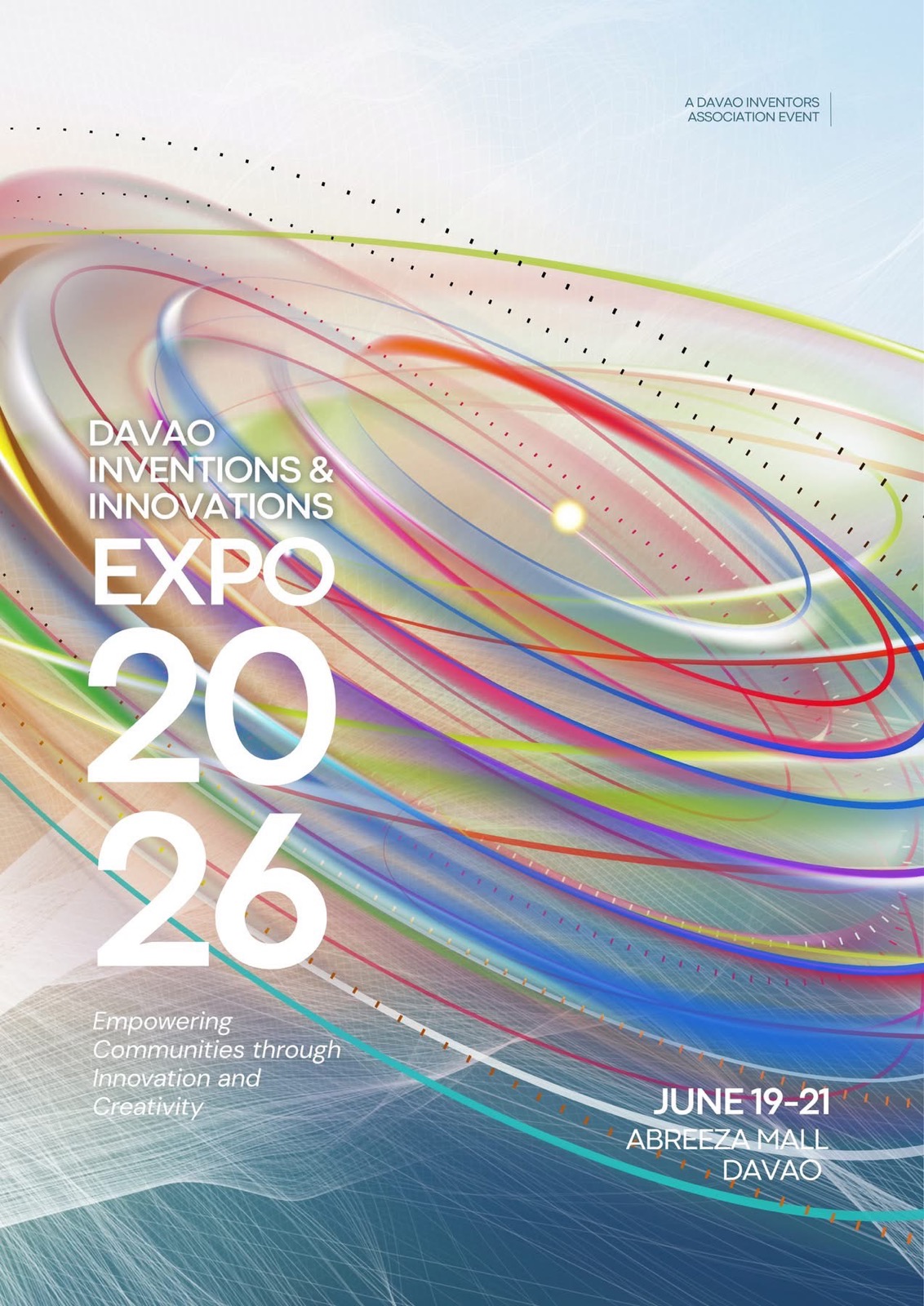
DAVAO CITY, Philippines — Technological solutions addressing farming, fishing and local industry needs will be featured at the Davao Inventions and Innovations Expo 2026 at Ayala Abreeza Mall from June 19 to 21.
The three-day expo showcases inventions and innovations from Davao-based inventors, innovators, and creative researchers. Creators Association president Virgilio Sangutan said this year’s event focuses on solutions that respond directly to community and industry challenges.
Exhibits include technologies for farmers such as organic fertilizer alternatives amid high input costs, and post-harvest solutions designed to extend the shelf life of fruits and vegetables without refrigeration.
Sangutan highlighted seaweed farming as an accessible, low-cost livelihood opportunity with strong potential for further development.
“Dili na siya pareho sa uban nga tanom nga kinahanglan pa og fertilizer, pesticide, or insecticide. Sa seaweeds, ang dagat ra ug ang init sa adlaw mao na ang mo-tabang sa pagpatubo,” he said.
(This is different from other crops which need fertilizer, pesticide or insecticide. For seaweeds, it just needs water and sunlight to let it grow.)
Seaweed farming has long been recommended as a priority livelihood project due to its scalability and strong global demand: “Seaweed is a very important craft that is exportable without limit when it comes to the demand and supply in the world market.”
Seaweed-related innovations, from production to processing, will be among those featured in the expo because it is one example of an industry that could be expanded to support coastal communities whose livelihoods remain underdeveloped.
Local value adding push
Meanwhile, Expo 2026 chairperson Julieto Mejos emphasized strengthening local value-adding industries, saying many raw materials produced in the country are still processed elsewhere before returning as finished goods.
“What we hear is Chinese (business) buying, raw materials… and they are the ones actually processing it, which is supposedly be done by us Filipinos to generate more livelihood, more work,” Mejos said.
He added that developing local processing industries could create more jobs and allow communities to benefit more directly from their own resources.
Mejos also said the country’s extensive coastline is an underutilized resource for production and livelihood. The Philippines has around 7,600 islands, yet few are actively producing food from these seashores, he said.
Market access hurdles
Beyond the inventions, Sangutan discussed the difficulties inventors face in bringing their work to the market. Many inventions remain unused or “on the shelf” because of costs involved in research and development, testing, and commercialization.
“Kadaghanan nga inventor, ang ilahang mga inventions dili gyud kaabot og market,” he said.
(There are many investors, but their inventions do not reach the market.)
Sangutan recalled that inventors from Mindanao previously had to travel to Manila to file patents, but said this has improved with the establishment of Intellectual Property Satellite Offices (IPSOs), including the first IPSO outside Metro Manila, in Davao City.
This made it easier for local inventors to process intellectual property concerns without going to Manila.
He also mentioned the creation of the Davao City Inventions and Innovations Center through City Ordinance No. 046, Series of 2021, which provides assistance and support to local inventors and innovators.
Still, Sangutan said market access remains one of the biggest hurdles for inventors. While many are skilled in developing solutions, they often struggle to turn them into actual products that can reach industries, investors, or end users.
He added that without commercialization, many inventions remain at prototype stage despite their potential usefulness in agriculture, fisheries, and waste management.
“It’s going to be our milestone moment for us inventors that had been keeping our inventions for the past six years,” he said.
He encouraged the public to visit the exhibition and see the inventions firsthand, saying it could also encourage more people to pursue innovation.
“We highly invite everyone to be around… there are lots of surprising inventions to be showcased,” Mejos said. (davaotoday.com) – Ayannah Tomandao / University of the Philippines Mindanao Intern


