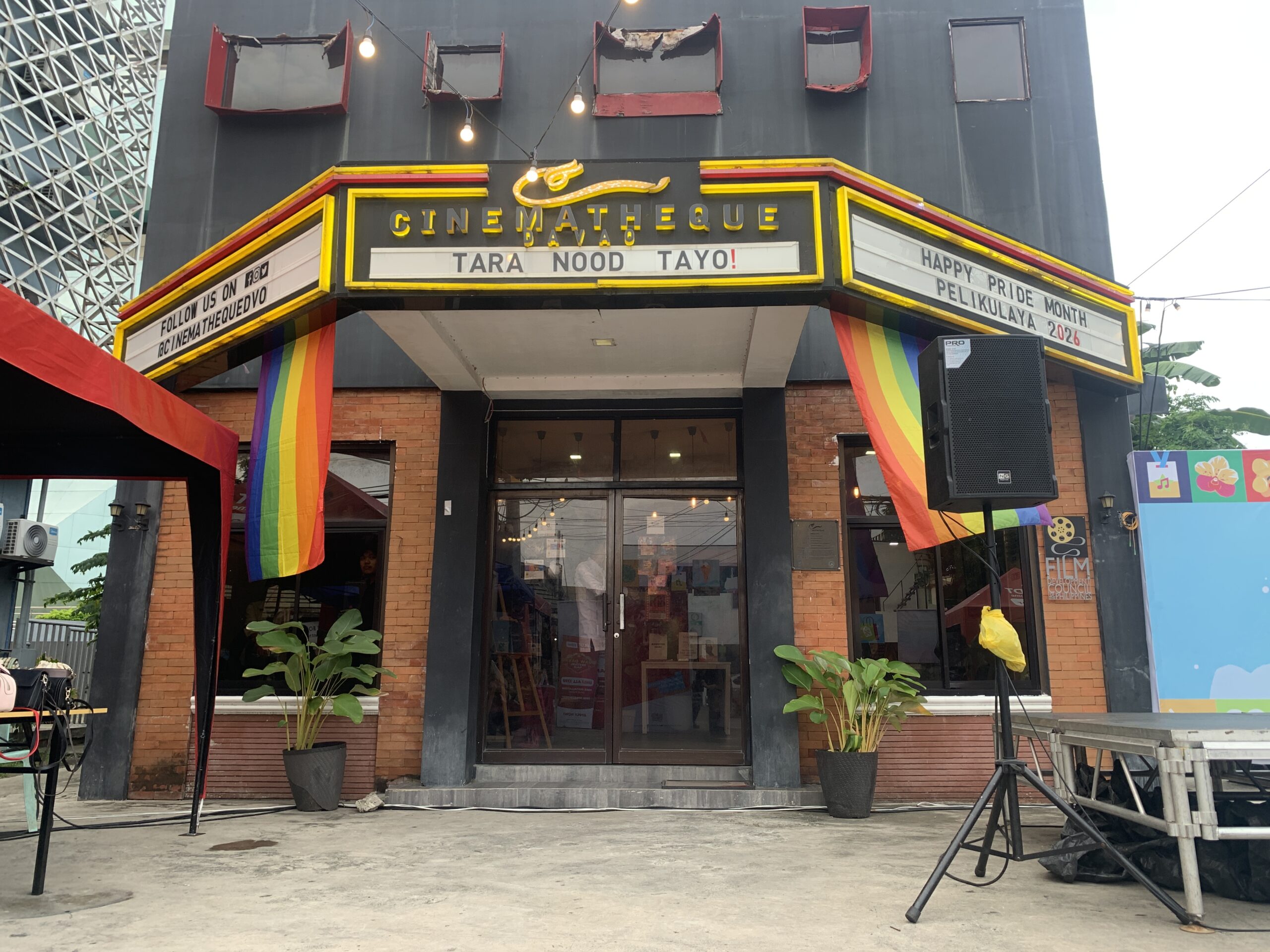
DAVAO CITY, Philippines — Tucked right next to People’s Park, the Film Development Council of the Philippines (FDCP) Cinematheque Centre-Davao serves as a sanctuary for local film enthusiasts and general audiences to watch exclusive film screenings.
Every June, coinciding with Pride Month, FDCP Cinematheque Centres across the nation transform into colorful, celebratory spaces as they host Pelikulaya, an LGBTQIA+ film festival anchored in the agency’s mission to uphold the essence of Pride through screenings queer-centric films, panel discussions and other events.
For this year’s Pelikulaya 2026, the lineup ranges from the short film “Perslab” by Ronnie Ramos to emotionally driven full-length feature such as Lino Brocka’s “Macho Dancer”.
With a strong roster of queer films, the annual film festival probes a deeper question: Why does cinema remain integral to the celebration of Pride?
Progress, acceptance and appreciation
In recent years, Philippine media has seen a gradual shift in depicting queer stories, moving past harmful, one-dimensional stereotypes toward authentic representations grounded in the lived experiences of the LGBTQIA+ community.
“Masyadong malaki na ang progress because nowadays napapanood na, nakikita. Mas marami ng lumalabas na queer films, katulad ng mga transgender films. Kahit saan pwede na siya mapanood,” said Mimi Juareza, a transgender indie actress based in Davao City who won Best Actor in the ninth Cinemalaya Film Festival for her performance in “Quick Change”.
(The progress has been huge because nowadays it’s seen and watched. More queer films are coming out, like transgender films. You can watch them anywhere now.)
This visibility also resonated with other festival attendees.
“Ganahan ko na diverse ang representation na gipakita kay dili lang gud siya one part of the community,” said Kyla, a festival attendee. “Every film, lahi-lahi na part sa community ang gina-represent.”
(I like that they showed diverse representations because it wasn’t just one part of the community. There were representations of different parts of the community in every film.)
Her friend, Desiree, echoed the same sentiment, mentioning that most people only know of queer representation in films through men loving men (MLM) and women loving women (WLW) relationships.
She particularly liked the short film “Yelo” by Gab Rosique that depicted a romantic relationship between a cisgender woman (Jessa) and a transgender woman (Candy), a story rarely seen in mainstream Philippine media.
Hannah, another festival attendee, said she appreciated being in the same room with others watching the queer films as an ally.
“Ma-feel nako ang appreciation gud sa queer cinema and mga indie films. Especially, ang industry ng cinema sa Philippines kay overlooked ang indie films, ang mga mainstream lang ang makit-an. So very comforting makit-an na medyo daghang tao nagawatch diri.”
(I can feel the appreciation for queer cinema and indie films. Especially because indie films are unnoticed here in the Philippine cinema industry, we only ever see mainstream films. So it’s very comforting to see that a lot of people are watching here.)
Through these less-explored lenses, Pelikulaya 2026 highlights how queer cinema continues to push the boundaries of storytelling.
Queer filmmakers’ perspectives
As student filmmakers hailing from the University of the Philippines – Mindanao, Emmanuel Pamaylaon and Henri Belimac have made names for themselves in both the queer and regional cinema scenes.
Their dedication to their craft carries credibility and understanding of what it takes to create queer narratives. Belimac made waves as the sole Mindanaoan finalist and grantee at the Puregold CinePanalo Festival with her film “Miss Intrams” while Pamaylaon earned critical acclaim “Hindi Nawawala sa Pagkawala ang mga Alaala” and most recently become the sole Mindanaoan finalist for Sine Kabataan 2026.
When asked what inspires them as queer filmmakers, Emmanuel expressed the need to continue forwarding queer narratives, especially in regional settings.
“Alam kong may kulang pa na mga istorya natin as queer people. Alam kong pwede pa tayong magdagdag ng mga narratives na labas sa mainstream media. Syempre, dito din sa Mindanao, being regional people, mas kailangan na ipush ang mga narratives natin.”
(I know that our stories as queer people are still incomplete. I know that we can still add narratives that go beyond what is shown in mainstream media. Especially here in Mindanao, as regional people, it’s important that we keep pushing our narratives.)
For Henri, her inspiration stems from the queer experience, especially being queer herself.
“I always make sure to make queer films that, even though I admit are heavily inspired from my own experiences, kay madirect and write siya in a way na makita din ng queer community ang selves nila within the stories I put out.”
(I always make sure to make queer films that, even though I admit are heavily inspired from my own experiences, are directed and written in a way where the queer community can also see themselves in the stories I put out.)
But, as queer filmmakers, navigating the industry comes with challenges. Henri emphasizes the lack of funding for queer artists and called for the abolition of censorship and other institutional barriers.
“I truly believe that art and media, especially in today’s time, hold so much power. So when we can finally break through restrictive and hateful censorship and are allowed more opportunities for support and funding, our queer films will be strong enough to push forward our rights to respect and of course, the likes of SOGIE Bill.”SOGIE Bill, is long-pending Philippine legislation aimed at prohibiting discrimnation on the basis of sexual orientation, gender identity and expression.
Engaging in queer films does not stop at Pride
While Pride Month may be drawing to a close, the stories and struggles of the LGBTQIA+ community don’t just take a pause.
“Maskin muingon ta na murag medyo progressive na ta, wala gihapon niabot sa point na wholeheartedly jud tinatanggap ng [general] community ang queer community,” Kyla said. “Daghan pa rin mga queer people makaranas ng abuse, homophobia, transphobia kay mag stem siya na dili gihapon open ang mind sa people about the community.”
(Even if we say we are more progressive, we haven’t reached a point yet where the [general] community wholeheartedly accepts the queer community. Many queer people still experience abuse, homophobia, transphobia because it stems from people not being open-minded about the community.)
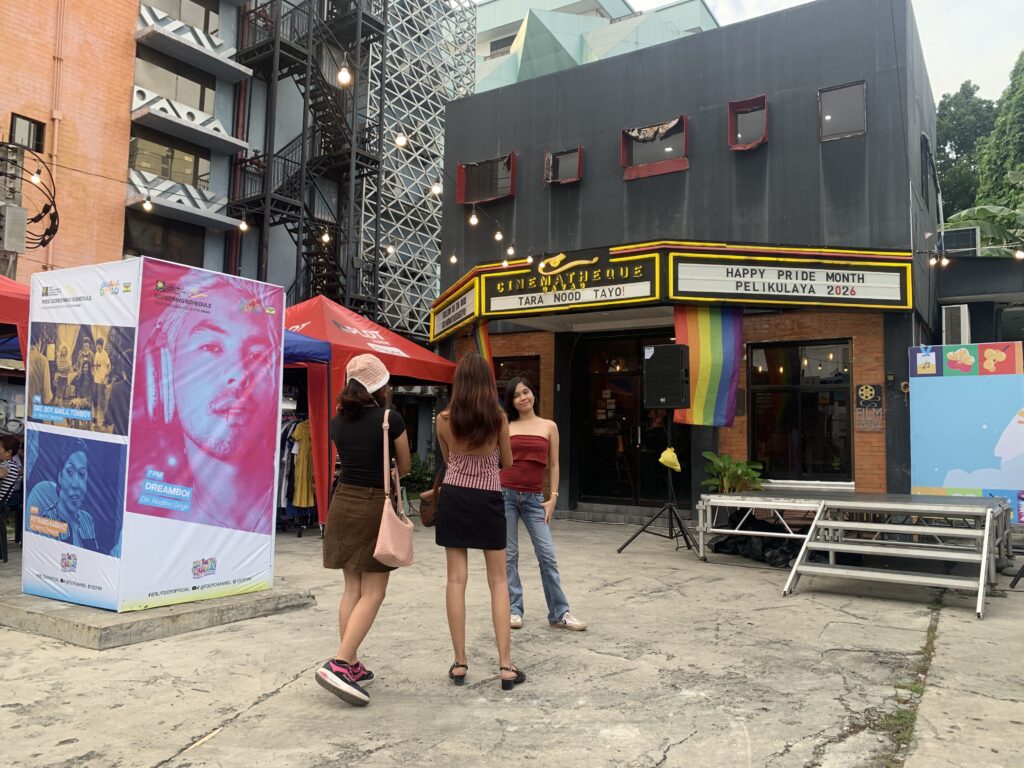
Queer storytelling beyond Pride month
This mirrors Emmanuel’s belief that telling queer stories should continue well beyond June, and that much remains to be done for the community to be fully recognized.
“Di lang dapat nakakulong sa Pride Month ang ating selebrasyon, mga panawagan, at pagpakita ng mga istorya natin kasi, more than ever, mas kailangan natin magpelikula ng queer narratives even outside Pride Month. Kailangan pa natin ipakita sa larger audience what queer stories should be and how we should accept queer people.”
(Our celebration, calls and stories shouldn’t just be confined during Pride Month because, more than ever we need to make films that showcase queer narratives even outside Pride Month. We still need to show to a larger audience what queer stories should look like and how we should accept queer people.)
As the curtains close to Pelikulaya 2026, the festival stands as a reminder of why queer experiences belong on screen. Cinema reflects a portion of our society, and it should remain an avenue where stories of the marginalized are not only told but unapologetically celebrated.
The FDCP Cinematheque Center – Davao will conclude Pelikulaya 2026 with a screening of “Dreamboi” directed by Rodina Singh on Monday, June 29, 2026 at 7:00 PM. – Reeham Taib | UP Mindanao Intern(davaotoday.com)