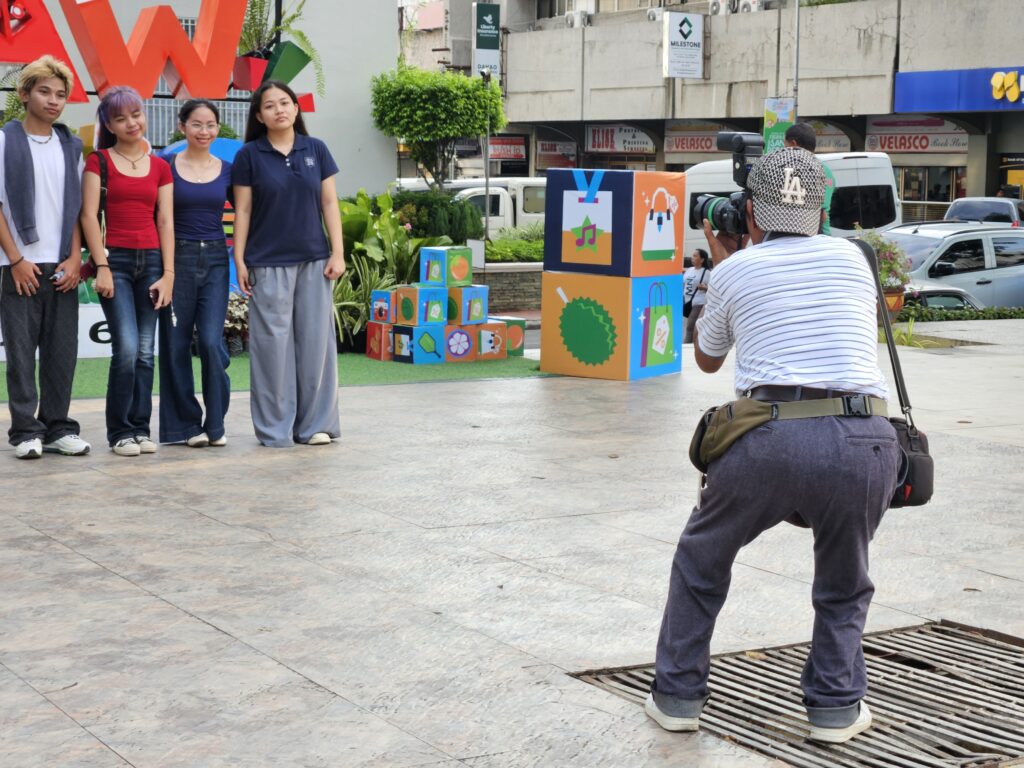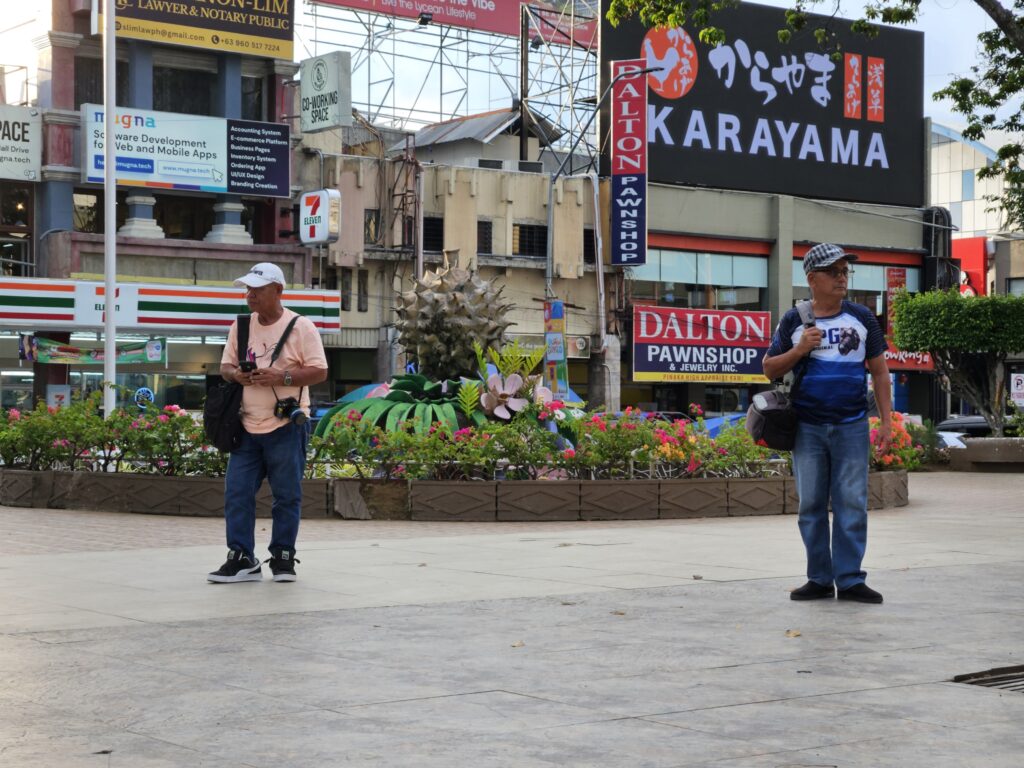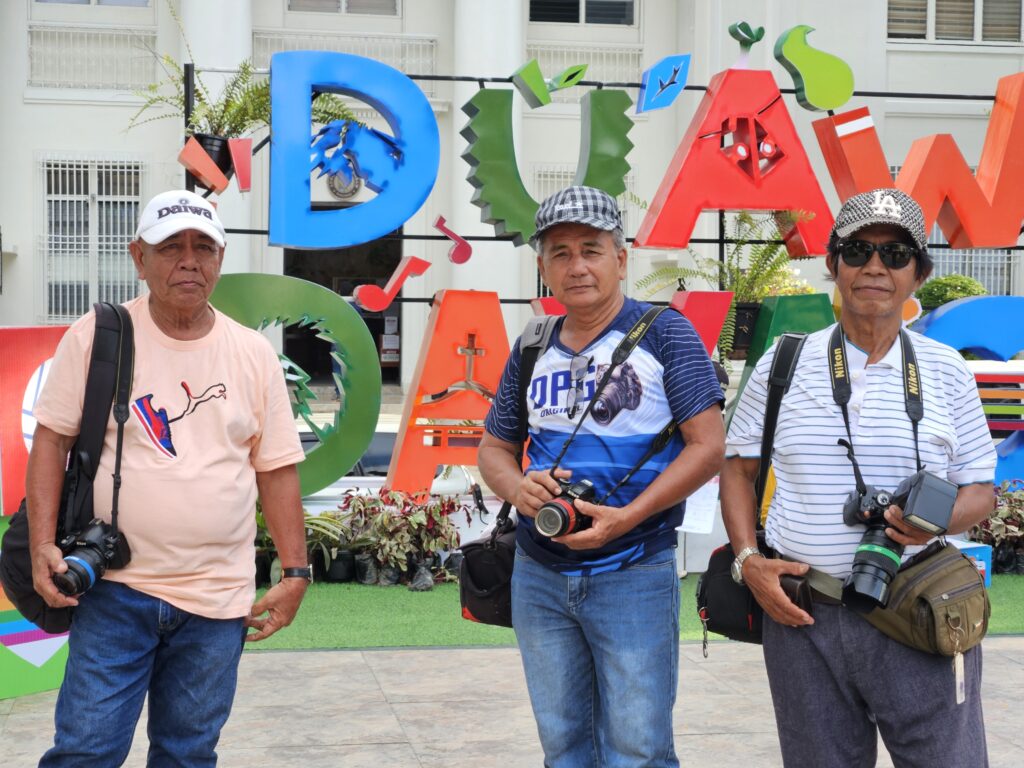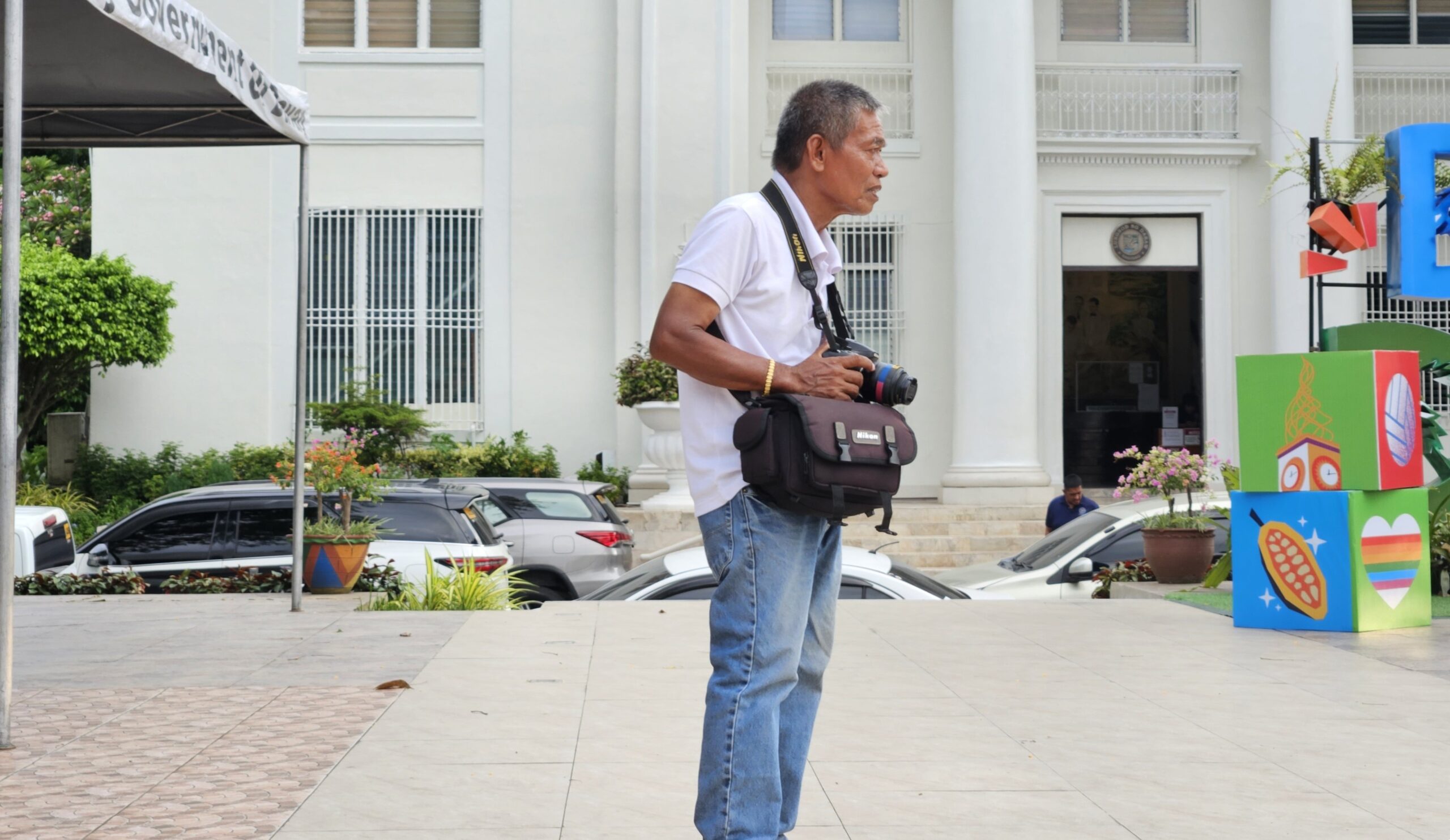
DAVAO CITY, Philippines—In the afternoon heat at Rizal Park, just steps from Davao City Hall, photographers wait for customers by the flagpole, with the “Duaw Davao” 3D letter as backdrop on the platform just in front of them. Some stand in silence, others sit on the edge of concrete planter box, cameras hanging from their shoulders as they observe people passing by.
Around them, the park hums with life—students, workers, and families walking through, most holding smartphones capable of taking instant, high quality photos.
For many, photography has become effortless. But for a small group of traditional photographers in Davao City, the rise of digital technology has reshaped not just how images are captured, but how they survive.
Among those waiting is 66-year-old Edwin Ortaliz, who has worked as a photographer for more than three decades. He started during the era of film, long before digital became the norm.
Today, he still comes to Rizal Park daily, hoping for passersby who want a printed photo.
“This is the only work I do every day,” Ortaliz said. “And the only thing that put my children through school.”
He earns an average of P600 per week. From each photo taken, the rate is P50, eight pesos go to printing costs, leaving him with roughly P42.
“Sometimes, when times are hard, I ask my children for help,” Ortaliz added.
Despite the instability, he continues because photography is the only livelihood he knows. Financial constraints forced him to transition from film to digital using a second-hand DSLR rather than a new unit.
Nearby stands Aly Japon, a veteran whose career began in 1975. He learned the trade by watching his uncles, eventually making it his lifelong profession. Like Ortaliz, Japon remains at Rizal Park, though he has felt the impact of smartphone photography significantly reducing demand for printed services.
Roger Yonson, another photographer who started in 1987 shortly after high school, witnessed the transition from film to digital, and then to smartphones. He recalled that during the early digital era, he could not afford a DSLR and relied on a point-and-shoot “digicam” before eventually upgrading. He continues to use a DSLR today while working at Rizal Park.
“Income has become more unstable as smartphones became widespread and accessible to almost everyone,” Yonson said.
Jimmy Samson, who has been a photographer since 1980, echoed the sentiment. He once used mechanical film cameras like the Olympus PEN-F and Nikkormat before shifting to a Nikon DSLR. He previously worked weddings, graduation ceremonies, and as an ID photographer for incoming freshmen students at the University of Mindanao UM.
However, as schools began hiring official documentation teams or contracting studios, independent photographers like Samson were gradually excluded. With fewer event-based jobs available, he now spends most of his time at Rizal Park waiting for a customer.
Asked how they attract clients, Samson admitted they have no strategy.
“We don’t have any way of convincing them. Usually, we just get hired because people feel sorry for us,” he said.
The photographers recall being regular fixtures at graduation ceremonies across Davao City schools, documenting milestones for families. Known then as maniniyot or kodaker, they provided services at school events before studios and institutional media teams became the standard.
Today, many are barred from graduation venues, as schools rely on in-house teams or contracted studios. As a result, Rizal Park, and sometimes Osmeña Park, has become their main workplace. There, they wait in corners or sit quietly near landmarks like the flagpole, hoping for customers who still value printed memories.
Despite decline in demand, these photographers continue to hold on to their craft, sustained by decades of experience and the hope that someone will still choose a printed memory in an increasingly digital world. – RENIER CORNELIO / MSU Marawi Intern