
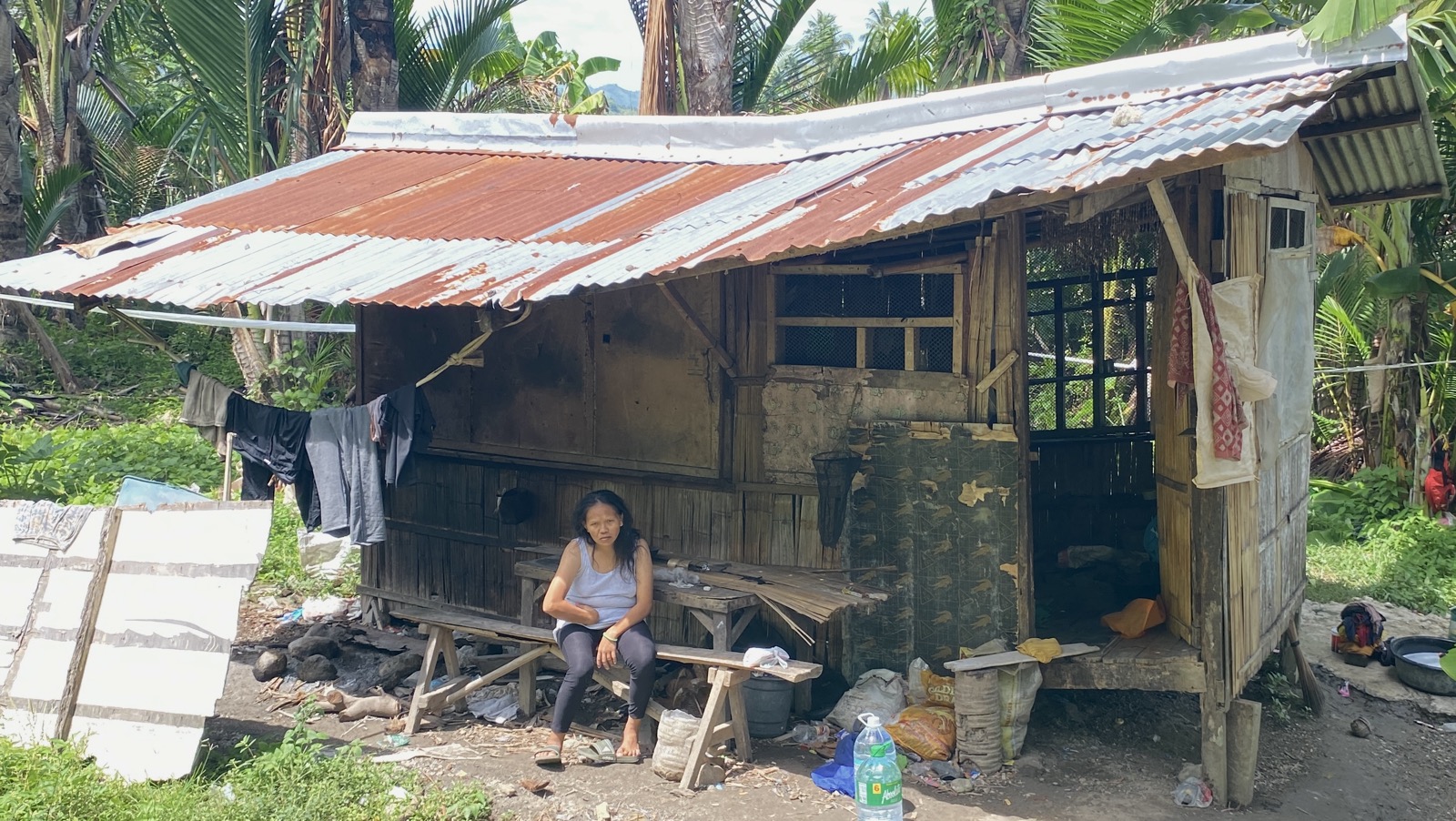
GLAN, Sarangani — When the ground stopped shaking after the magnitude 7.8 earthquake struck parts of Mindanao on June 8, another uncertainty began for thousands of families in Glan, Sarangani: Where do they go now?
The quake left more than collapsed roofs and cracked walls. For many residents, especially those living in remote, landslide-prone communities, it raised a more difficult question: Can they rebuild?
Days after the disaster, families whose homes were severely damaged continue to seek assistance, for food and temporary shelter — and for construction materials and cash to rebuild. For some, rebuilding may not be an option if their communities are declared unsafe.
Homes unsafe after quake
Maria Villamor, 24, no longer sleeps inside the house she spent years calling home.
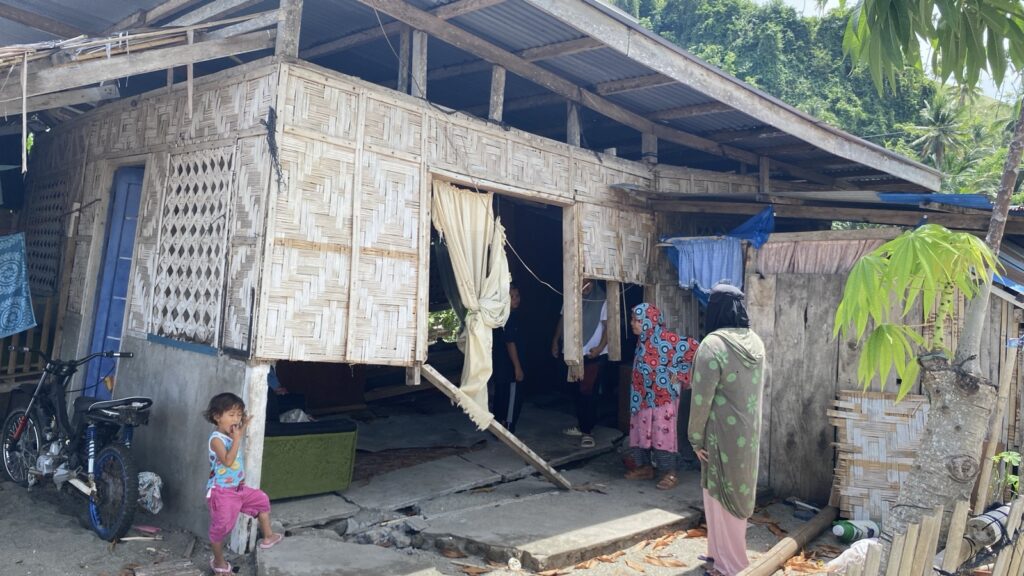
The quake left their house in Barangay Tapon leaning to one side. Although parts of the structure remain standing, Maria said it is no longer safe.
Instead of returning, the family stays in temporary shelters beside the highway while authorities determine whether it is safe to go back.
“Ang problema lang gyud ang among kapuy-an. Wala na Ma’am. Ga bakilid lang jud siya. Dili na jud namo siya maadtuan kay wala mi kabalo basin mauyog napud ug kalit unya mahugmak,” she said. (“Our biggest problem now is our home. It’s gone, Ma’am. It’s already leaning badly. We can’t go there anymore because we don’t know if it might suddenly shake again and collapse.”)
Like many in the barangay, Maria and her family spend their days outside their damaged house, fearing another strong tremor could trigger its collapse. Several neighbors have stopped sleeping inside houses initially considered as repairable because they no longer trust the weakened walls.
Assessment process
Cesar Ian Manico, information officer II of the Department of Social Welfare and Development (DSWD) Region 12, said initial assessments begin at the barangay level, particularly in areas where government responders could not immediately enter because roads remained impassable.
Once access is possible, DSWD personnel validate reports and classify damaged houses as repairable and unrepairable.
Those classifications determine not only financial assistance but also whether residents can safely return home, remain in evacuation areas, or require continued temporary shelter.
Although authorities have not finished assessing many houses, some residents have already returned briefly to bathe, retrieve belongings, cook meals and check on property. For families staying in makeshift tents along the road, the shelters provide safety but offer little privacy and limited access to necessities.
Rebuilding sites
As residents wait for assessment results, some communities are taking matters into their own hands.
In Purok Islam, where there is no permanent evacuation center, the residents worked together to establish a shelter on a vacant lot farther from the hillside.
Purok chairwoman Raida Nidal said the initiative was meant to provide a safer place for families from both Purok Islam and nearby Purok Highway while waiting for government decisions.
People want to return home, but they also know that returning too soon could put their families at risk.
Patrick Yap, officer-in-charge of the municipal administrator’s office, said the municipal government wants affected residents to return to normal life as soon as possible. He appealed to donors to prioritize construction materials that families can use once rebuilding begins.
But, rebuilding will depend on hazard assessments conducted by technical agencies. The Philippine Institute of Volcanology and Seismology (PHILVOCS) has advised local governments that if relocation becomes necessary, affected families should not be moved to areas adjacent to existing danger zones, Yap said.
Relocating communities beside unstable slopes or hazard-prone areas would only expose them to the same risks in future disasters.
Finding relocation areas remains one of the municipality’s biggest challenges, he said. The local government has purchased relocation sites in several barangays, but many areas are still partially developed; roads and other infrastructure still need completion. The municipality is exploring additional land to accommodate residents who may be prohibited from rebuilding inside identified danger zones.
Danger zones reshape recovery
The quake did more than destroy houses. It reshaped how the entire communities are viewed.
Several of the hardest-hit barangays are in mountainous areas where landslides blocked roads in the quake’s aftermath, delaying relief operations and making it difficult for responders to reach isolated residents. These same communities now face closer evaluation as authorities determine whether they remain suitable for settlement.
Yap acknowledged that some barangays still lack permanent evacuation centers, forcing residents to establish temporary shelters themselves while waiting for government assistance. Despite logistical challenges, the municipality is coordinating with barangay officials to monitor conditions and ensure isolated communities receive help.
Uncertain recovery
For many survivors, uncertainty extends beyond where they will rebuild. It includes how they will recover.
Josephine Vendiola, 60, who is staying at the municipal tent city in Poblacion, said the quake also damaged the small beauty salon that provides her family’s main income. Although the building was classified as repairable, it sustained large foundation cracks and would require major repairs. She hopes authorities can provide materials to restore the business and help her family recover financially.
For Mahadzieh Tel, 55, of Barangay Burias, returning home is even more uncertain. Her house was classified unrepairable after large cracks spread across the floor while the walls began separating from the foundation. She said the house no longer feels safe to live in. If rebuilding elsewhere is not immediately possible, she and her husband hope to salvage usable materials while waiting for authorities to determine whether the property can be occupied.
“Ako Ma’am mahadlok na gyud ko pero akong bana iya ra ning ibilin ning uban kay dili na mani pwede, ang uban kay na-separate naman,” Mahadzieh said. (“I’m really scared now, Ma’am, but my husband said we should just leave the rest here because this is no longer usable; some parts have already separated.”)
Sahara Ambiran, 36, carries another burden beyond damaged walls. During the earthquake, she and her family narrowly escaped collapsing concrete inside their home. Although they qualified for cash assistance after their house was assessed as beyond repair, she said the amount would not be enough to build another home. Today, they sleep on the terrace of a relative’s house because they remain too afraid to return.
For Sahara and hundreds of other survivors in Glan, rebuilding is no longer simply about putting up new walls. It is about deciding whether the place they once called home is still safe to return to. Ayannah Tomandao/University of the Philippines- Mindanao Intern


