
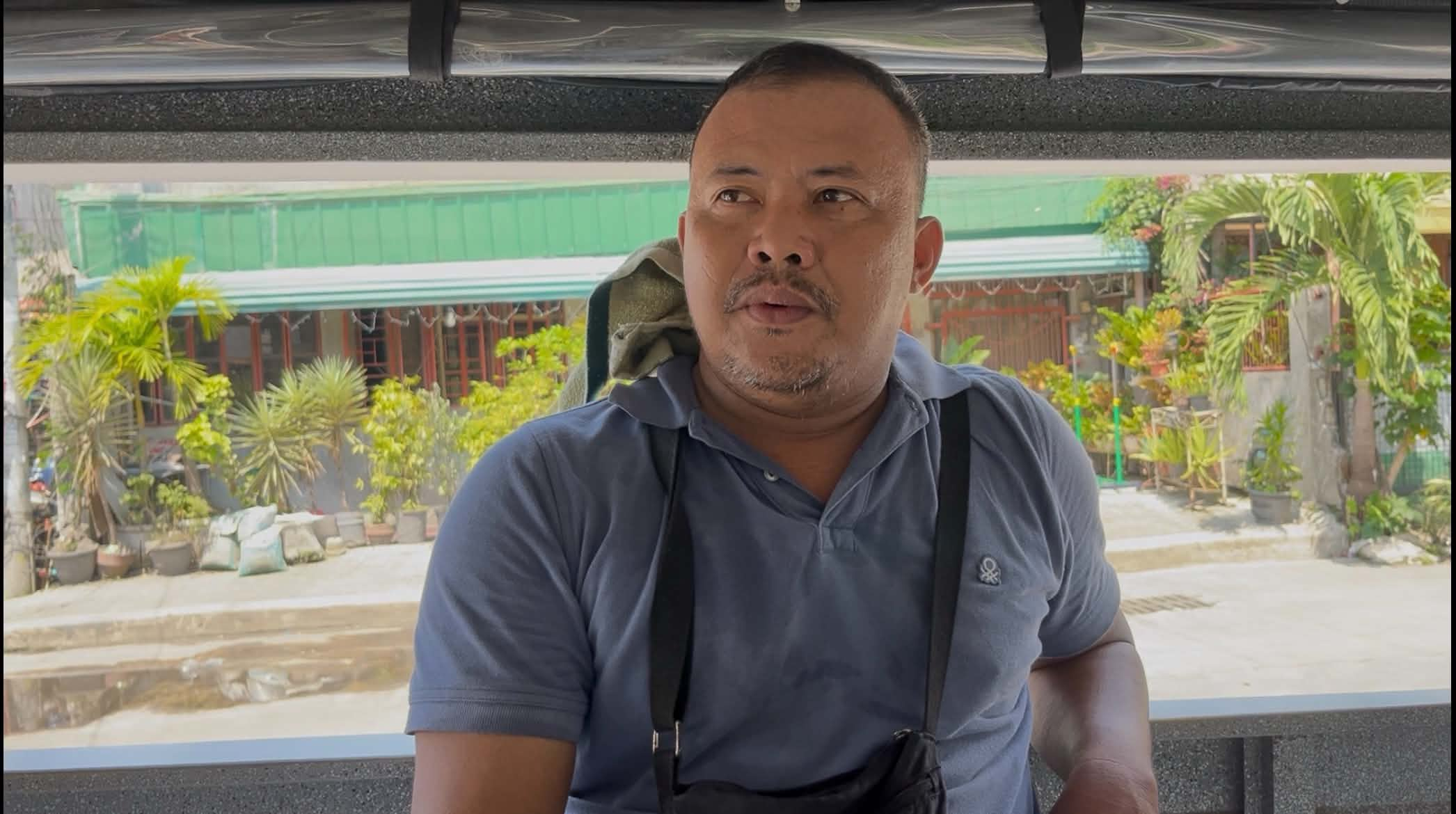
DAVAO CITY, Philippines—For jeepney driver Gomer Sanchez, a long day behind the wheel now leaves little money to take home after diesel prices crossed the three-digit mark.
Sanchez, 41, has been plying his route in Davao City for more than four years. Before that, he drove his own tricycle along Ramon Magsaysay Avenue.
But increasing competition from unregistered vehicles—and electric tricycles, coupled with the costs of maintaining a franchise, forced Sanchez to give up his tricycle and shift to driving a four-wheeler.
Fuel costs now take a bigger share of his daily earnings. He spends P300 on fuel for three run, which only cost P150 before.
His daily earnings can reach P800 to P900 on busy days, but after fuel and vehicle rental costs, far less remains for his family. On one particularly slow day, Sanchez said he brought home only P400.
”’Mao ra ni among kita ‘ron (Is that all you earned today)?’ His wife’s question echoed in his mind, he recalled.”
Sanchez is the sole income earner in his household, supporting his wife and two children, one in 12th grade and another in third grade.
Reducing fuel prices
The government recently increased the minimum passenger fare for public utility jeepneys by P1 to offset regular fuel price increases.
For Sanchez, the increase provides some additional income, but he also considers the burden on commuters.
“The commuters are also having a hard time. The one-peso increase is enough, it’s small additional amount,” he said in Cebuano, noting that passengers are majority students and workers earning minimum wages.
Another jeepney driver, 30-year-old Joshua Reusora, said he spends more than Php 300 on fuel after completing about eight rounds in a day.
Another jeepney driver, Joshua Reusora, 30, spends more than ?300 on fuel after completing about eight rounds in a day. He is left with about ?500, which he said is insufficient for a driver with a family.
For Reusora, the ?1 fare increase has somewhat helped, but he said a ?15 fare would provide drivers with more room to earn.
Jeepney driver Edward Intong, 43, offered a different solution. Instead of increasing fares, Intong said the government should reduce fuel prices.
“The best solution is really to lower the price of gasoline,” Intong told Davao Today in Cebuano.
He said rising utility bills have further reduced what drivers take home. Water and electricity bills have increased, but drivers’ earnings barely cover them.
The drivers’ concern echoed those raised by progressive groups who gathered along Roxas Avenue in Davao City on Sept. 30 in support of the nationwide strike called by Pagkakaisa ng mga Samahan ng Tsuper at Opereytor Nationwide (Piston).
The protesters called for lower fuel prices, including the removal of VAT and the scrapping of the Oil Deregulation Law, which they said would help reduce transportation and commodity costs.
Abdul Rauf Sissay, secretariat member of Bagong Alyansang Makabayan (Bayan) in Southern Mindanao Region, said consultations with drivers and operators showed that fuel prices and rising costs of basic goods were among their main concerns.
He said the ?1 fare increase does not sufficiently address the daily expenses of drivers and operators.
Sissay also called for higher wages for workers, saying rising commodity prices affect both transport workers and commuters.
He cited the ?540 minimum wage in Davao Region and argued that it remains insufficient for a family of five or six.
Sissay also raised concerns about drivers who could be displaced by the Davao Bus Project, asking whether government assistance and alternative livelihoods would be sufficient.
Free rides affect some routes
Sanchez said government-sponsored rides have not significantly affected his route, which is relatively short.
But drivers operating along longer routes such as Buhangin, Mintal, and Toril face a different situation because free rides can attract passengers away from regular jeepneys.
The free buses also offer amenities such as air conditioning and Wi-Fi that become a stronger attraction for passengers to take the free rides.
“That is helping the commuters. But what is it for us? it’s more hardship,” Sanchez said.
Modernization and the threat of displacement
The drivers’ concerns extend beyond fuel prices.
Sanchez does not oppose the government’s public transport modernization program, but he believes the transition should happen only when alternative livelihoods are available for drivers who may lose their source of income.
“We are not against it. Modernization should not leave drivers without livelihood. But right now, for me, the timing is still premature,” he said.
Sanchez asked whether displaced drivers would find work if they were removed from the transport sector, particularly in a country where he believes employment opportunities remain limited.
Beyond the city
Kat Dalon, vice chairperson of Sabokahan Unity of Lumad Women, said rising fuel prices also affect communities outside urban centers.
She said higher transportation costs increase the price of goods brought from rural areas to cities and make it more difficult for farmers and Indigenous communities to transport their products.
”When the price of petroleum increases, prices of things bought increase because petroleum is used [for transportation],” Dalon said in Cebuano.
For drivers like Sanchez, the immediate personal concern is the remaining amount of daily earnings that can reach their families after paying for fuel.
“It has changed significantly,” he said.
For every peso added to fares drivers and commuters continue to weigh the same question: How much more can either side afford GCA (davaotoday.com)


