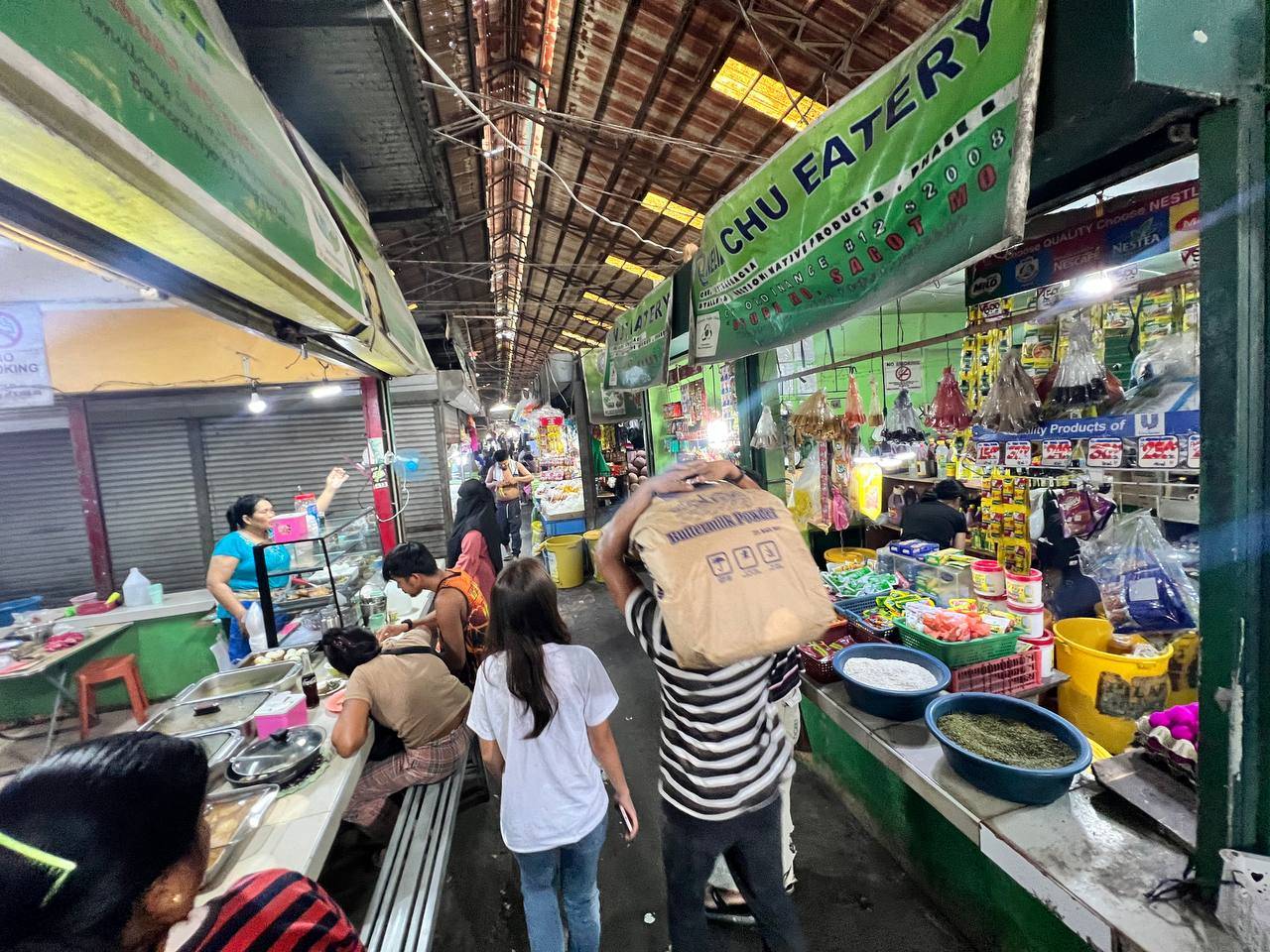
GENERAL SANTOS, Philippines – On the morning of June 8, vendors prepared their stalls, tricycle drivers waited for passengers and children hurried to school as they did every day here.
At past 7 a.m., the ground beneath them roared violently, shaking with a 7.8 magnitude earthquake, the strongest in the city’s history.
In seconds, the daily rhythm fractured. Walls cracked, buildings collapsed and fear spread faster than the tremors. Adela Neric, 60, was selling street food in Barangay Bula when the quake struck. Her first thought wasn’t her stall – it was the sea.
“We ran. We were afraid that a tsunami might come,” Neric speaking in Visayan told Davao Today on June 29.
She fled with neighbors to the barangay hall, leaving her house unlocked. Days later, trauma still lingers. Yet her son must work anyway so the family can eat.
Neric’s home survived with cracks only, but her peace of mind did not. Nights are spent in open spaces, always ready to flee. “We’re afraid that a tsunami might come,” she said, voice carrying the weight of lingering shock.
Wilmar Lecciones, a worker at Elijah’s Garlic Fried Chicken, witnessed similar chaos. “Yes, many really fled. They were afraid a tsunami would come, and many were traumatized,” said Lecciones speaking in Visayan.
Some stayed outside because their homes sat right by the coast. Those who lived inland had also evacuated but returned after two or three days.
Families abandoned homes, rushing to barangay centers or gyms seeking safety. Many slept outside for days, unwilling to risk being trapped indoors. Even weeks later, aftershocks kept residents on edge, living half-prepared for disaster.
Unequal aid distribution
Government and non-government organizations (NGOs) responded quickly, but testimonies reveal uneven aid distribution.
Barangay Bula reported 97 unrepairable houses and 909 repairable ones. Barangay captain Nicanora Vergas confirmed families received P30,000 for unrepairable houses and P5,000 for repairable houses, plus food packs. “The assistance given to us here was sufficient,” Vergas speaking in Visayan told Davao Today on June 29.
Yet not all shared that optimism. Leonardo Bufete Jr., a tricycle driver in Calumpang, said nothing arrived. “Nothing. Not even a single grain of rice. Nothing truly,” Bufete Jr., also speaking in Visayan, told Davao Today.
Mary Jane Navarro, also from Calumpang, confirmed her family received nothing while others did. Vendor Jessa Celerian got P5,000 cash aid but noted exclusion varied. “It depends where names are listed. Not all were able to receive assistance,” Navarro told Davao Today.
Alma Adana, a fish vendor, said a clerical error denied her help. “Someone replaced my name with a wrong one. That’s why I couldn’t receive anything,” she said.
Norsida Hamja in Barangay Kulasi received P5,175 from the Department of Social Welfare and Development (DSWD) for wall repairs but added, “My child is still traumatized.”
Relief goods including rice, canned goods and noodles were distributed, yet inconsistencies remained. Some barangays received multiple rounds while others waited weeks for one package.
Trauma persists
Beyond financial loss, deep psychological scars endure. Security guard Danilo Muñoz Jr. admitted, “there is still trauma, but we must remain cautious.”
Adana confessed continued fear. “Still afraid, Ma’am, still traumatized. Hoping it never happens again,” she told Davao Today.
Families across Bula continue sleeping outside, fearing tsunamis and collapsing structures.
“My wife is also traumatized and afraid, and my daughter has been traumatized as well because of the earthquake,” Bufete Jr. shared.
The psychological toll manifests in reduced activity. When shops reopened, customers hesitated to enter enclosed spaces, fearing another quake.
Livelihoods shattered
The earthquake disrupted livelihoods across General Santos. Vendors, drivers and workers saw incomes plummet.
Fruit vendors Alien and Irene Cabrera watched daily sales drop by half. “Before we earned P10,000. Now, it is only P5,000,” Irene said.
Fish vendor Jessa Celerian reported drastic losses. “Before, our income ranged from P30,000 to P50,000. Now, it is only P10,000 to P15,000,” Celerian said.
Lecciones estimated losses at 70 to 80 percent. Bufete Jr. lost passengers overnight. Market vendors like Adarna described fewer customers. Sales dropped from P5,000 to P7,000 to P3,000-P4,000
Collapse of malls and establishments compounded losses. Retail and food workers lost jobs while vendors struggled attracting fearful customers.
Panic
Barangays held disaster drills before the quake, but panic overwhelmed training when it struck. Vergas admitted seminars were conducted, yet nervousness prevented application.
Neric recalled evacuation was instinct-driven. “They just sounded sirens. We ran.”
Some families prepared flashlights, medicine and power banks, yet most relied on instincts running toward open spaces, barangay centers or gyms.
For residents in Barangay Bula, Calumpang and Kulasi, rebuilding is not only about repairing walls – it requires livelihoods, regaining trust in preparedness and overcoming trauma. As aftershocks continue rattling the city, the people of General Santos try to be resilient, but their plea stands clear: stronger materials, fairer aid distribution and a return to normal life they once knew. Omerahh Usman, MSU Marawi Intern