
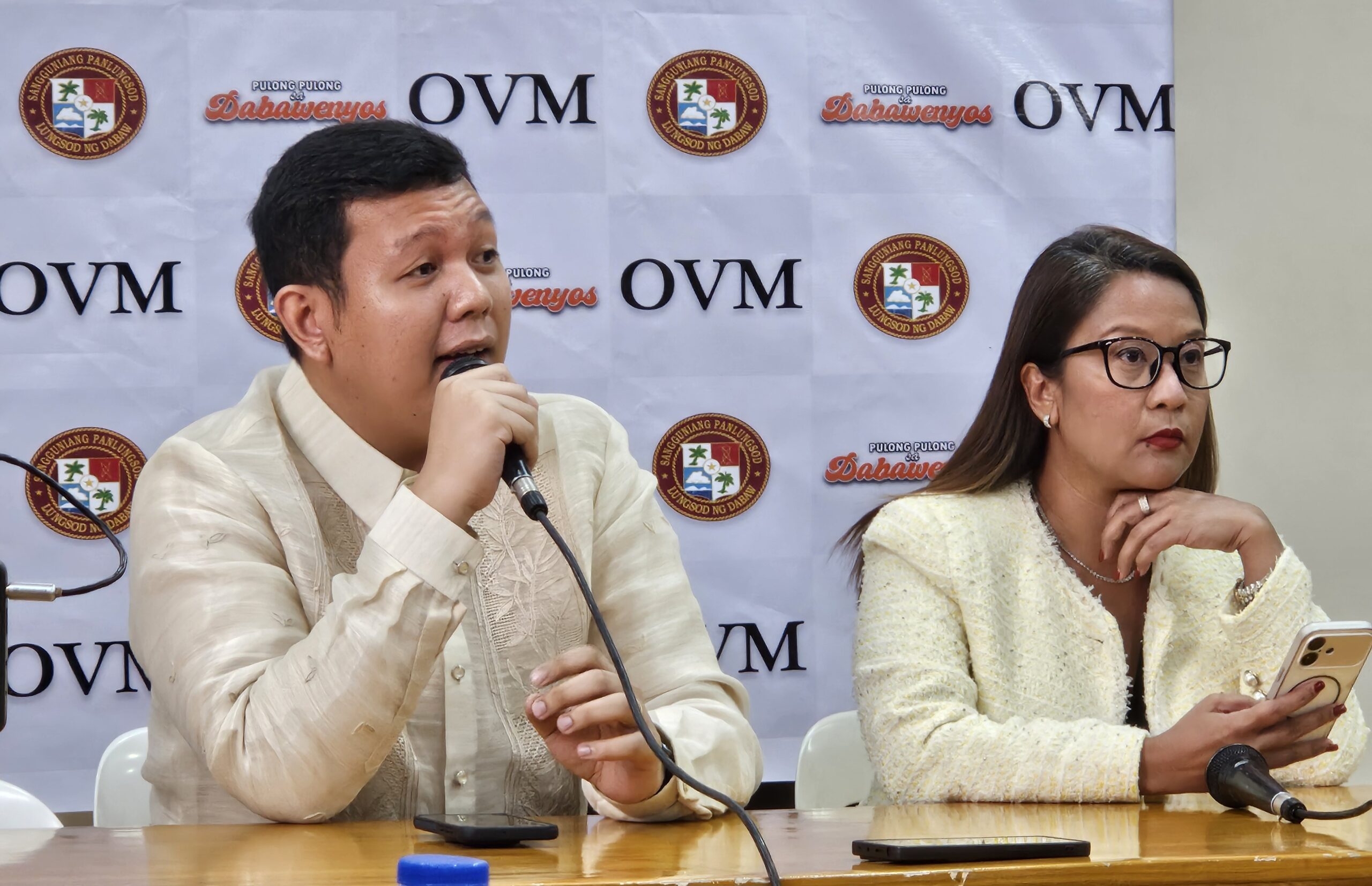
DAVAO CITY, Philippines – Davao City’s anti-bullying ordinance cannot be fully implemented because the city mayor’s office has not approved its Implementing Rules and Regulations (IRR), leaving key provisions—like barangay protection desks and the convening of an Anti-Bullying Council—without funding or authority even as the law is already in effect.
Councilor Lorenzo Villafuerte, chair of the city council’s social services committee, said a draft IRR is with the City Social Welfare and Development Office (CSWDO) for administrative review and officials hope Davao City Mayor Sebastian “Baste” Duterte will finalize it by October.
Without the IRR, the city cannot set up monitoring and intervention mechanisms, require schools to report cases to the Department of Education (DepEd) or CHED, or authorize the council to sanction private schools that repeatedly hide or fail to resolve bullying incidents.
Some schools hide bullying cases
Local data suggest those gaps matter. The City Population Division’s Teen Center at People’s Park recorded 5,728 bullying cases among children 14 and under in 2025 (2,336 boys, 3,392 girls). Through May 2026 it logged 299 cases (98 boys, 201 girls).
Villafuerte warned these figures understate the problem, saying “some schools here resort to hiding their cases of bullying” to protect reputations.
The stalled IRR prevents establishing Anti-Bullying Protection Desks in every barangay which are intended as local reporting centers and also blocks enforcement of the ordinance’s expanded scope, which explicitly covers workplace bullying in private businesses.
Villafuerte said he will present the collected data to Mayor Baste and recommend convening the Anti-Bullying Council during Bullying Prevention Month in October to launch information drives and enforcement.
He noted that both the local ordinance and the national Anti-Bullying Act of 2013 legally command all school administrators to record and report these issues directly to the Department of Education (DepEd) or the Commission on Higher Education (CHED).
Surveillance, policing
While the anti-bullying IRR remains pending, the city council approved measures that emphasize surveillance and policing: a resolution urging barangays to install and maintain CCTV systems, coordinated with the Public Safety and Security Office, and another asking barangay captains to deploy tanods (village watchmen) to patrol and protect government assets.
Councilor Antoniette Principe said DepEd Davao has tightened school entry rules after the Tacloban school shooting, enforcing “No ID, No Entry,” conducting bag checks and keeping civil security unit guards at public schools while officials draft a new ordinance to make those protocols permanent.
Councilors stressed the ordinance’s restorative intent.
Villafuerte rejected calls to add harsher penalties to “scare” children, saying the goal is reform: both victim and bully must undergo counseling because bullies often replicate difficult home situations.
Principe echoed a focus on prevention, noting the city deploys interventions for at-risk children and plans to strengthen barangay-level children’s councils so youths receive social support before criminal liability becomes an issue.
That orientation drew criticism from progressive educator groups wary of increasing policing in schools.
The Educators’ Forum for Development (EFD)-Mindanao urged the city and national government to prioritize students’ psychological wellbeing, fully fund existing laws, hire more school guidance counselors and LGU social workers, and invest in positive-discipline programs rather than “militarizing educational spaces.”
EFD-Mindanao leaders argued school violence reflects deeper systemic failures, unequal service provision, fragmented responses, and public rhetoric that normalizes punitive or vigilante approaches, rather than simply gaps in regulation.
The finalization of the IRR will determine whether the city can activate its monitoring and intervention mechanisms, fund barangay protection desks, and sanction institutions that conceal or mishandle bullying cases.
If the mayor approves the IRR by October, officials plan an outreach and enforcement push timed with Bullying Prevention Month; if not, key provisions of the ordinance will remain unenforceable despite the law being in force.(davaotoday.com)


